Arequipa to Cuzco is 195 miles (314 km), a flight of about 50 minutes.
The right side keeps passengers close to Arequipa's volcanic trio during takeoff and then delivers the high snow peaks of the Cordillera Vilcanota, including Ausangate, on the approach into Cusco, making it consistently the more dramatic side for this short but visually intense Andean hop.
Flight Path
High Andean altiplano and puna grasslands between Arequipa and Cusco, with the northern slopes of the Chachani-Coropuna volcanic chain fading behind and the southern flanks of the Cordillera Vilcanota coming into view ahead.
Great circle distance and headings ›
.jpg?width=600)
Phase by phase
Takeoff from AQP
RIGHTDeparting Arequipa and turning north toward Cusco, the aircraft's right side faces the volcanic skyline that defines the city: El Misti rises just east of the field, with Pichu Pichu to the southeast and Chachani filling in to the north-east as the plane climbs and banks onto its northbound heading.
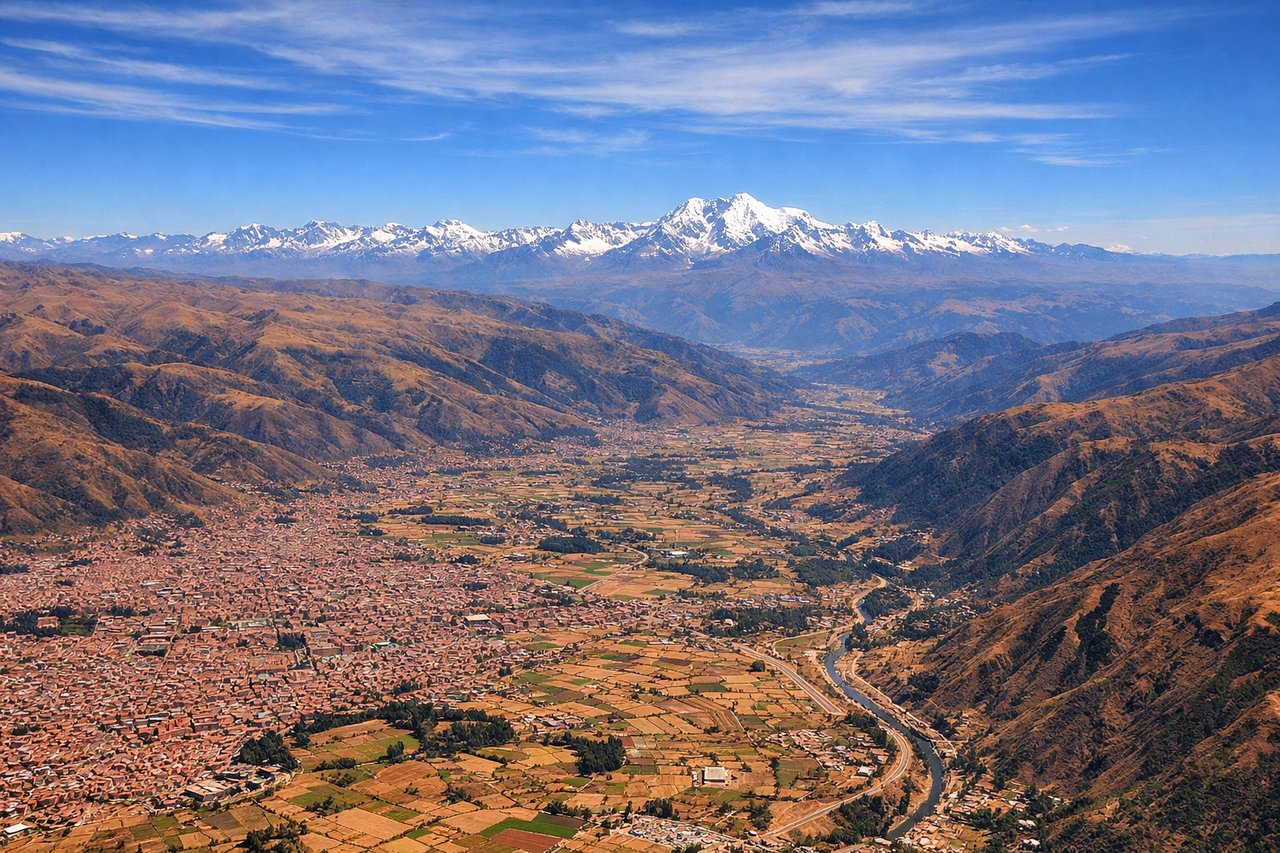
Landing at CUZ
RIGHTOn the approach into Cusco, the arrival pattern swings the aircraft east of the city before lining up for the runway-28 landing, putting the snow-capped Cordillera Vilcanota and the prominent Ausangate peak on the right side, along with terraced Andean farmland leading into the Cusco valley.
Landmarks on this routeAll landmarks →
Will your flight be in sunlight?
Pick a date and time in the Sun Map to watch the sun move across your whole flight.
About This Route
Which side of the plane should I sit on flying from Rodriguez Ballon (AQP) to Velazco Astete (CUZ)?
Sit on the Right side of the plane for the best views on flights from Arequipa to Cuzco. The right side keeps passengers close to Arequipa's volcanic trio during takeoff and then delivers the high snow peaks of the Cordillera Vilcanota, including Ausangate, on the approach into Cusco, making it consistently the more dramatic side for this short but visually intense Andean hop.
What can I see during takeoff from Rodriguez Ballon in Arequipa?
During takeoff from Rodriguez Ballon (AQP), sit on the Right side for the best views. Departing Arequipa and turning north toward Cusco, the aircraft's right side faces the volcanic skyline that defines the city: El Misti rises just east of the field, with Pichu Pichu to the southeast and Chachani filling in to the north-east as the plane climbs and banks onto its northbound heading. Notable sights include: El Misti volcano, Pichu Pichu, Chachani, Arequipa's colonial city grid below.
What can I see when landing at Velazco Astete in Cuzco?
When landing at Velazco Astete (CUZ), sit on the Right side for the best views. On the approach into Cusco, the arrival pattern swings the aircraft east of the city before lining up for the runway-28 landing, putting the snow-capped Cordillera Vilcanota and the prominent Ausangate peak on the right side, along with terraced Andean farmland leading into the Cusco valley. Notable sights include: Ausangate peak, Cordillera Vilcanota, Cusco valley terraced fields, Urubamba river valley in the distance.
How long is the flight from Arequipa to Cuzco?
The flight from Rodriguez Ballon (AQP) to Velazco Astete (CUZ) takes about 50 minutes. The shortest flight path between them is 195 miles (314 km); winds and air traffic control usually add a few percent.
What does the Arequipa to Cuzco flight path pass over?
High Andean altiplano and puna grasslands between Arequipa and Cusco, with the northern slopes of the Chachani-Coropuna volcanic chain fading behind and the southern flanks of the Cordillera Vilcanota coming into view ahead.