The right side wins because of the sweep of Canadian Arctic coastline and the Labrador Sea near southern Greenland during cruise, followed by a scenic mountain-and-skyline arrival into LAX, while the left side spends most of the flight over open ocean and flat prairie with a less dramatic desert approach.
Flight Path
The flight's midpoint lies over the Labrador Sea near the southern tip of Greenland, with the route continuing across Hudson Bay and the Canadian Shield before crossing the Rocky Mountains and the Great Basin desert into Southern California.
Great circle distance and headings ›.jpeg?width=600)
.jpg?width=600)


.jpg?width=600)
Phase by phase
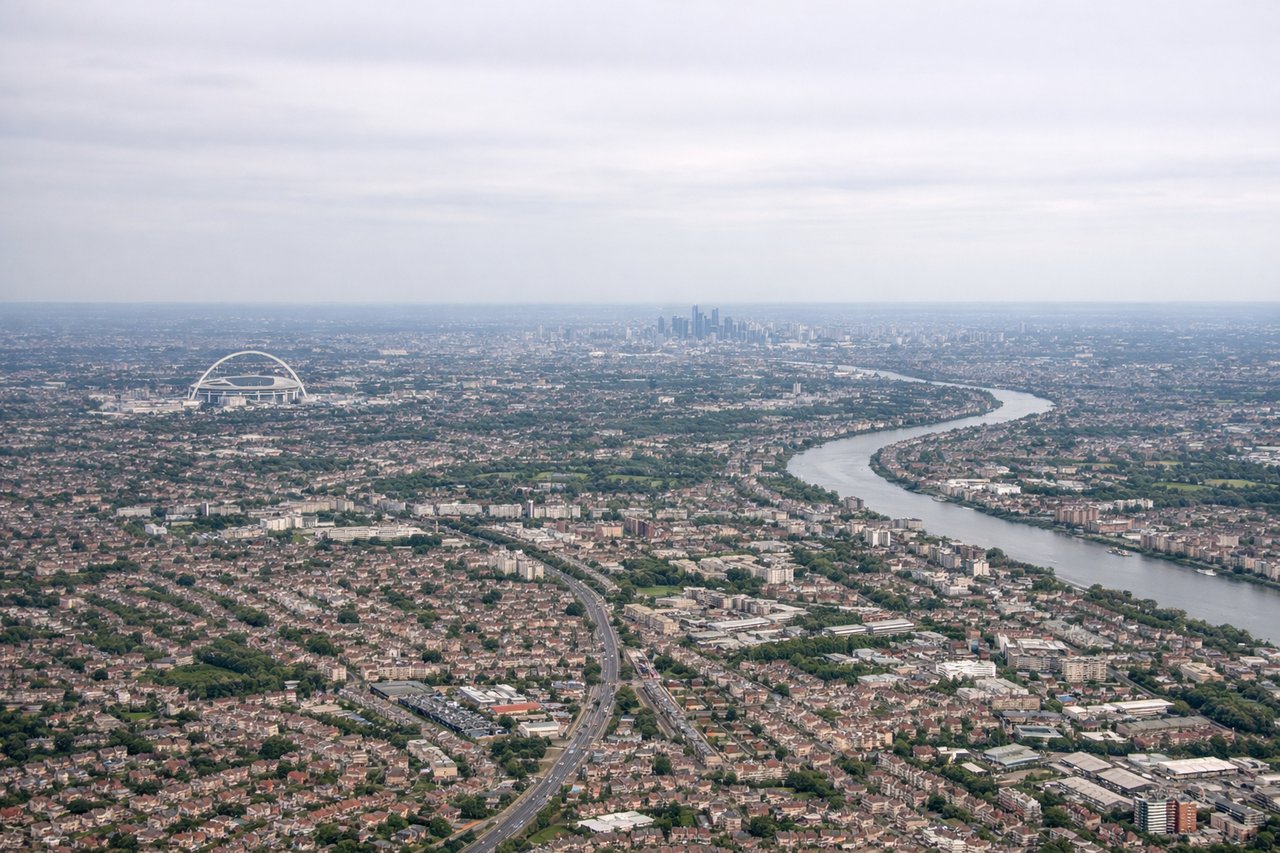
Takeoff from LHR
RIGHTWestbound departures from LHR climb out over the Thames Valley before banking north toward Ireland and Scotland on the transatlantic routing, giving right-side passengers a wider view of that turn and the passing Berkshire countryside. The left side mostly looks out over flat, unremarkable farmland during the same climb.
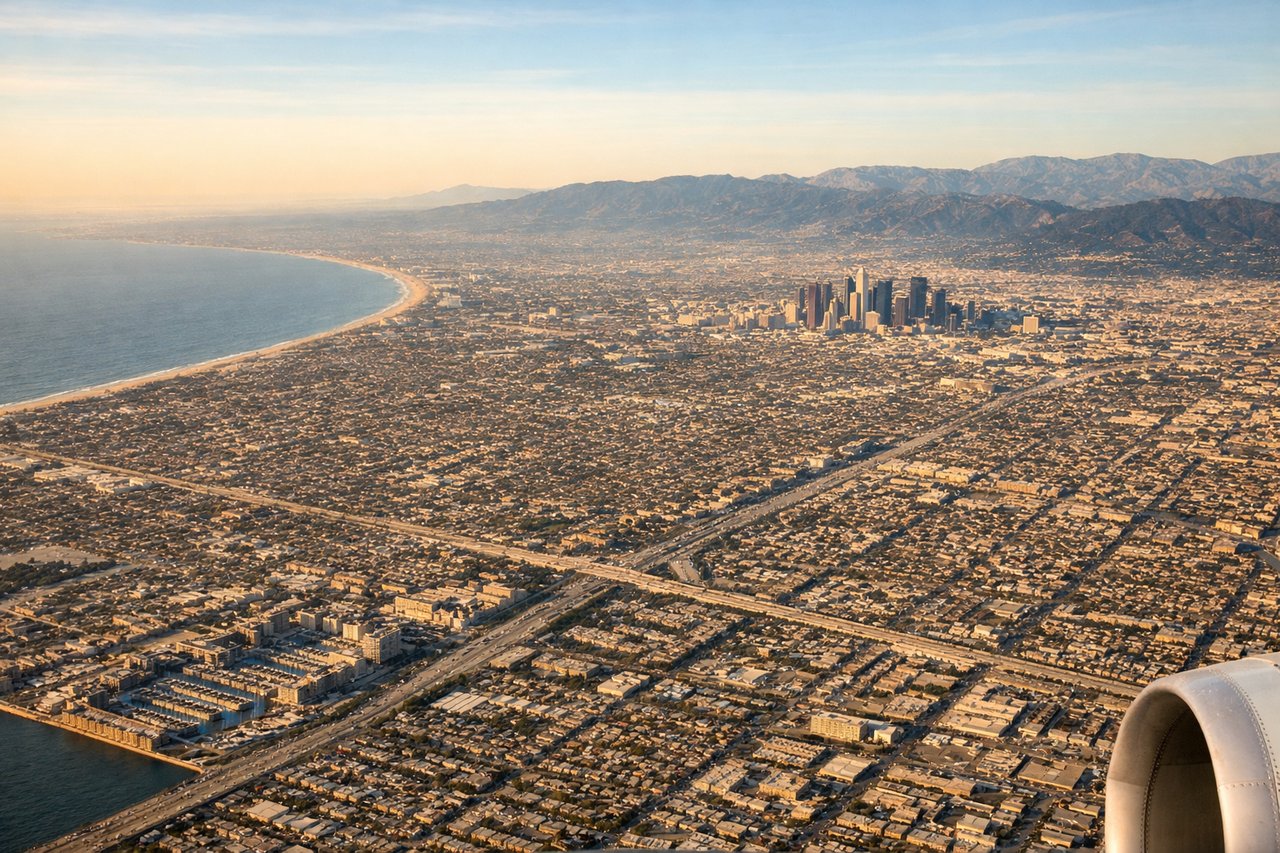
Landing at LAX
RIGHTTranscontinental arrivals into LAX from the east typically cross the San Gabriel Mountains and swing north of downtown before turning to land west, putting the mountains, the LA skyline, and the San Fernando Valley on the right side. The left side during this maneuver mostly faces open sky and the featureless southern basin.
Landmarks on this routeAll landmarks →
Will your flight be in sunlight?
See exactly which side of the plane gets sun and shade at your departure time.
About This Route
Which side of the plane should I sit on flying from Heathrow (LHR) to Los Angeles International (LAX)?
Sit on the Right side of the plane for the best views on flights from London to Los Angeles. The right side wins because of the sweep of Canadian Arctic coastline and the Labrador Sea near southern Greenland during cruise, followed by a scenic mountain-and-skyline arrival into LAX, while the left side spends most of the flight over open ocean and flat prairie with a less dramatic desert approach.
What can I see during takeoff from Heathrow in London?
During takeoff from Heathrow (LHR), sit on the Right side for the best views. Westbound departures from LHR climb out over the Thames Valley before banking north toward Ireland and Scotland on the transatlantic routing, giving right-side passengers a wider view of that turn and the passing Berkshire countryside. The left side mostly looks out over flat, unremarkable farmland during the same climb. Notable sights include: Windsor Castle and Great Park, the Thames River winding through Berkshire, Reading's town outline, patchwork fields giving way to the Chiltern Hills.
What can I see when landing at Los Angeles International in Los Angeles?
When landing at Los Angeles International (LAX), sit on the Right side for the best views. Transcontinental arrivals into LAX from the east typically cross the San Gabriel Mountains and swing north of downtown before turning to land west, putting the mountains, the LA skyline, and the San Fernando Valley on the right side. The left side during this maneuver mostly faces open sky and the featureless southern basin. Notable sights include: San Gabriel Mountains, downtown Los Angeles skyline, San Fernando Valley, the Hollywood Hills.
How long is the flight from London to Los Angeles?
The flight from Heathrow (LHR) to Los Angeles International (LAX) takes 11h 10m.
What does the London to Los Angeles flight path pass over?
The flight's midpoint lies over the Labrador Sea near the southern tip of Greenland, with the route continuing across Hudson Bay and the Canadian Shield before crossing the Rocky Mountains and the Great Basin desert into Southern California.