The left side mostly offers Sonoran desert and open ocean with no strong payoff, while the right side gets a glimpse of the Dallas skyline on departure and, far more importantly, the classic Diamond Head-Waikiki-Honolulu approach into HNL, which is the scenic highlight of the entire flight.
Flight Path
After crossing West Texas, New Mexico, and Arizona, the route exits the mainland near the Southern California coast and then spends roughly five hours over open Pacific water with no landmarks, until the Hawaiian Islands emerge near the end of the flight, starting with the Big Island's Mauna Kea and Mauna Loa volcanoes and then Maui's Haleakala as the descent into Oahu begins.
Great circle distance and headings ›.jpg?width=600)

Phase by phase
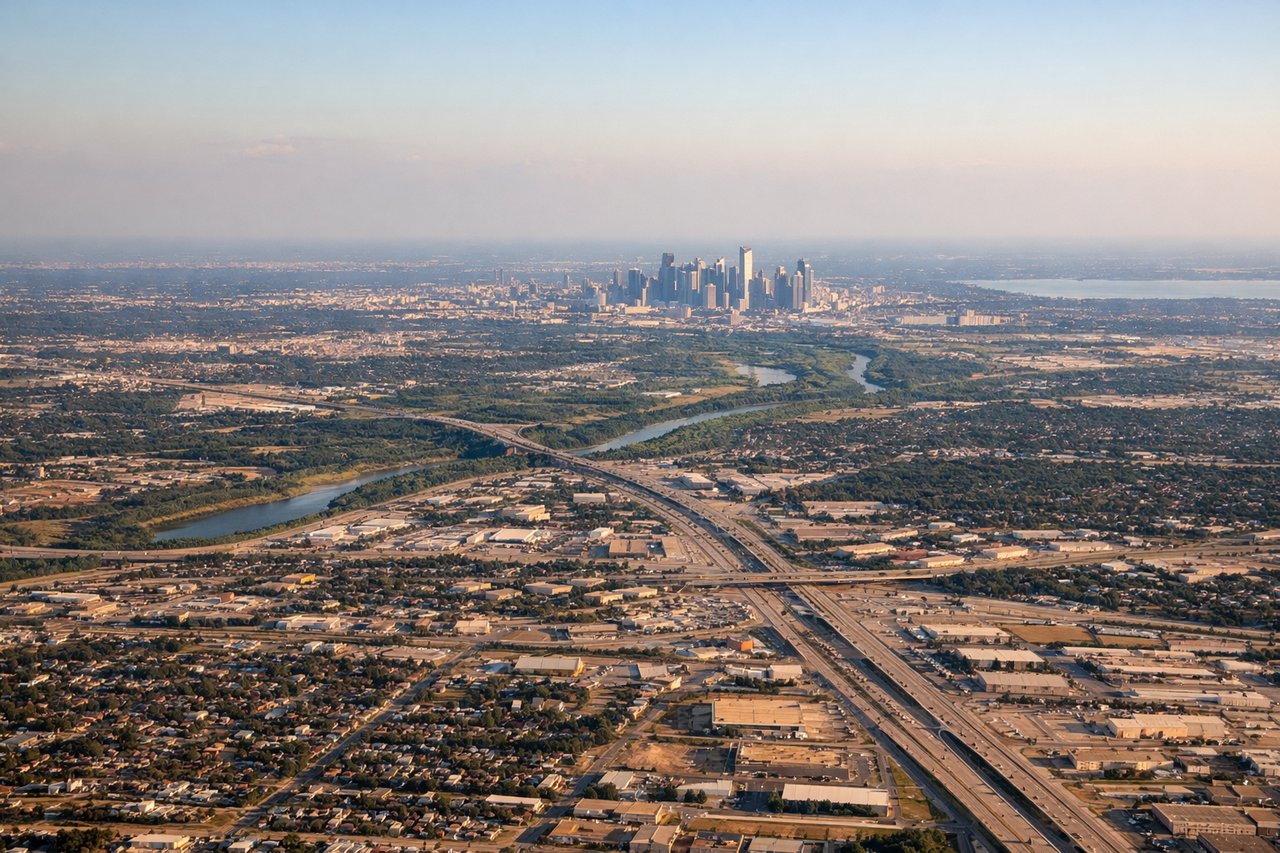
Takeoff from DFW
RIGHTDFW's typical south-flow departure sends the aircraft south before banking right onto the westbound cruise track toward Arizona. As the plane rolls out of that turn heading west, downtown Dallas and the Trinity River sit off the right side, giving a brief skyline view before the flat Texas plains take over.
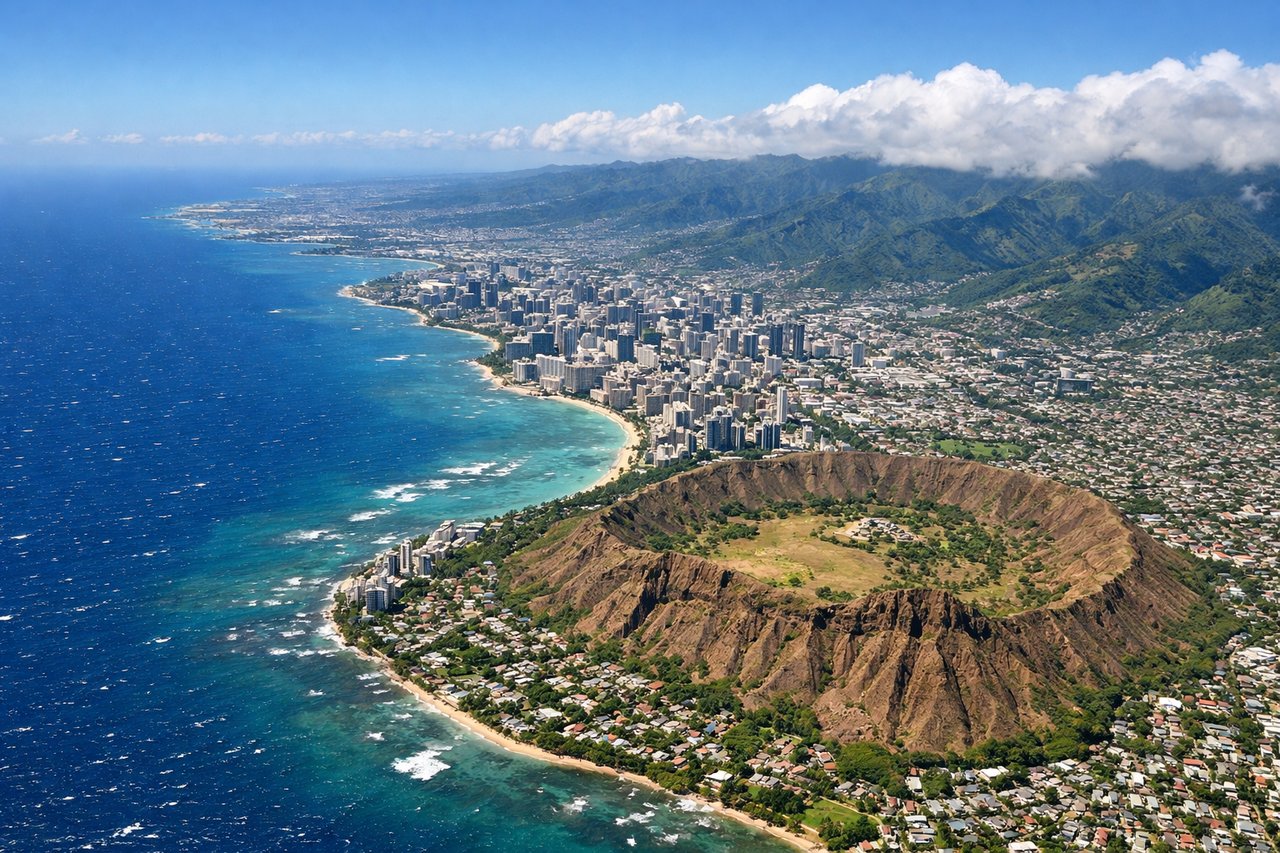
Landing at HNL
RIGHTMainland arrivals into HNL commonly loop south of Oahu to line up for the east-facing runways, which puts the south shore directly under the right side of the aircraft. That means a clear view of Diamond Head, Waikiki Beach, and the Honolulu skyline during the final descent.
Landmarks on this routeAll landmarks →
Will your flight be in sunlight?
See exactly which side of the plane gets sun and shade at your departure time.
About This Route
Which side of the plane should I sit on flying from Dallas Fort Worth International (DFW) to Honolulu International (HNL)?
Sit on the Right side of the plane for the best views on flights from Dallas-Fort Worth to Honolulu. The left side mostly offers Sonoran desert and open ocean with no strong payoff, while the right side gets a glimpse of the Dallas skyline on departure and, far more importantly, the classic Diamond Head-Waikiki-Honolulu approach into HNL, which is the scenic highlight of the entire flight.
What can I see during takeoff from Dallas Fort Worth International in Dallas-Fort Worth?
During takeoff from Dallas Fort Worth International (DFW), sit on the Right side for the best views. DFW's typical south-flow departure sends the aircraft south before banking right onto the westbound cruise track toward Arizona. As the plane rolls out of that turn heading west, downtown Dallas and the Trinity River sit off the right side, giving a brief skyline view before the flat Texas plains take over. Notable sights include: Downtown Dallas skyline, Trinity River bends, Las Colinas towers, flat North Texas farmland.
What can I see when landing at Honolulu International in Honolulu?
When landing at Honolulu International (HNL), sit on the Right side for the best views. Mainland arrivals into HNL commonly loop south of Oahu to line up for the east-facing runways, which puts the south shore directly under the right side of the aircraft. That means a clear view of Diamond Head, Waikiki Beach, and the Honolulu skyline during the final descent. Notable sights include: Diamond Head crater, Waikiki Beach, Honolulu downtown skyline, Koko Head.
How long is the flight from Dallas-Fort Worth to Honolulu?
The flight from Dallas Fort Worth International (DFW) to Honolulu International (HNL) takes 8h 10m.
What does the Dallas-Fort Worth to Honolulu flight path pass over?
After crossing West Texas, New Mexico, and Arizona, the route exits the mainland near the Southern California coast and then spends roughly five hours over open Pacific water with no landmarks, until the Hawaiian Islands emerge near the end of the flight, starting with the Big Island's Mauna Kea and Mauna Loa volcanoes and then Maui's Haleakala as the descent into Oahu begins.