Takeoff from Abu Dhabi offers more visually distinctive geography—the Persian Gulf, coastal features, and mountain backdrop are striking and sustained during climb. Landing into Buenos Aires is visually flatter and less dramatic. Left seats capture the superior departure experience.
Flight Path
The flight crosses the Arabian Sea (visible from both sides during the first 6-8 hours), the Indian subcontinent (southern India, Deccan Plateau, and coastal regions), the Arabian Sea again, the Horn of Africa region (distant to the south), and then the African continent (East Africa, central Africa, and southern Africa over roughly 8-10 hours). The South Atlantic Ocean dominates the final 4-5 hours of flight. The Equator is crossed roughly 7-8 hours into the flight. Notable landmarks include the Deccan Plateau (dark, elevated terrain), the East African Rift Valley (visible as a linear depression), and the southern African plateau. The flight path generally follows a great-circle route over the Indian Ocean, sub-Saharan Africa, and the South Atlantic.
Great circle distance and headings ›
_(cropped).jpg?width=600)
Phase by phase
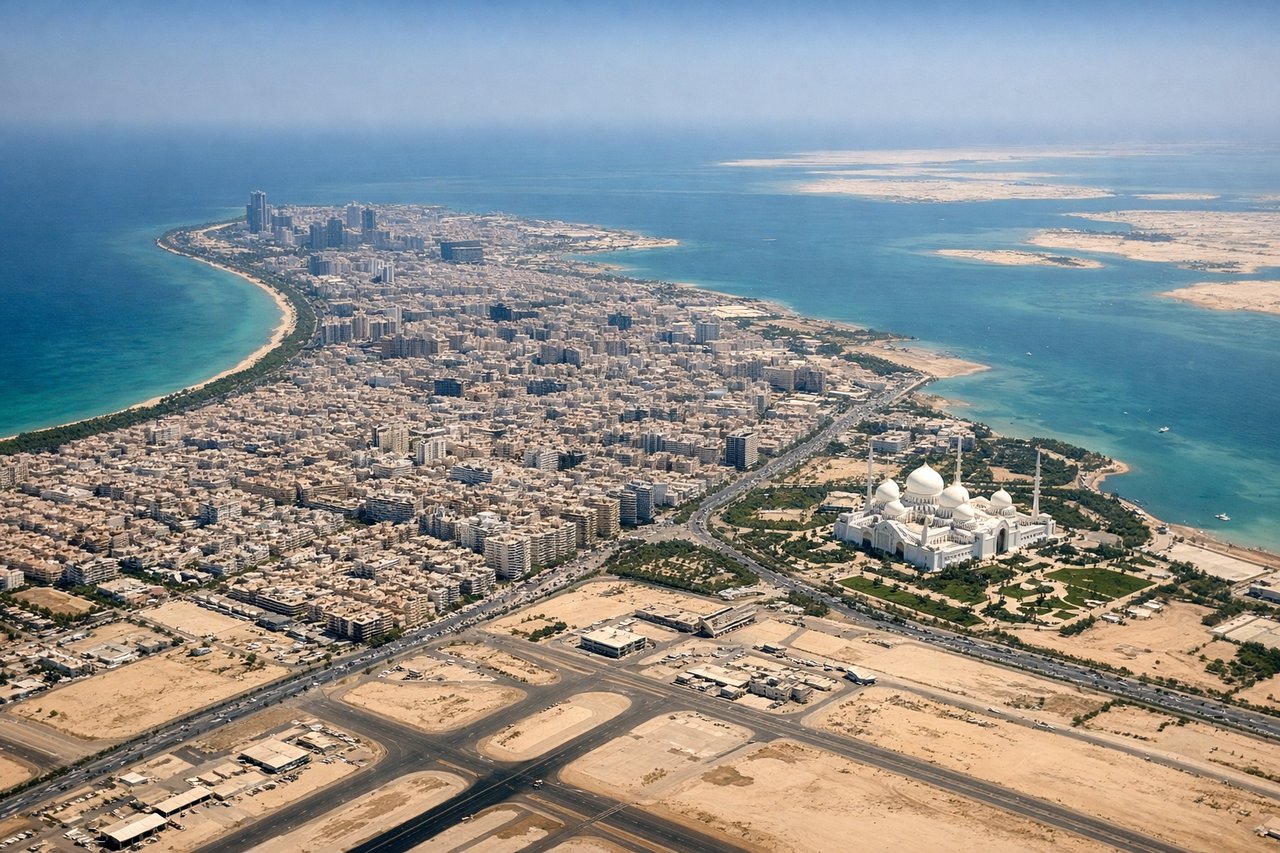
Takeoff from AUH
LEFTAbu Dhabi International typically departs runways 31L/31R (northwesterly heading). Left-side seats offer views of the Persian Gulf coastline, the Hajar Mountains to the southeast, and the contrast between coastal development and desert inland. Right seats face inland desert with minimal visual interest.
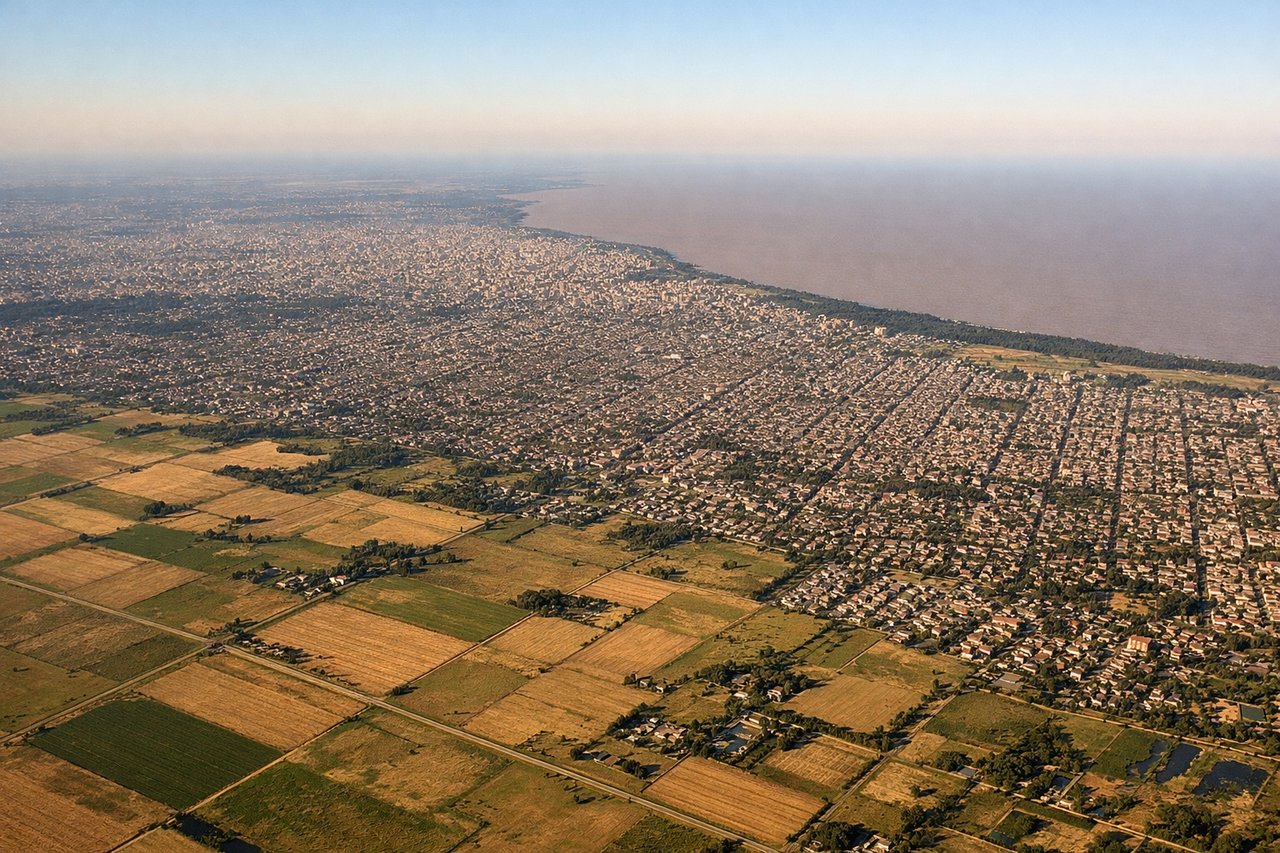
Landing at EZE
RIGHTEzeiza typically uses runways 09/27 depending on wind. For westbound arrivals (common for flights from Asia), approach vectors often align with runway 09 (easterly heading). Right-side seats provide views of the Río de la Plata estuary, the pampas landscape, and Buenos Aires' western suburbs during descent. Left seats face inland pampas with less distinctive features.
Landmarks on this routeAll landmarks →
Will your flight be in sunlight?
See exactly which side of the plane gets sun and shade at your departure time.
About This Route
Which side of the plane should I sit on flying from Abu Dhabi International (AUH) to Ezeiza Ministro Pistarini (EZE)?
Sit on the Left side of the plane for the best views on flights from Abu Dhabi to Buenos Aires. Takeoff from Abu Dhabi offers more visually distinctive geography—the Persian Gulf, coastal features, and mountain backdrop are striking and sustained during climb. Landing into Buenos Aires is visually flatter and less dramatic. Left seats capture the superior departure experience.
What can I see during takeoff from Abu Dhabi International in Abu Dhabi?
During takeoff from Abu Dhabi International (AUH), sit on the Left side for the best views. Abu Dhabi International typically departs runways 31L/31R (northwesterly heading). Left-side seats offer views of the Persian Gulf coastline, the Hajar Mountains to the southeast, and the contrast between coastal development and desert inland. Right seats face inland desert with minimal visual interest. Notable sights include: Persian Gulf (northwest of runway), Hajar Mountains (southeast horizon), Abu Dhabi city grid (south), coastal salt marshes and sabkha flats (immediate vicinity).
What can I see when landing at Ezeiza Ministro Pistarini in Buenos Aires?
When landing at Ezeiza Ministro Pistarini (EZE), sit on the Right side for the best views. Ezeiza typically uses runways 09/27 depending on wind. For westbound arrivals (common for flights from Asia), approach vectors often align with runway 09 (easterly heading). Right-side seats provide views of the Río de la Plata estuary, the pampas landscape, and Buenos Aires' western suburbs during descent. Left seats face inland pampas with less distinctive features. Notable sights include: Río de la Plata estuary (southern horizon and right side), Buenos Aires western suburbs and sprawl (center and left), Paraná River delta (northeast, distant), flat pampas grassland (foreground and left).
How long is the flight from Abu Dhabi to Buenos Aires?
The flight from Abu Dhabi International (AUH) to Ezeiza Ministro Pistarini (EZE) takes Approximately 14.5 to 15.5 hours.
What does the Abu Dhabi to Buenos Aires flight path pass over?
The flight crosses the Arabian Sea (visible from both sides during the first 6-8 hours), the Indian subcontinent (southern India, Deccan Plateau, and coastal regions), the Arabian Sea again, the Horn of Africa region (distant to the south), and then the African continent (East Africa, central Africa, and southern Africa over roughly 8-10 hours). The South Atlantic Ocean dominates the final 4-5 hours of flight. The Equator is crossed roughly 7-8 hours into the flight. Notable landmarks include the Deccan Plateau (dark, elevated terrain), the East African Rift Valley (visible as a linear depression), and the southern African plateau. The flight path generally follows a great-circle route over the Indian Ocean, sub-Saharan Africa, and the South Atlantic.