Right-side seats win overall because the takeoff view of the Persian Gulf and Abu Dhabi coastline is more visually distinctive than the landing approach. The flight path itself (west-southwest across relatively featureless desert) offers limited mid-flight landmarks, so the departure experience carries more weight.
Flown AUH to RUH? Did we get it right?
Flight Path
Abu Dhabi to Riyadh is 500 miles (805 km), a flight of about 1 hour 15 minutes.
The flight crosses the UAE-Saudi border roughly midway, passing over the Rub' al Khali (Empty Quarter) desert margin. This region is extremely flat and sparsely populated—minimal visible landmarks. The terrain transitions from the coastal plain near Abu Dhabi to the interior Saudi plateau. No major mountain ranges, water bodies, or cities are visible during cruise; the view is predominantly pale desert with occasional wadi systems and scattered settlements below.
Great circle distance and headings ›Phase by phase

Takeoff from AUH
RIGHTRight-side seats capture the Persian Gulf coastline and the sprawling Abu Dhabi urban area receding beneath the aircraft. Typical departures from AUH use runways 31L/R, so a right-bank turn toward Riyadh (west-southwest) gives right-side passengers extended views of the coastal plain and offshore islands.
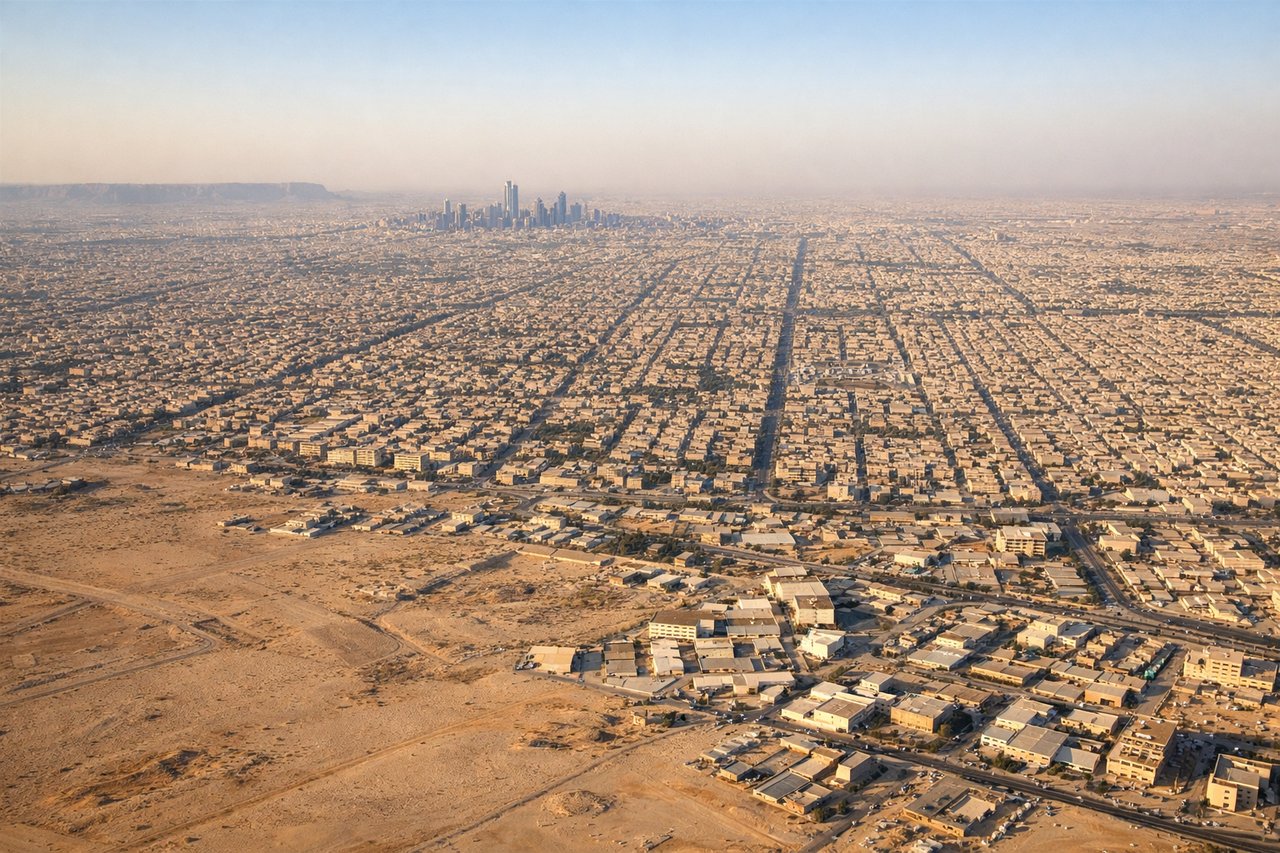
Landing at RUH
LEFTLeft-side seats offer the best view during descent into Riyadh. Typical arrivals use runways 03L/R or 15L/R depending on wind; a left-bank approach from the northwest gives left-side passengers clear views of Riyadh's urban sprawl, the Wadi Hanifah valley, and the surrounding desert plateau as the aircraft descends.
Will your flight be in sunlight?
Pick a date and time in the Sun Map to watch the sun move across your whole flight.
About This Route
Which side of the plane should I sit on flying from Abu Dhabi International (AUH) to King Khaled International (RUH)?
Sit on the Right side of the plane for the best views on flights from Abu Dhabi to Riyadh. Right-side seats win overall because the takeoff view of the Persian Gulf and Abu Dhabi coastline is more visually distinctive than the landing approach. The flight path itself (west-southwest across relatively featureless desert) offers limited mid-flight landmarks, so the departure experience carries more weight.
What can I see during takeoff from Abu Dhabi International in Abu Dhabi?
During takeoff from Abu Dhabi International (AUH), sit on the Right side for the best views. Right-side seats capture the Persian Gulf coastline and the sprawling Abu Dhabi urban area receding beneath the aircraft. Typical departures from AUH use runways 31L/R, so a right-bank turn toward Riyadh (west-southwest) gives right-side passengers extended views of the coastal plain and offshore islands. Notable sights include: Persian Gulf (immediate offshore), Abu Dhabi city grid and high-rises, Saadiyat Island and surrounding barrier islands, Al Ain oasis region (visible as green patches inland to the south-southeast).
What can I see when landing at King Khaled International in Riyadh?
When landing at King Khaled International (RUH), sit on the Left side for the best views. Left-side seats offer the best view during descent into Riyadh. Typical arrivals use runways 03L/R or 15L/R depending on wind; a left-bank approach from the northwest gives left-side passengers clear views of Riyadh's urban sprawl, the Wadi Hanifah valley, and the surrounding desert plateau as the aircraft descends. Notable sights include: Riyadh city center and high-rise district, Wadi Hanifah (the shallow valley running north-south through the city), King Khaled International Airport runways and taxiways, surrounding Saudi desert plateau with sparse settlements.
How long is the flight from Abu Dhabi to Riyadh?
The flight from Abu Dhabi International (AUH) to King Khaled International (RUH) takes about 1 hour 15 minutes. The shortest flight path between them is 500 miles (805 km); winds and air traffic control usually add a few percent.
What does the Abu Dhabi to Riyadh flight path pass over?
The flight crosses the UAE-Saudi border roughly midway, passing over the Rub' al Khali (Empty Quarter) desert margin. This region is extremely flat and sparsely populated—minimal visible landmarks. The terrain transitions from the coastal plain near Abu Dhabi to the interior Saudi plateau. No major mountain ranges, water bodies, or cities are visible during cruise; the view is predominantly pale desert with occasional wadi systems and scattered settlements below.