Bhopal to Bombay is 409 miles (658 km), a flight of about 1 hour 10 minutes.
While takeoff offers good local views of Bhopal, the landing approach provides more dramatic and extensive scenery with the Sahyadri Range and coastal transition, making left-side seats the better choice for the overall flight experience.
Flight Path
The flight path crosses the Deccan Plateau's northern edge, passing over agricultural regions of central Maharashtra. The Ajanta Range and associated plateau escarpments are visible to the south during cruise, along with scattered towns and reservoir systems. The terrain gradually transitions from the plateau toward the coastal plains as the aircraft approaches Mumbai.
Great circle distance and headings ›Phase by phase
Takeoff from BHO
RIGHTRight-side seats offer views of Bhopal city and the Upper Lake immediately after departure, with the Vindhya Range visible to the south as the aircraft climbs. Left side faces open terrain with fewer distinctive landmarks during initial climb.
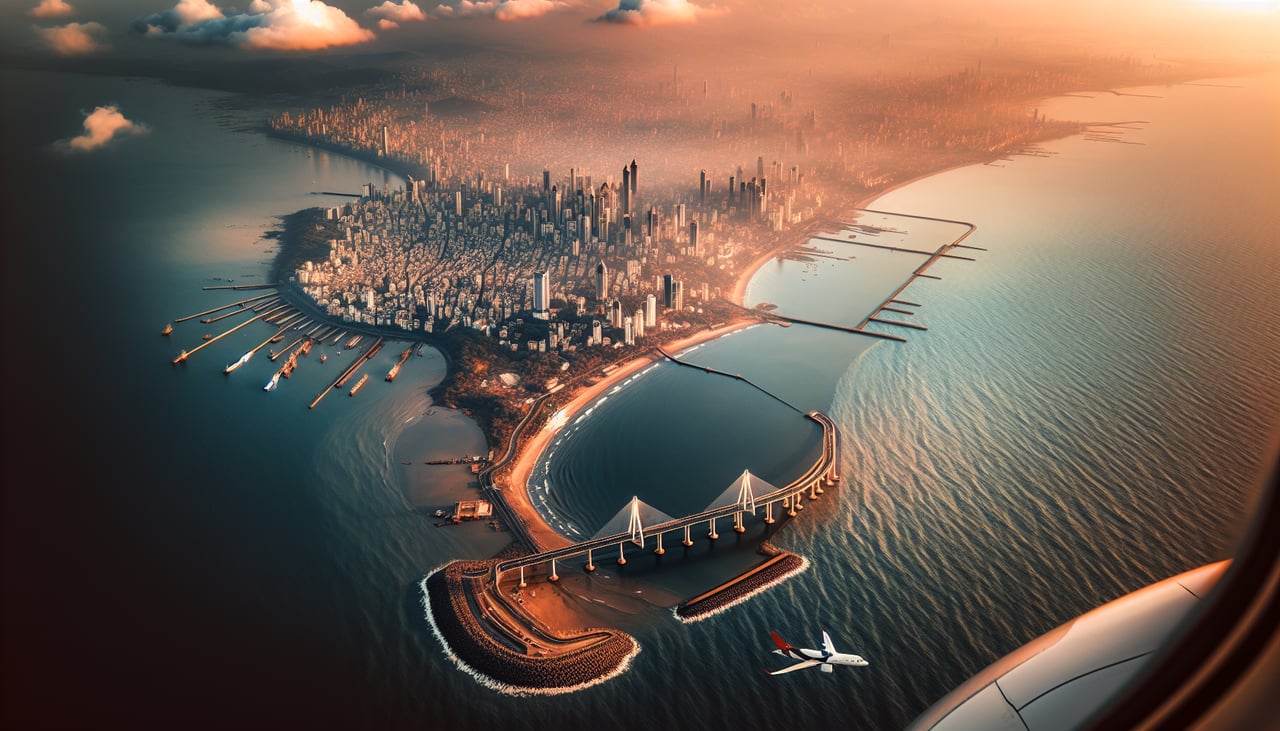
Landing at BOM
LEFTLeft-side seats provide excellent views of the Sahyadri Range (Western Ghats) as the aircraft descends toward Mumbai, along with views of the coastal plains and approach to the Arabian Sea. Right side faces inland terrain with less dramatic scenery during descent.
Landmarks on this routeAll landmarks →
Will your flight be in sunlight?
Pick a date and time in the Sun Map to watch the sun move across your whole flight.
About This Route
Which side of the plane should I sit on flying from Bhopal (BHO) to Chhatrapati Shivaji International (BOM)?
Sit on the Left side of the plane for the best views on flights from Bhopal to Bombay. While takeoff offers good local views of Bhopal, the landing approach provides more dramatic and extensive scenery with the Sahyadri Range and coastal transition, making left-side seats the better choice for the overall flight experience.
What can I see during takeoff from Bhopal in Bhopal?
During takeoff from Bhopal (BHO), sit on the Right side for the best views. Right-side seats offer views of Bhopal city and the Upper Lake immediately after departure, with the Vindhya Range visible to the south as the aircraft climbs. Left side faces open terrain with fewer distinctive landmarks during initial climb. Notable sights include: Bhopal Upper Lake, Bhopal city grid, Vindhya Range (southern horizon), agricultural plains to the east.
What can I see when landing at Chhatrapati Shivaji International in Bombay?
When landing at Chhatrapati Shivaji International (BOM), sit on the Left side for the best views. Left-side seats provide excellent views of the Sahyadri Range (Western Ghats) as the aircraft descends toward Mumbai, along with views of the coastal plains and approach to the Arabian Sea. Right side faces inland terrain with less dramatic scenery during descent. Notable sights include: Sahyadri Range (Western Ghats), coastal plains of Maharashtra, Arabian Sea, Mumbai metropolitan area.
How long is the flight from Bhopal to Bombay?
The flight from Bhopal (BHO) to Chhatrapati Shivaji International (BOM) takes about 1 hour 10 minutes. The shortest flight path between them is 409 miles (658 km); winds and air traffic control usually add a few percent.
What does the Bhopal to Bombay flight path pass over?
The flight path crosses the Deccan Plateau's northern edge, passing over agricultural regions of central Maharashtra. The Ajanta Range and associated plateau escarpments are visible to the south during cruise, along with scattered towns and reservoir systems. The terrain gradually transitions from the plateau toward the coastal plains as the aircraft approaches Mumbai.