The right side wins overall because the Cairo departure offers the genuinely spectacular and rare view of the Giza pyramids and Nile Delta — a once-in-a-trip visual that outweighs the London approach views. During the cruise, the right side also tracks closer to the Alps as the route passes over central Europe, offering distant views of Alpine peaks. The London approach on the left is excellent but London is a more commonly seen city from the air for many travelers.
Flown CAI to LHR? Did we get it right?
Flight Path
Cairo to London is 2,195 miles (3,533 km), a flight of about 5 hours 30 minutes.
The route crosses the Mediterranean Sea north of Egypt, then passes over Greece and the Aegean, crosses the Balkans over Bulgaria or Serbia, transits Austria or southern Germany with the Alps visible to the south or directly below depending on routing, crosses France, and enters UK airspace over the English Channel near the Strait of Dover before tracking west over southern England to Heathrow.
Great circle distance and headings ›


Phase by phase

Takeoff from CAI
RIGHTCairo International typically departs on runway 05R/23L or 05L/23R. On a northwestbound departure toward Europe, a right-side seat gives you a clear view south over the Nile Delta as it fans out toward the Mediterranean, with the dense urban grid of Cairo visible below and the Giza plateau with the pyramids briefly visible to the southwest before the aircraft turns. The desert contrast with the green Nile ribbon is striking from this side.
Landing at LHR
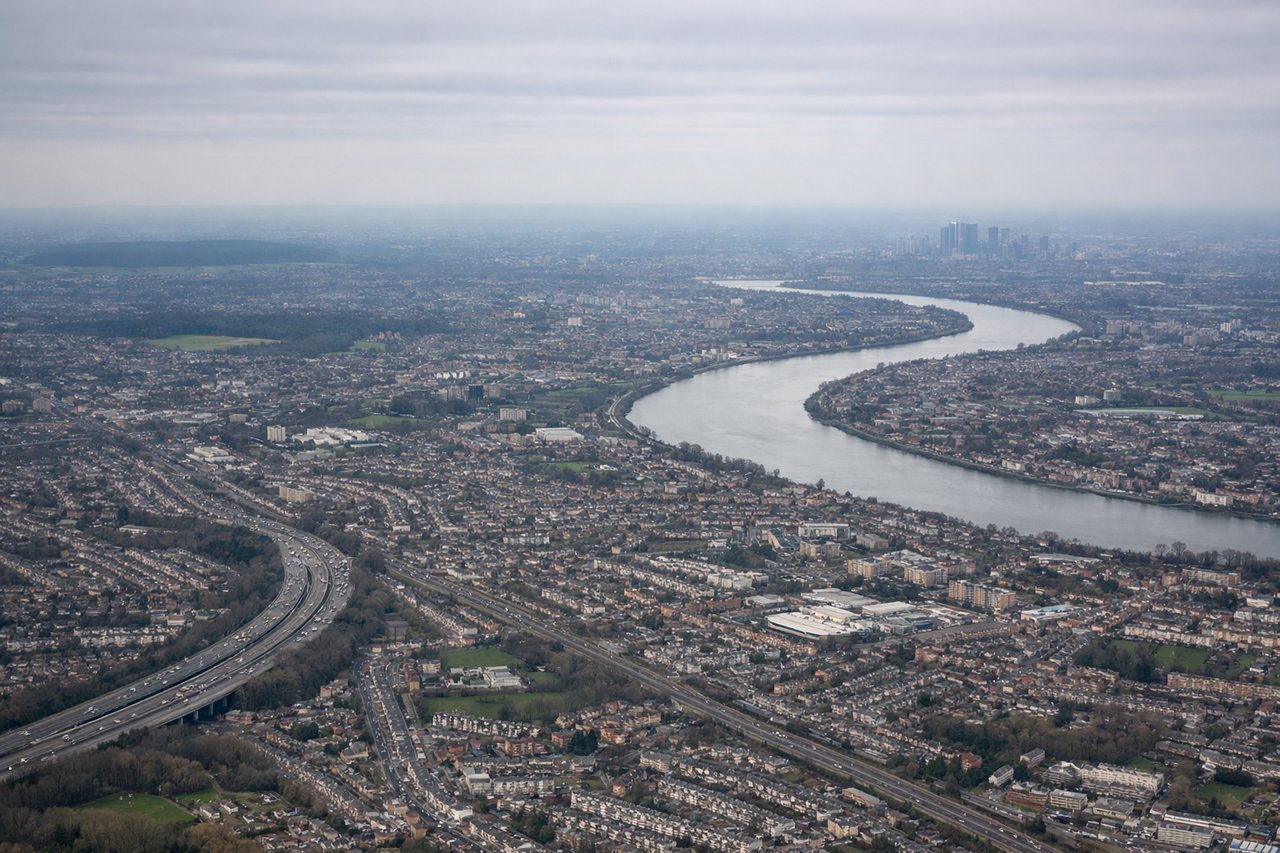
LEFTHeathrow predominantly uses westerly runways (09L/27R and 09R/27L), meaning aircraft typically approach from the east over London. On a left-side seat during approach, you get a panoramic view of central London — the Thames snaking through the city, the City of London, Canary Wharf towers, and the South Bank are all clearly visible on the left side as the aircraft tracks west over the city at low altitude.
Will your flight be in sunlight?
Pick a date and time in the Sun Map to watch the sun move across your whole flight.
About This Route
Which side of the plane should I sit on flying from Cairo International (CAI) to Heathrow (LHR)?
Sit on the Right side of the plane for the best views on flights from Cairo to London. The right side wins overall because the Cairo departure offers the genuinely spectacular and rare view of the Giza pyramids and Nile Delta — a once-in-a-trip visual that outweighs the London approach views. During the cruise, the right side also tracks closer to the Alps as the route passes over central Europe, offering distant views of Alpine peaks. The London approach on the left is excellent but London is a more commonly seen city from the air for many travelers.
What can I see during takeoff from Cairo International in Cairo?
During takeoff from Cairo International (CAI), sit on the Right side for the best views. Cairo International typically departs on runway 05R/23L or 05L/23R. On a northwestbound departure toward Europe, a right-side seat gives you a clear view south over the Nile Delta as it fans out toward the Mediterranean, with the dense urban grid of Cairo visible below and the Giza plateau with the pyramids briefly visible to the southwest before the aircraft turns. The desert contrast with the green Nile ribbon is striking from this side. Notable sights include: Nile Delta fanning toward the Mediterranean, Giza pyramid complex to the southwest, Cairo urban sprawl along the Nile, green agricultural strip of the Nile Valley contrasting with Eastern Desert.
What can I see when landing at Heathrow in London?
When landing at Heathrow (LHR), sit on the Left side for the best views. Heathrow predominantly uses westerly runways (09L/27R and 09R/27L), meaning aircraft typically approach from the east over London. On a left-side seat during approach, you get a panoramic view of central London — the Thames snaking through the city, the City of London, Canary Wharf towers, and the South Bank are all clearly visible on the left side as the aircraft tracks west over the city at low altitude. Notable sights include: River Thames winding through central London, Canary Wharf tower cluster in Docklands, City of London skyline, Windsor Castle and Windsor Great Park visible just before touchdown.
How long is the flight from Cairo to London?
The flight from Cairo International (CAI) to Heathrow (LHR) takes about 5 hours 30 minutes. The shortest flight path between them is 2,195 miles (3,533 km); winds and air traffic control usually add a few percent.
What does the Cairo to London flight path pass over?
The route crosses the Mediterranean Sea north of Egypt, then passes over Greece and the Aegean, crosses the Balkans over Bulgaria or Serbia, transits Austria or southern Germany with the Alps visible to the south or directly below depending on routing, crosses France, and enters UK airspace over the English Channel near the Strait of Dover before tracking west over southern England to Heathrow.