Cleveland to Milano is 4,292 miles (6,908 km), a flight of about 9 hours 15 minutes.
Left seats capture the more dramatic geography: the Lake Erie departure views are comparable on both sides, but the Alpine approach on the left is significantly more visually rewarding than a right-side descent over the flat Po plain.
Flight Path
The flight path crosses the Atlantic roughly along 45°N latitude, passing south of Newfoundland and north of the Azores. Over the Atlantic, no landmarks are visible. Approaching Europe, the flight enters airspace over the Bay of Biscay and southwestern France. The Pyrenees may be visible on the southern horizon during the final 2-3 hours of flight if conditions permit. The Alps become increasingly prominent in the final 90 minutes of descent, with Mont Blanc and the Mont-Blanc massif potentially visible to the southeast as you approach the Milan basin from the west.
Great circle distance and headings ›
.jpeg?width=600)

_Panoramica_del_centro_della_citt%C3%A0_dal_lago.jpg?width=600)


.jpg?width=600)
.jpg?width=600)
Phase by phase
Takeoff from CLE
RIGHTCLE typically departs runways 24L/24R (westbound) or 06L/06R (eastbound). For transatlantic flights, eastbound departures on 06L/06R are standard. Right-side seats face north during climb-out, offering views of Lake Erie's southern shoreline and the Cuyahoga River valley as you gain altitude.
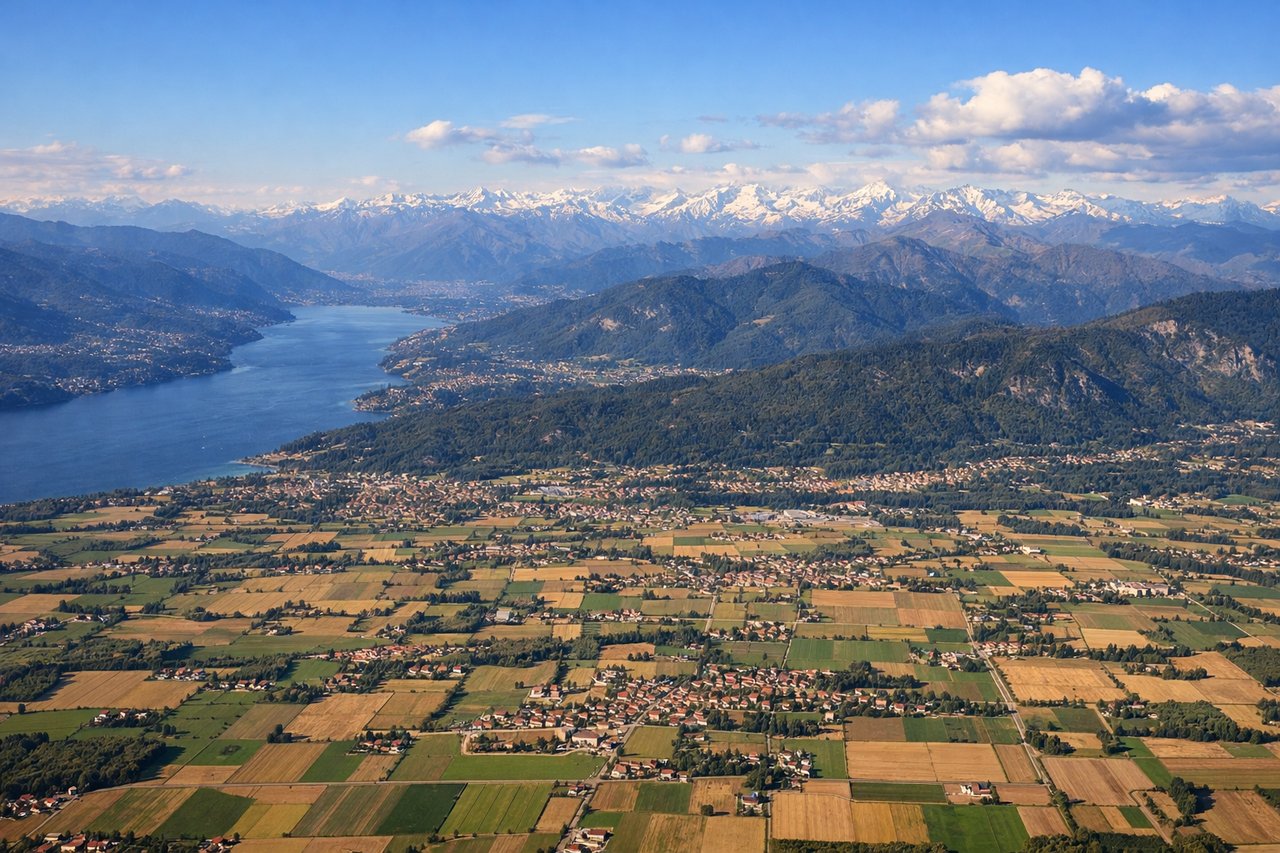
Landing at MXP
LEFTMalpensa (MXP) typically uses runways 11L/11R for arrivals from the west. Left-side seats during descent on approach heading 110° face south, providing views of the Ticino River valley, the Alpine foothills, and the Po River plain as you descend toward Milan.
Landmarks on this routeAll landmarks →
Will your flight be in sunlight?
Pick a date and time in the Sun Map to watch the sun move across your whole flight.
About This Route
Which side of the plane should I sit on flying from Cleveland Hopkins International (CLE) to Malpensa (MXP)?
Sit on the Left side of the plane for the best views on flights from Cleveland to Milano. Left seats capture the more dramatic geography: the Lake Erie departure views are comparable on both sides, but the Alpine approach on the left is significantly more visually rewarding than a right-side descent over the flat Po plain.
What can I see during takeoff from Cleveland Hopkins International in Cleveland?
During takeoff from Cleveland Hopkins International (CLE), sit on the Right side for the best views. CLE typically departs runways 24L/24R (westbound) or 06L/06R (eastbound). For transatlantic flights, eastbound departures on 06L/06R are standard. Right-side seats face north during climb-out, offering views of Lake Erie's southern shoreline and the Cuyahoga River valley as you gain altitude. Notable sights include: Lake Erie (immediate north), Cuyahoga River valley (west-northwest), Cleveland downtown skyline (briefly visible south), Geauga County farmland (northeast).
What can I see when landing at Malpensa in Milano?
When landing at Malpensa (MXP), sit on the Left side for the best views. Malpensa (MXP) typically uses runways 11L/11R for arrivals from the west. Left-side seats during descent on approach heading 110° face south, providing views of the Ticino River valley, the Alpine foothills, and the Po River plain as you descend toward Milan. Notable sights include: Ticino River valley (southwest approach), Alpine foothills and pre-Alps (south and southeast), Po River plain (east), Lombardy agricultural grid (foreground).
How long is the flight from Cleveland to Milano?
The flight from Cleveland Hopkins International (CLE) to Malpensa (MXP) takes about 9 hours 15 minutes. The shortest flight path between them is 4,292 miles (6,908 km); winds and air traffic control usually add a few percent.
What does the Cleveland to Milano flight path pass over?
The flight path crosses the Atlantic roughly along 45°N latitude, passing south of Newfoundland and north of the Azores. Over the Atlantic, no landmarks are visible. Approaching Europe, the flight enters airspace over the Bay of Biscay and southwestern France. The Pyrenees may be visible on the southern horizon during the final 2-3 hours of flight if conditions permit. The Alps become increasingly prominent in the final 90 minutes of descent, with Mont Blanc and the Mont-Blanc massif potentially visible to the southeast as you approach the Milan basin from the west.