Left wins at both ends. The Rocky Mountain panorama on departure is one of the great window seat moments in North American aviation, and the Thames approach into Heathrow on the left side gives you central London at low altitude. The right seat offers little at either end — flat plains on departure and north London suburbs on arrival.
Flown DEN to LHR? Did we get it right?
Flight Path
Denver to London is 4,658 miles (7,497 km), a flight of about 9 hours 30 minutes.
After departing Denver, the route tracks northeast over the Great Plains of Nebraska and Iowa, then crosses the Great Lakes region — Lake Michigan and Lake Erie may be visible depending on exact routing. The flight then crosses southern Canada (Ontario and Quebec), before heading out over the North Atlantic near Newfoundland. The mid-Atlantic portion is open ocean with occasional iceberg fields near Greenland if routing goes far north. Landfall over Ireland or southwest England brings green patchwork farmland before descending into London.
Great circle distance and headings ›

Phase by phase
Takeoff from DEN
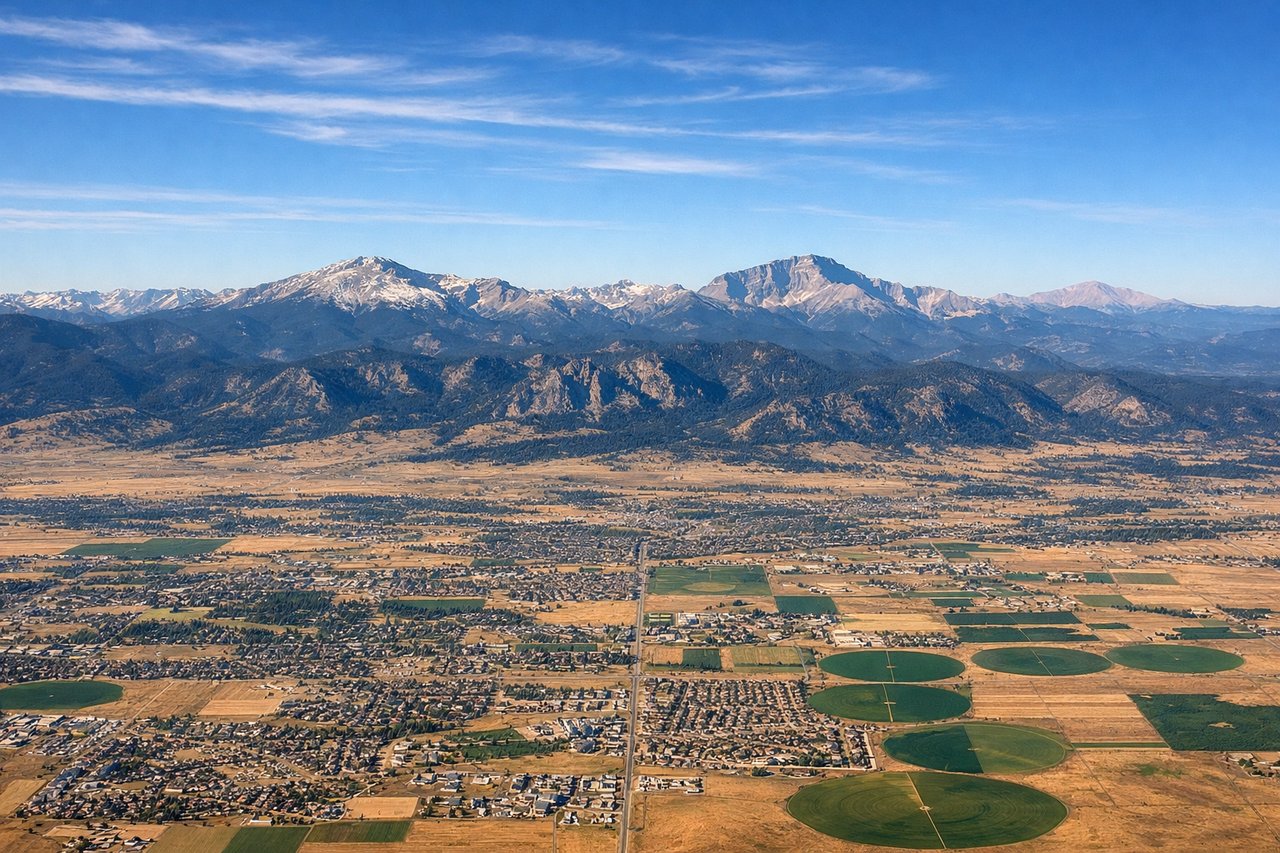
LEFTDEN typically departs eastward on runways 16R/34L or 8/26, but for northeast-bound transatlantic flights, aircraft often turn north then northeast after takeoff. A left (west-facing) seat gives you the full panorama of the Front Range of the Rocky Mountains — the entire stretch from Pikes Peak in the south to Longs Peak in the north — as the aircraft climbs and banks. This is the defining view of the Denver departure.
Landing at LHR
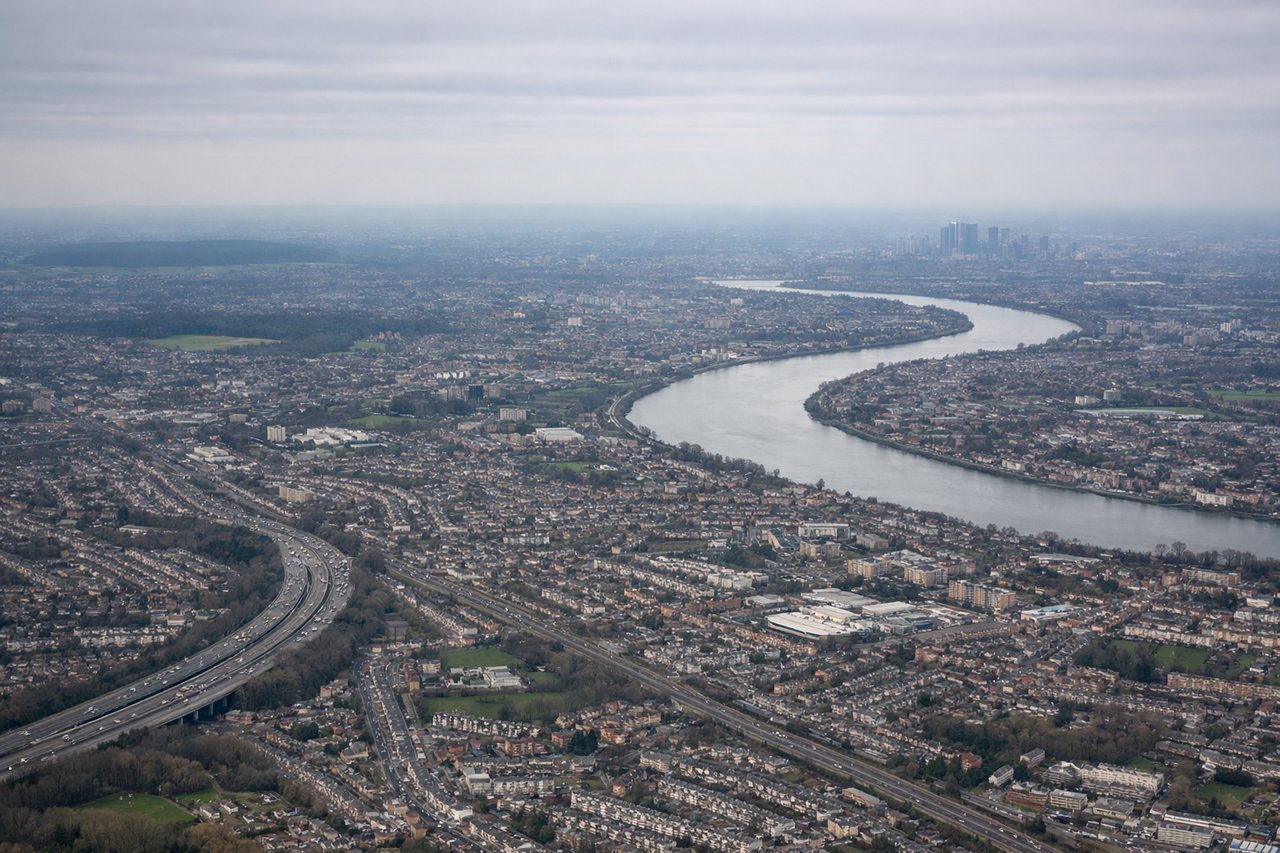
LEFTHeathrow predominantly uses westerly runways (09L/27R and 09R/27L), meaning aircraft typically approach from the east over London. On a standard ILS approach to runway 27L or 27R, the aircraft tracks west over central London at low altitude. A left (south-facing) seat gives you views over the Thames, central London landmarks, and the Surrey suburbs. The right seat looks north toward less distinctive outer suburbs.
Will your flight be in sunlight?
Pick a date and time in the Sun Map to watch the sun move across your whole flight.
About This Route
Which side of the plane should I sit on flying from Denver International (DEN) to Heathrow (LHR)?
Sit on the Left side of the plane for the best views on flights from Denver to London. Left wins at both ends. The Rocky Mountain panorama on departure is one of the great window seat moments in North American aviation, and the Thames approach into Heathrow on the left side gives you central London at low altitude. The right seat offers little at either end — flat plains on departure and north London suburbs on arrival.
What can I see during takeoff from Denver International in Denver?
During takeoff from Denver International (DEN), sit on the Left side for the best views. DEN typically departs eastward on runways 16R/34L or 8/26, but for northeast-bound transatlantic flights, aircraft often turn north then northeast after takeoff. A left (west-facing) seat gives you the full panorama of the Front Range of the Rocky Mountains — the entire stretch from Pikes Peak in the south to Longs Peak in the north — as the aircraft climbs and banks. This is the defining view of the Denver departure. Notable sights include: Front Range of the Rocky Mountains (Longs Peak, Mount Evans, Pikes Peak visible along the range), Denver city grid spreading across the plains below, Cherry Creek Reservoir southeast of the city, the distinctive white tent roof of DEN terminal receding below.
What can I see when landing at Heathrow in London?
When landing at Heathrow (LHR), sit on the Left side for the best views. Heathrow predominantly uses westerly runways (09L/27R and 09R/27L), meaning aircraft typically approach from the east over London. On a standard ILS approach to runway 27L or 27R, the aircraft tracks west over central London at low altitude. A left (south-facing) seat gives you views over the Thames, central London landmarks, and the Surrey suburbs. The right seat looks north toward less distinctive outer suburbs. Notable sights include: River Thames winding through central London, Windsor Castle and Windsor Great Park to the west, the dense rooftops of West London suburbs (Hounslow, Ealing), Wembley Stadium arch visible to the north on the right side.
How long is the flight from Denver to London?
The flight from Denver International (DEN) to Heathrow (LHR) takes about 9 hours 30 minutes. The shortest flight path between them is 4,658 miles (7,497 km); winds and air traffic control usually add a few percent.
What does the Denver to London flight path pass over?
After departing Denver, the route tracks northeast over the Great Plains of Nebraska and Iowa, then crosses the Great Lakes region — Lake Michigan and Lake Erie may be visible depending on exact routing. The flight then crosses southern Canada (Ontario and Quebec), before heading out over the North Atlantic near Newfoundland. The mid-Atlantic portion is open ocean with occasional iceberg fields near Greenland if routing goes far north. Landfall over Ireland or southwest England brings green patchwork farmland before descending into London.