The left side combines a genuine skyline view of Dallas at takeoff with the standout feature of the entire flight: the twin volcanoes flanking Mexico City on arrival. The right side offers only a distant, often hazy view of the Sierra Madre Oriental and lower western ranges, which is scenic but less distinctive.
Flight Path
Rio Grande valley crossing near the Texas-Mexico border, the northern Mexican plateau, and the distant Sierra Madre Oriental range paralleling the route to the west
Great circle distance and headings ›_(cropped).jpg?width=600)

Phase by phase
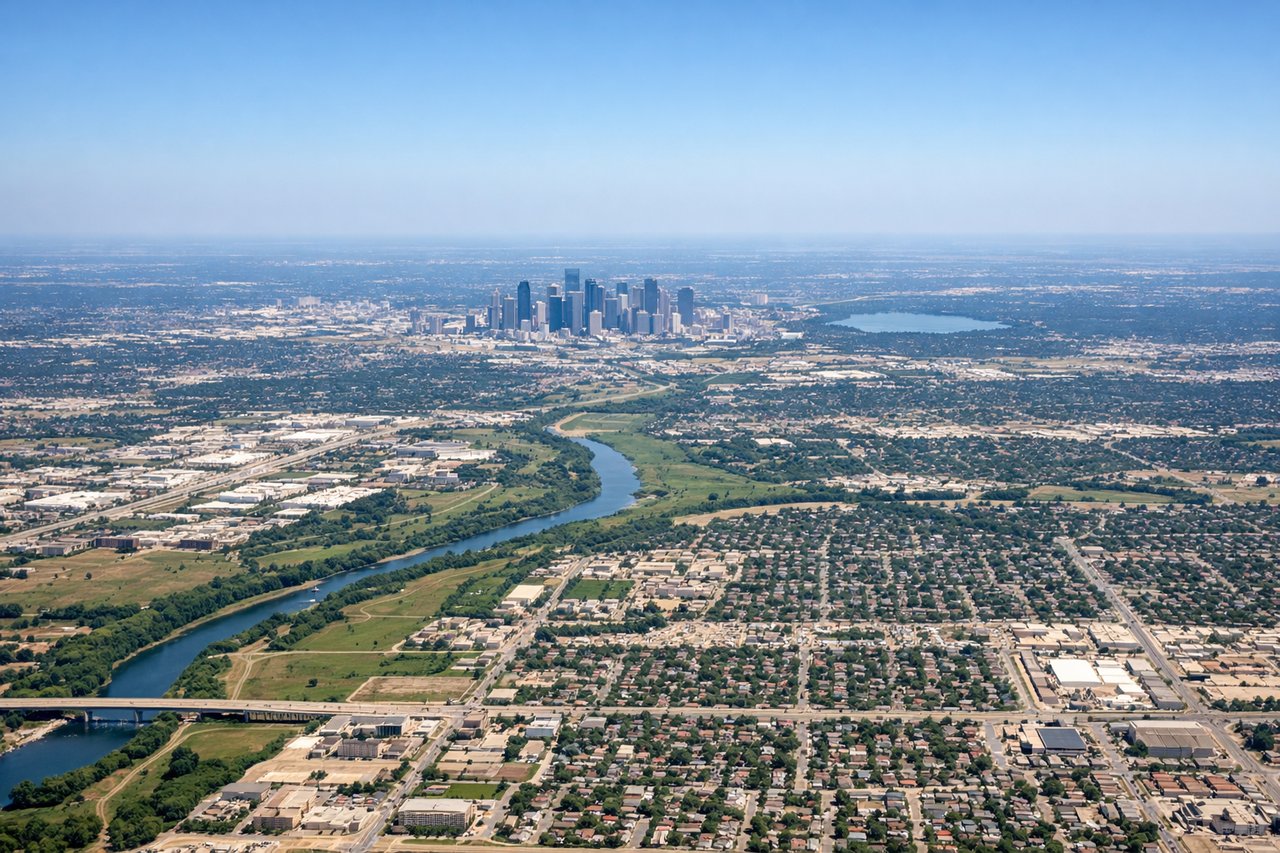
Takeoff from DFW
LEFTDeparting DFW southbound on the 17-series runways puts downtown Dallas's skyline on the left side during the initial climb, while Fort Worth's smaller skyline sits farther right and less prominently. The Dallas high-rises and Trinity River bends are the more visually distinct urban feature during climb-out.
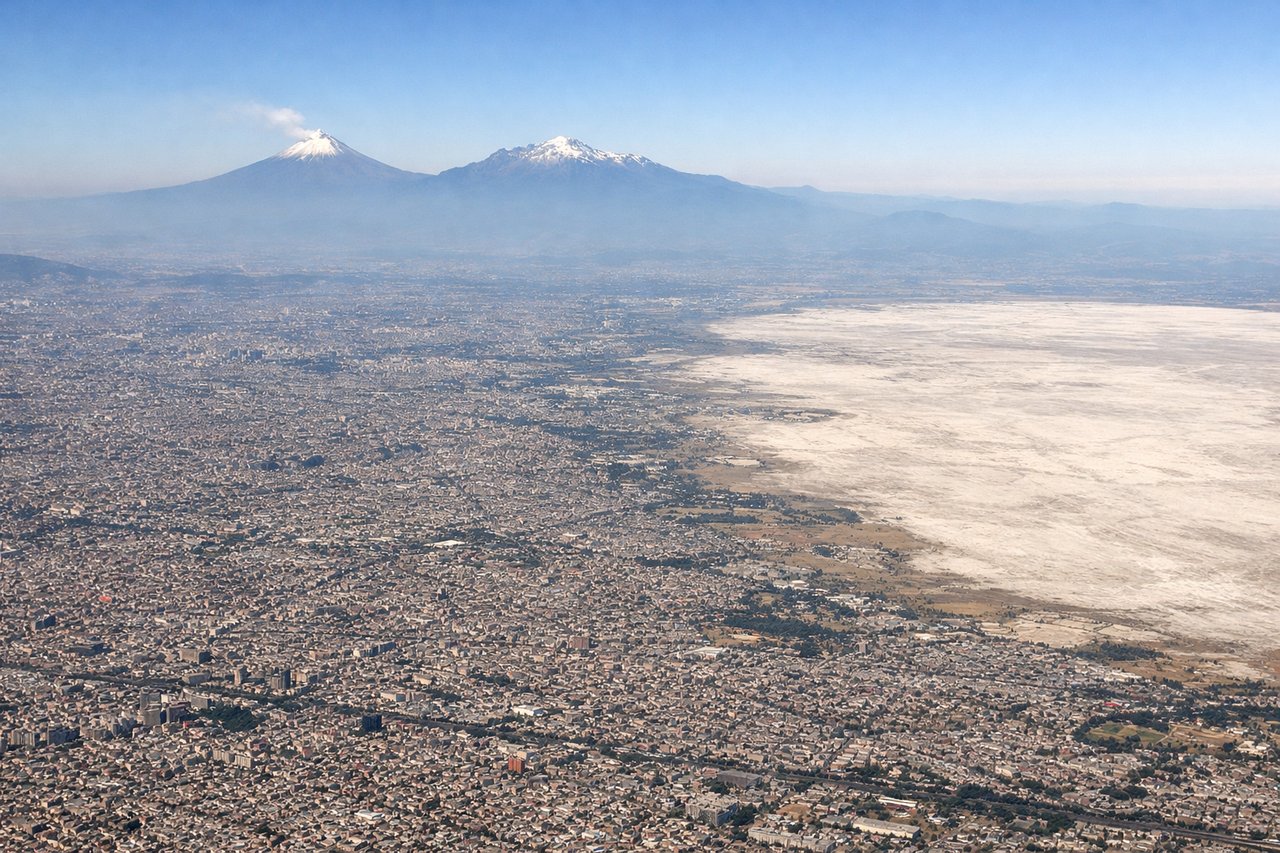
Landing at MEX
LEFTOn approach into Mexico City's high valley, the snow-capped volcanoes Popocatepetl and Iztaccihuatl sit east of the city, appearing on the left side as the aircraft descends from the north. These 5,000+ meter peaks are the single most dramatic landmark on the whole route, far more striking than the lower, hazier ranges visible to the right.
Landmarks on this routeAll landmarks →
Will your flight be in sunlight?
See exactly which side of the plane gets sun and shade at your departure time.
About This Route
Which side of the plane should I sit on flying from Dallas Fort Worth International (DFW) to Licenciado Benito Juarez International (MEX)?
Sit on the Left side of the plane for the best views on flights from Dallas-Fort Worth to Mexico City. The left side combines a genuine skyline view of Dallas at takeoff with the standout feature of the entire flight: the twin volcanoes flanking Mexico City on arrival. The right side offers only a distant, often hazy view of the Sierra Madre Oriental and lower western ranges, which is scenic but less distinctive.
What can I see during takeoff from Dallas Fort Worth International in Dallas-Fort Worth?
During takeoff from Dallas Fort Worth International (DFW), sit on the Left side for the best views. Departing DFW southbound on the 17-series runways puts downtown Dallas's skyline on the left side during the initial climb, while Fort Worth's smaller skyline sits farther right and less prominently. The Dallas high-rises and Trinity River bends are the more visually distinct urban feature during climb-out. Notable sights include: Downtown Dallas skyline, Trinity River, DFW airport's terminal complex below, Dallas-Fort Worth suburban sprawl.
What can I see when landing at Licenciado Benito Juarez International in Mexico City?
When landing at Licenciado Benito Juarez International (MEX), sit on the Left side for the best views. On approach into Mexico City's high valley, the snow-capped volcanoes Popocatepetl and Iztaccihuatl sit east of the city, appearing on the left side as the aircraft descends from the north. These 5,000+ meter peaks are the single most dramatic landmark on the whole route, far more striking than the lower, hazier ranges visible to the right. Notable sights include: Popocatepetl volcano, Iztaccihuatl volcano, Mexico City's basin sprawl, Sierra Madre Oriental foothills fading north.
How long is the flight from Dallas-Fort Worth to Mexico City?
The flight from Dallas Fort Worth International (DFW) to Licenciado Benito Juarez International (MEX) takes 2h 40m.
What does the Dallas-Fort Worth to Mexico City flight path pass over?
Rio Grande valley crossing near the Texas-Mexico border, the northern Mexican plateau, and the distant Sierra Madre Oriental range paralleling the route to the west