Dallas-Fort Worth to Omaha is 584 miles (940 km), a flight of about 1 hour 55 minutes.
The right side captures the dramatic Dallas skyline on departure and has decent views of the Red River crossing into Oklahoma and the Kansas Flint Hills in the mid-flight. The left side wins at landing but the right side delivers more visual interest across the full flight.
Flight Path
The flight tracks north-northeast over the Red River crossing from Texas into Oklahoma near Gainesville, then over the rolling Flint Hills of eastern Kansas, the Arkansas River valley near Wichita, and the flat agricultural plains of Nebraska before descending into Omaha. The terrain transitions from Texas scrubland to tallgrass prairie to the intensively farmed Nebraska plains.
Great circle distance and headings ›Phase by phase
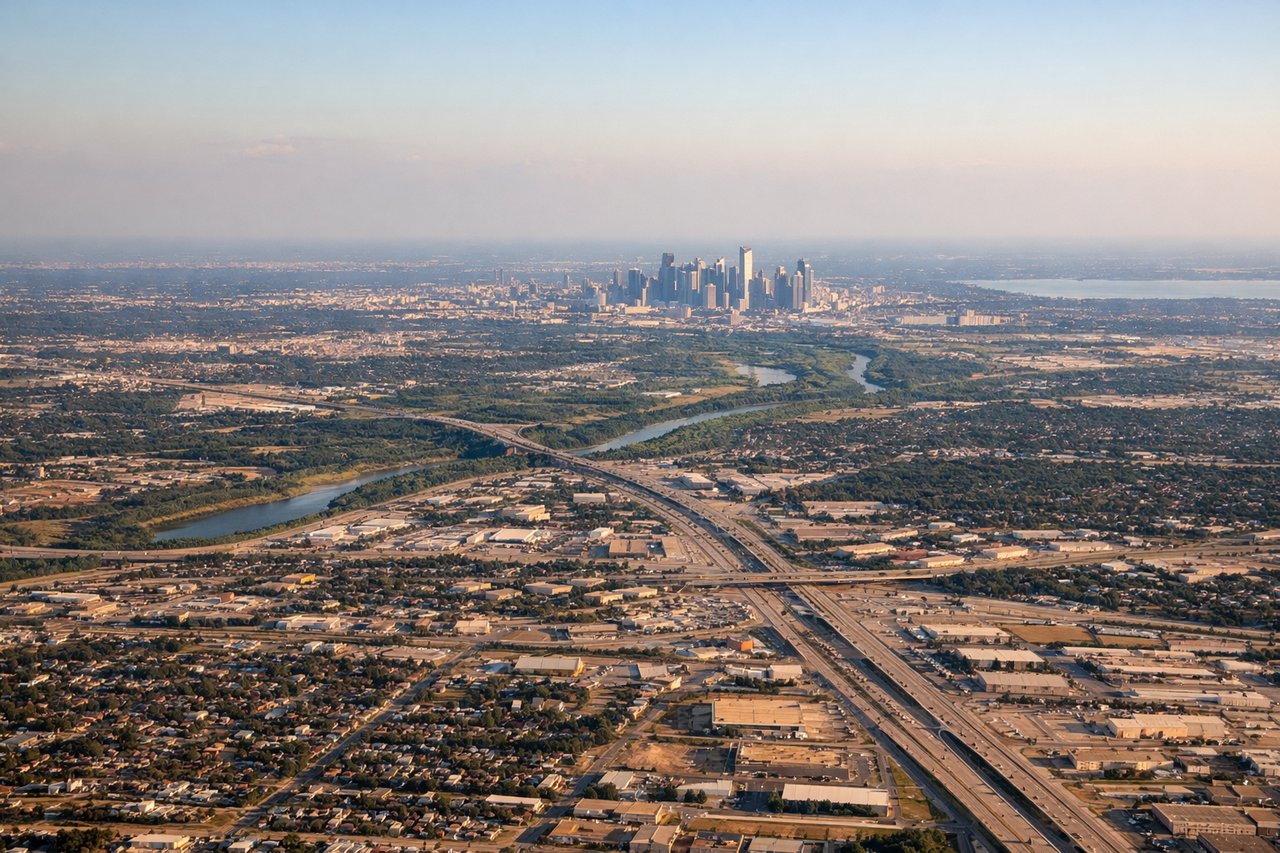
Takeoff from DFW
RIGHTDFW's primary departures to the north use runways 17L/35R and 18L/36R. Departing northbound on the west side runways, the right (east) side gives you a clear view over the DFW metroplex including downtown Dallas skyline and the sprawling urban grid. The left side faces west toward Fort Worth and open plains.
Landing at OMA
LEFTEppley Airfield sits on the east bank of the Missouri River, and aircraft typically approach from the south or southwest on runway 32 or 14. On approach from the south, the left (west) side gives a direct view of the Missouri River, the downtown Omaha skyline on the bluffs, and the river's wide bend separating Nebraska from Iowa.
Will your flight be in sunlight?
Pick a date and time in the Sun Map to watch the sun move across your whole flight.
About This Route
Which side of the plane should I sit on flying from Dallas Fort Worth International (DFW) to Eppley Afld (OMA)?
Sit on the Right side of the plane for the best views on flights from Dallas-Fort Worth to Omaha. The right side captures the dramatic Dallas skyline on departure and has decent views of the Red River crossing into Oklahoma and the Kansas Flint Hills in the mid-flight. The left side wins at landing but the right side delivers more visual interest across the full flight.
What can I see during takeoff from Dallas Fort Worth International in Dallas-Fort Worth?
During takeoff from Dallas Fort Worth International (DFW), sit on the Right side for the best views. DFW's primary departures to the north use runways 17L/35R and 18L/36R. Departing northbound on the west side runways, the right (east) side gives you a clear view over the DFW metroplex including downtown Dallas skyline and the sprawling urban grid. The left side faces west toward Fort Worth and open plains. Notable sights include: Downtown Dallas skyline, White Rock Lake, Lake Ray Hubbard to the east, the dense urban grid of the Metroplex.
What can I see when landing at Eppley Afld in Omaha?
When landing at Eppley Afld (OMA), sit on the Left side for the best views. Eppley Airfield sits on the east bank of the Missouri River, and aircraft typically approach from the south or southwest on runway 32 or 14. On approach from the south, the left (west) side gives a direct view of the Missouri River, the downtown Omaha skyline on the bluffs, and the river's wide bend separating Nebraska from Iowa. Notable sights include: Missouri River and its wide bend, downtown Omaha skyline, Council Bluffs Iowa across the river, Offutt Air Force Base to the south.
How long is the flight from Dallas-Fort Worth to Omaha?
The flight from Dallas Fort Worth International (DFW) to Eppley Afld (OMA) takes about 1 hour 55 minutes. The shortest flight path between them is 584 miles (940 km); winds and air traffic control usually add a few percent.
What does the Dallas-Fort Worth to Omaha flight path pass over?
The flight tracks north-northeast over the Red River crossing from Texas into Oklahoma near Gainesville, then over the rolling Flint Hills of eastern Kansas, the Arkansas River valley near Wichita, and the flat agricultural plains of Nebraska before descending into Omaha. The terrain transitions from Texas scrubland to tallgrass prairie to the intensively farmed Nebraska plains.