The right side wins both phases: a scenic coastal departure from Durban with ocean and harbor views, and a Manhattan skyline approach into JFK, while the left side offers only unremarkable inland or suburban terrain during those same segments.
Flight Path
The route crosses the Sahara Desert's sand seas over Sudan and Libya, the Mediterranean coastline near Egypt or Tunisia, and then a long stretch of open Atlantic Ocean between the Iberian Peninsula and the North American coast.
Great circle distance and headings ›.jpg?width=600)


.jpg?width=600)
Phase by phase
Takeoff from DUR
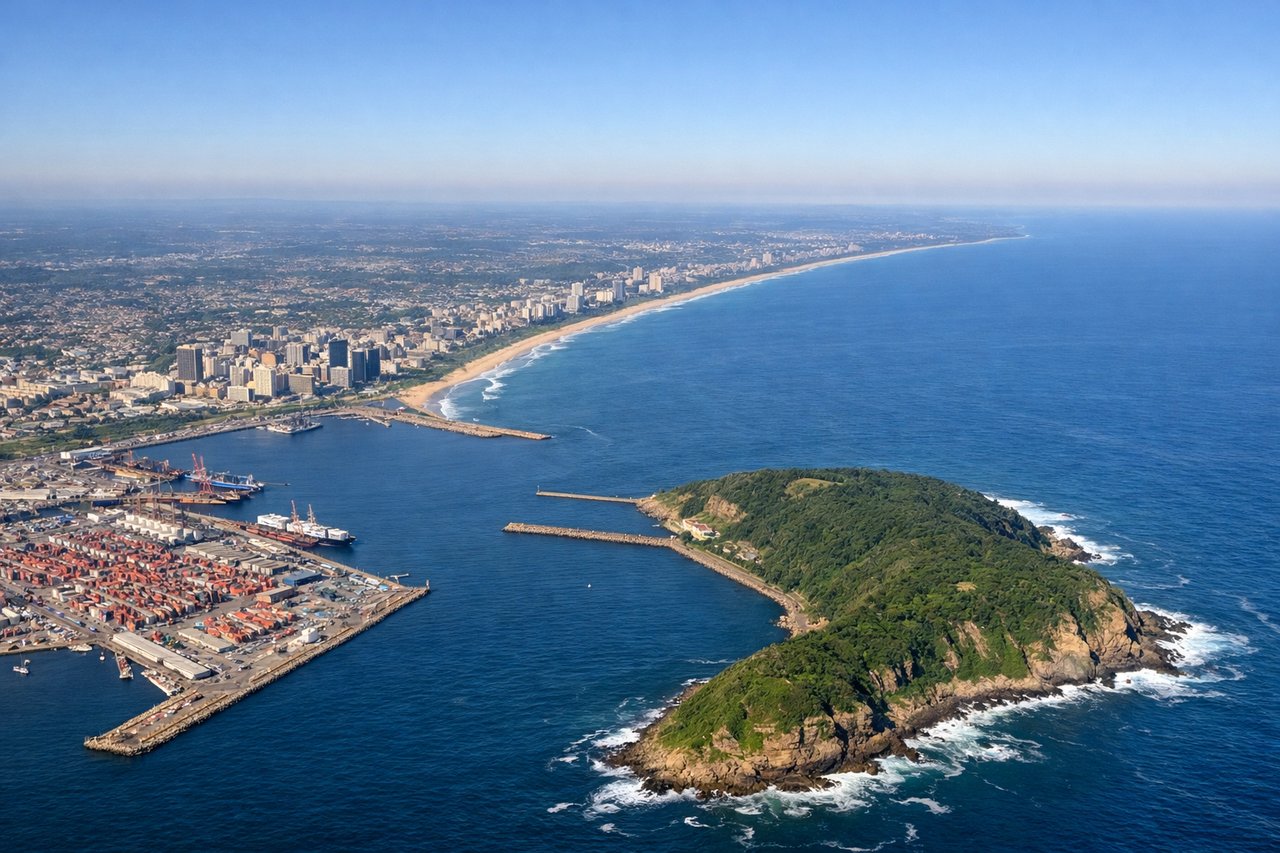
RIGHTDeparting Durban, the right side offers views of the Indian Ocean coastline, the Umgeni River mouth, and the city's harbor as the aircraft climbs out over the coast before turning north. The left side mostly shows inland KwaZulu-Natal hills, which are pleasant but less distinctive.
Landing at JFK
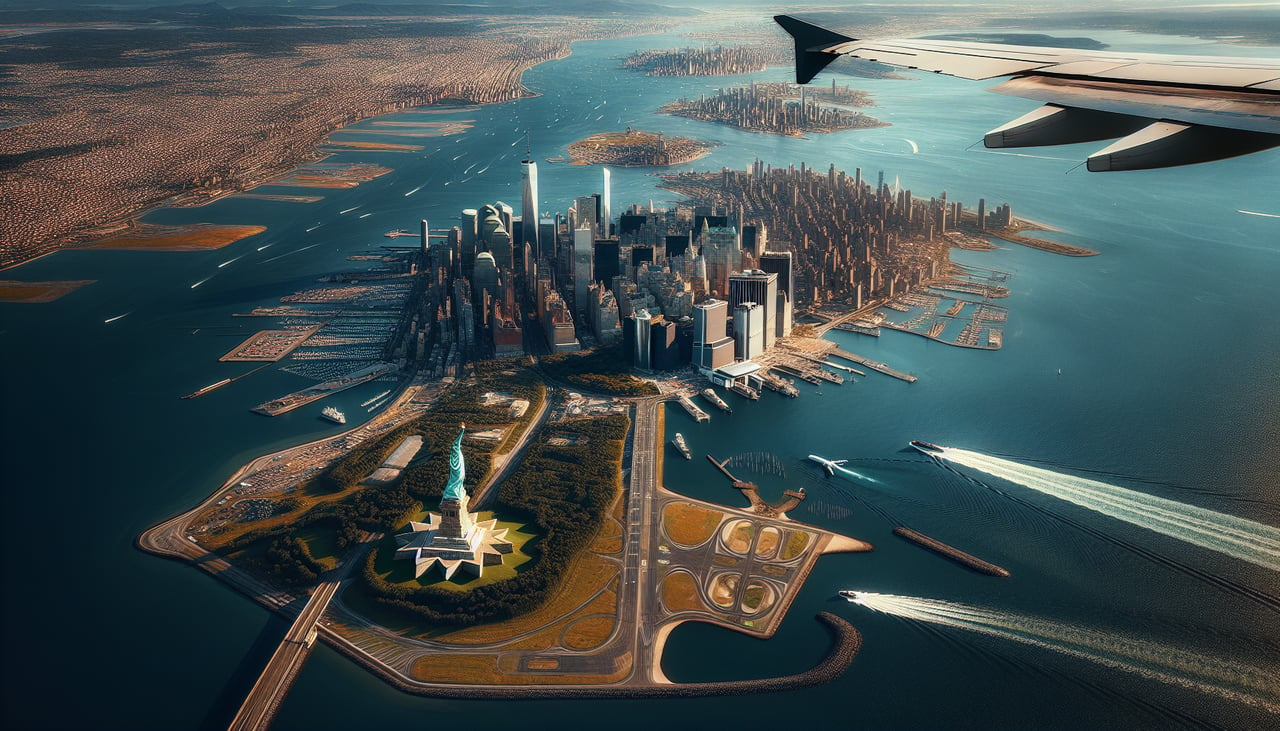
RIGHTOn typical JFK arrivals from the northeast, aircraft descend over Long Island before turning south for runway 22L/22R, putting the Manhattan skyline and Jamaica Bay wetlands on the right side of the aircraft. The left side mainly shows the flat, less distinctive suburbs of Nassau County.
Landmarks on this routeAll landmarks →
Will your flight be in sunlight?
See exactly which side of the plane gets sun and shade at your departure time.
About This Route
Which side of the plane should I sit on flying from King Shaka International Airport (DUR) to John F Kennedy International (JFK)?
Sit on the Right side of the plane for the best views on flights from Durban to New York. The right side wins both phases: a scenic coastal departure from Durban with ocean and harbor views, and a Manhattan skyline approach into JFK, while the left side offers only unremarkable inland or suburban terrain during those same segments.
What can I see during takeoff from King Shaka International Airport in Durban?
During takeoff from King Shaka International Airport (DUR), sit on the Right side for the best views. Departing Durban, the right side offers views of the Indian Ocean coastline, the Umgeni River mouth, and the city's harbor as the aircraft climbs out over the coast before turning north. The left side mostly shows inland KwaZulu-Natal hills, which are pleasant but less distinctive. Notable sights include: Durban Harbor, Indian Ocean coastline, Umgeni River mouth, Bluff headland.
What can I see when landing at John F Kennedy International in New York?
When landing at John F Kennedy International (JFK), sit on the Right side for the best views. On typical JFK arrivals from the northeast, aircraft descend over Long Island before turning south for runway 22L/22R, putting the Manhattan skyline and Jamaica Bay wetlands on the right side of the aircraft. The left side mainly shows the flat, less distinctive suburbs of Nassau County. Notable sights include: Manhattan skyline, Jamaica Bay, Rockaway Peninsula, Verrazzano-Narrows Bridge.
How long is the flight from Durban to New York?
The flight from King Shaka International Airport (DUR) to John F Kennedy International (JFK) takes 16h 45m.
What does the Durban to New York flight path pass over?
The route crosses the Sahara Desert's sand seas over Sudan and Libya, the Mediterranean coastline near Egypt or Tunisia, and then a long stretch of open Atlantic Ocean between the Iberian Peninsula and the North American coast.