While takeoff offers good coastal views on the right, the landing approach into DCA on the left provides more iconic and visually distinctive landmarks (Potomac River, National Mall, Washington Monument). The left side captures the most memorable part of this route.
Flown FLL to DCA? Did we get it right?
Flight Path
Fort Lauderdale to Washington is 901 miles (1,450 km), a flight of about 2 hours 25 minutes.
The flight path crosses inland Florida (Lake Okeechobee visible from altitude around 1.5 hours out), then transitions over Georgia and the Appalachian foothills. The Blue Ridge Mountains appear as a distant ridge on the horizon during cruise over North Carolina/Virginia. The Shenandoah Valley becomes visible in the final descent phase. No single dramatic midpoint landmark, but the gradual transition from flat coastal Florida to the rolling Piedmont and mountain terrain of the Southeast is geographically significant.
Great circle distance and headings ›Phase by phase
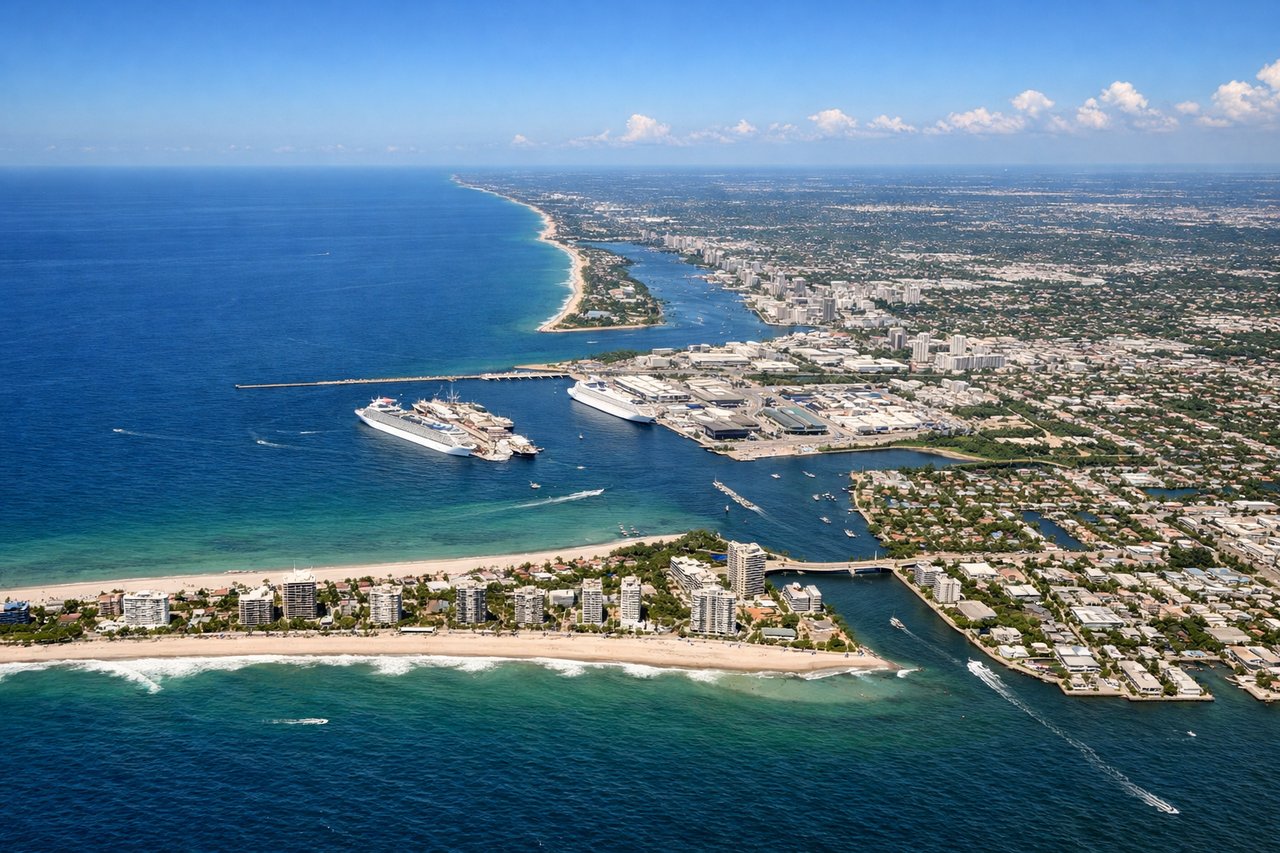
Takeoff from FLL
RIGHTFLL typically departs eastbound (runways 08L/08R or 09L/09R), so right-side seats face the Atlantic Ocean and the Florida coastline. You'll see the immediate beach development and offshore waters clearly during climb-out.
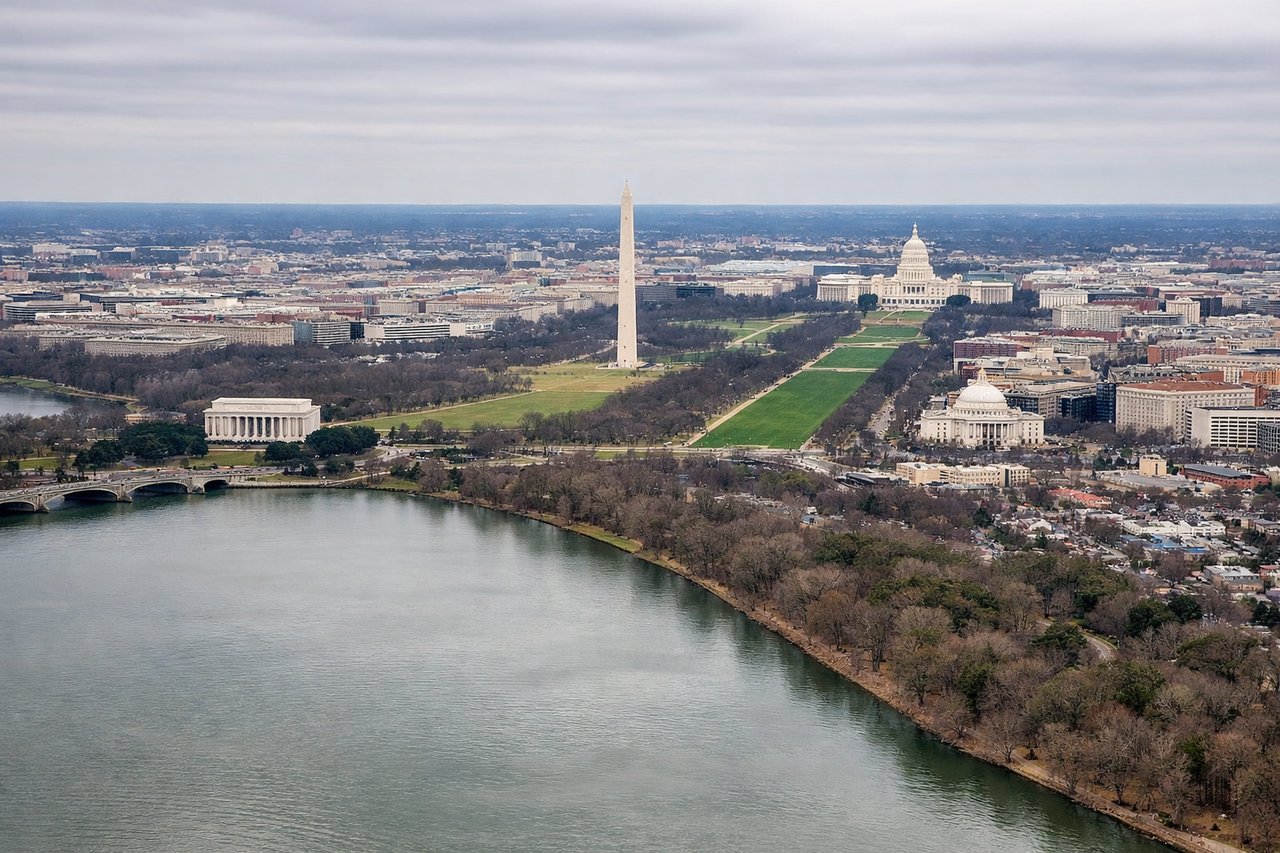
Landing at DCA
LEFTDCA approaches from the east over the Potomac River (typically runway 01 or 19 depending on wind). Left-side seats provide direct views of the Potomac River, the National Mall, and central Washington DC landmarks during descent.
Will your flight be in sunlight?
Pick a date and time in the Sun Map to watch the sun move across your whole flight.
About This Route
Which side of the plane should I sit on flying from Fort Lauderdale Hollywood International (FLL) to Ronald Reagan Washington National (DCA)?
Sit on the Left side of the plane for the best views on flights from Fort Lauderdale to Washington. While takeoff offers good coastal views on the right, the landing approach into DCA on the left provides more iconic and visually distinctive landmarks (Potomac River, National Mall, Washington Monument). The left side captures the most memorable part of this route.
What can I see during takeoff from Fort Lauderdale Hollywood International in Fort Lauderdale?
During takeoff from Fort Lauderdale Hollywood International (FLL), sit on the Right side for the best views. FLL typically departs eastbound (runways 08L/08R or 09L/09R), so right-side seats face the Atlantic Ocean and the Florida coastline. You'll see the immediate beach development and offshore waters clearly during climb-out. Notable sights include: Atlantic Ocean, Fort Lauderdale Beach and coastal strip, Port Everglades shipping channel, Intracoastal Waterway.
What can I see when landing at Ronald Reagan Washington National in Washington?
When landing at Ronald Reagan Washington National (DCA), sit on the Left side for the best views. DCA approaches from the east over the Potomac River (typically runway 01 or 19 depending on wind). Left-side seats provide direct views of the Potomac River, the National Mall, and central Washington DC landmarks during descent. Notable sights include: Potomac River, National Mall and Washington Monument, Tidal Basin, Arlington National Cemetery across the river.
How long is the flight from Fort Lauderdale to Washington?
The flight from Fort Lauderdale Hollywood International (FLL) to Ronald Reagan Washington National (DCA) takes about 2 hours 25 minutes. The shortest flight path between them is 901 miles (1,450 km); winds and air traffic control usually add a few percent.
What does the Fort Lauderdale to Washington flight path pass over?
The flight path crosses inland Florida (Lake Okeechobee visible from altitude around 1.5 hours out), then transitions over Georgia and the Appalachian foothills. The Blue Ridge Mountains appear as a distant ridge on the horizon during cruise over North Carolina/Virginia. The Shenandoah Valley becomes visible in the final descent phase. No single dramatic midpoint landmark, but the gradual transition from flat coastal Florida to the rolling Piedmont and mountain terrain of the Southeast is geographically significant.