The right side strings together the best moments of the whole flight: a glimpse of Houston's skyline at takeoff, the Alaska Range and Aleutian coastline during the long cruise, and Tokyo Bay with a possible Mount Fuji view on final approach, whereas the left side spends most of the flight over featureless open ocean.
Flight Path
The route's midpoint lies over the Gulf of Alaska and Aleutian Islands region, with the Alaska Range (and Denali, weather permitting) visible inland before the long crossing of the Bering Sea toward Kamchatka and northern Japan.
Great circle distance and headings ›.jpg?width=600)


Phase by phase

Takeoff from IAH
RIGHTDeparting IAH on a north-northwest heading (runway 33) puts downtown Houston's skyline and the Buffalo Bayou/Ship Channel area in view just after liftoff on the right side, while the left side looks out over flat, undeveloped Gulf Coastal plain.
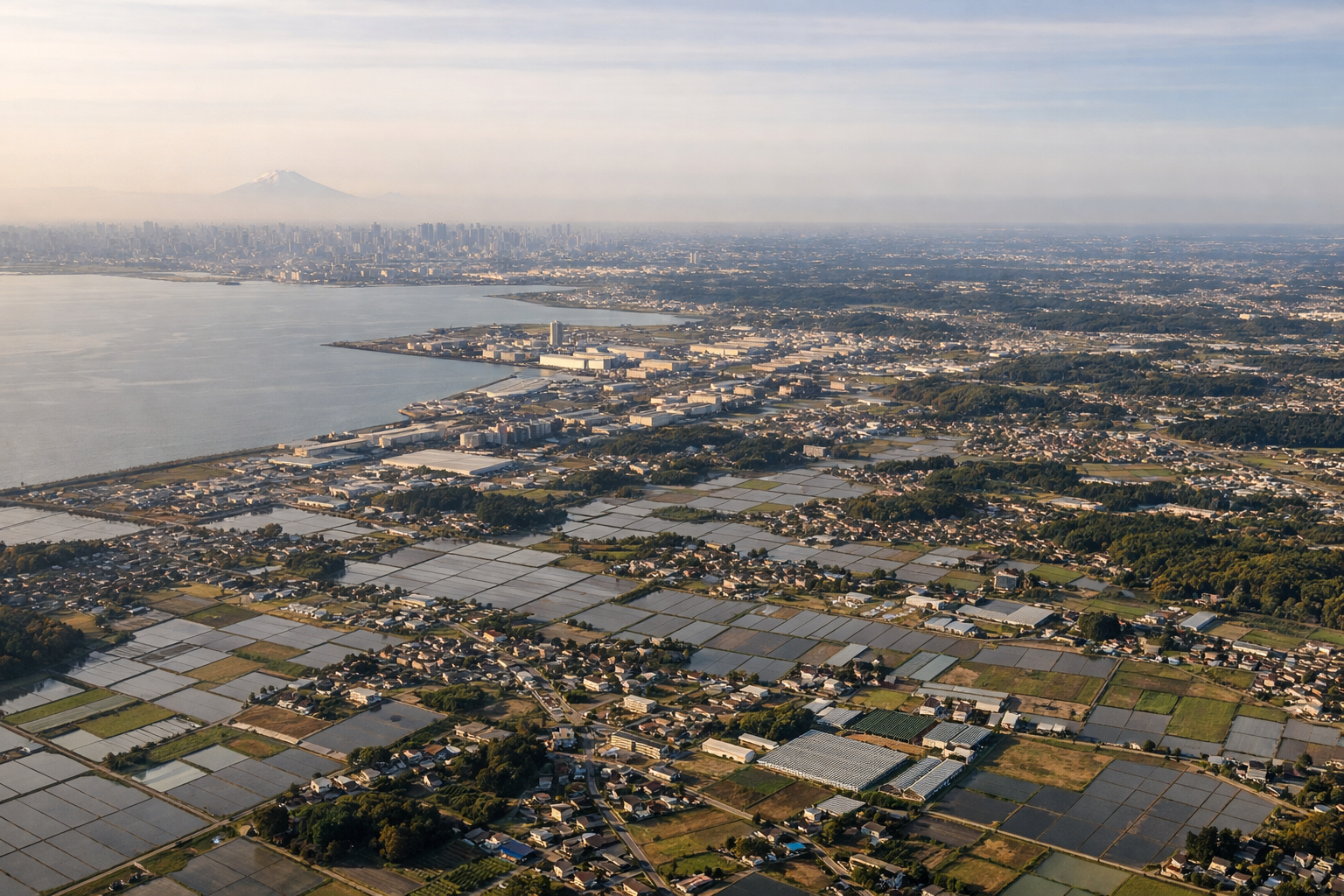
Landing at NRT
RIGHTOn approach into Narita landing toward the south (runway 16), the aircraft descends from the north over Chiba, putting Tokyo Bay, the Tokyo skyline, and on clear days Mount Fuji's silhouette on the right side, while the left side faces open Pacific coastline.
Landmarks on this routeAll landmarks →
Will your flight be in sunlight?
See exactly which side of the plane gets sun and shade at your departure time.
About This Route
Which side of the plane should I sit on flying from George Bush Intcntl Houston (IAH) to New Tokyo International (NRT)?
Sit on the Right side of the plane for the best views on flights from Houston to Tokyo. The right side strings together the best moments of the whole flight: a glimpse of Houston's skyline at takeoff, the Alaska Range and Aleutian coastline during the long cruise, and Tokyo Bay with a possible Mount Fuji view on final approach, whereas the left side spends most of the flight over featureless open ocean.
What can I see during takeoff from George Bush Intcntl Houston in Houston?
During takeoff from George Bush Intcntl Houston (IAH), sit on the Right side for the best views. Departing IAH on a north-northwest heading (runway 33) puts downtown Houston's skyline and the Buffalo Bayou/Ship Channel area in view just after liftoff on the right side, while the left side looks out over flat, undeveloped Gulf Coastal plain. Notable sights include: Downtown Houston skyline, Buffalo Bayou, Houston Ship Channel, flat Gulf Coastal plain.
What can I see when landing at New Tokyo International in Tokyo?
When landing at New Tokyo International (NRT), sit on the Right side for the best views. On approach into Narita landing toward the south (runway 16), the aircraft descends from the north over Chiba, putting Tokyo Bay, the Tokyo skyline, and on clear days Mount Fuji's silhouette on the right side, while the left side faces open Pacific coastline. Notable sights include: Tokyo Bay, Tokyo skyline, Mount Fuji (clear days), Chiba farmland patchwork.
How long is the flight from Houston to Tokyo?
The flight from George Bush Intcntl Houston (IAH) to New Tokyo International (NRT) takes 13h 45m.
What does the Houston to Tokyo flight path pass over?
The route's midpoint lies over the Gulf of Alaska and Aleutian Islands region, with the Alaska Range (and Denali, weather permitting) visible inland before the long crossing of the Bering Sea toward Kamchatka and northern Japan.