The right side wins overall because it combines the dramatic NYC skyline departure with intermittent glimpses of the Florida and Bahamas coastline during cruise, giving more varied scenery across the full flight than the largely open-ocean left side.
Flight Path
The flight path crosses the Atlantic seaboard near Cape Hatteras, passes over or near the northern Bahamas (Great Abaco, Andros), and continues over the Straits of Florida and the northern coast of Cuba before crossing the Yucatan Channel into Cancun.
Great circle distance and headings ›.jpg?width=600)

Phase by phase
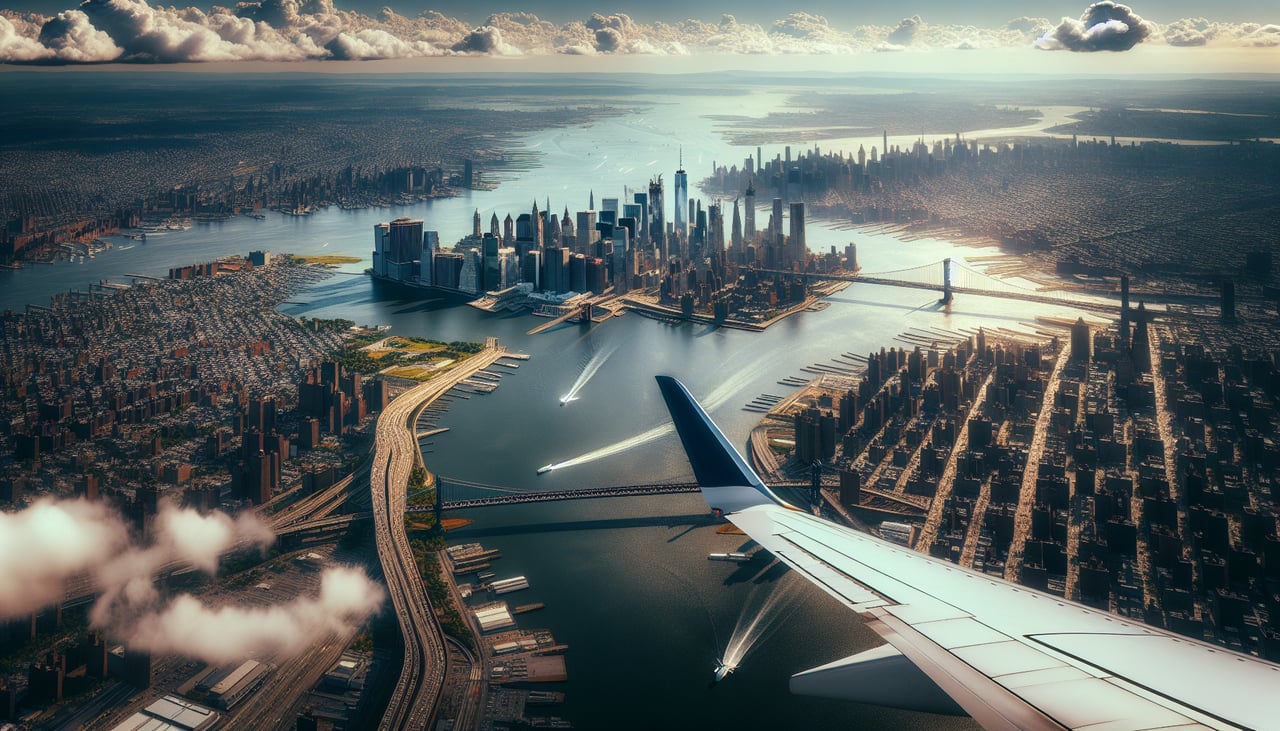
Takeoff from JFK
RIGHTDeparting JFK southbound, the right side offers a clear view of the New York City skyline and Long Island's coastline as the aircraft climbs and banks south over Jamaica Bay. This is a strong, recognizable urban view that the left (ocean-facing) side lacks.
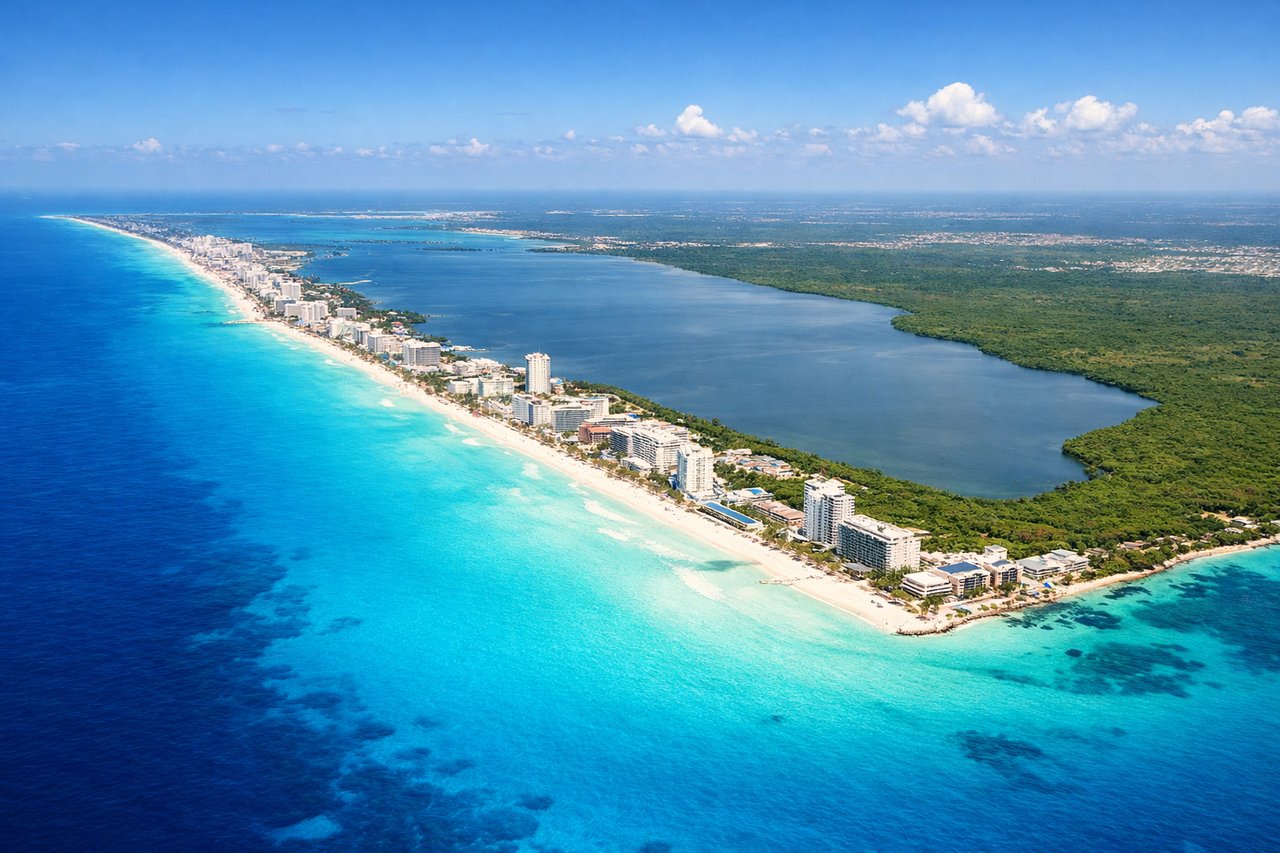
Landing at CUN
LEFTOn approach into Cancun via runway 12, the aircraft descends from the north over the Caribbean, giving the left side sweeping views of turquoise water, Isla Mujeres, and the barrier reef before crossing into the hotel zone and jungle. This is a much richer visual than the plain jungle canopy seen on the right.
Landmarks on this routeAll landmarks →
Will your flight be in sunlight?
See exactly which side of the plane gets sun and shade at your departure time.
About This Route
Which side of the plane should I sit on flying from John F Kennedy International (JFK) to Cancun International (CUN)?
Sit on the Right side of the plane for the best views on flights from New York to Cancun. The right side wins overall because it combines the dramatic NYC skyline departure with intermittent glimpses of the Florida and Bahamas coastline during cruise, giving more varied scenery across the full flight than the largely open-ocean left side.
What can I see during takeoff from John F Kennedy International in New York?
During takeoff from John F Kennedy International (JFK), sit on the Right side for the best views. Departing JFK southbound, the right side offers a clear view of the New York City skyline and Long Island's coastline as the aircraft climbs and banks south over Jamaica Bay. This is a strong, recognizable urban view that the left (ocean-facing) side lacks. Notable sights include: Manhattan skyline, Verrazzano-Narrows Bridge, Jamaica Bay, Rockaway Peninsula.
What can I see when landing at Cancun International in Cancun?
When landing at Cancun International (CUN), sit on the Left side for the best views. On approach into Cancun via runway 12, the aircraft descends from the north over the Caribbean, giving the left side sweeping views of turquoise water, Isla Mujeres, and the barrier reef before crossing into the hotel zone and jungle. This is a much richer visual than the plain jungle canopy seen on the right. Notable sights include: Isla Mujeres, Caribbean turquoise shallows, Cancun hotel zone lagoon, coastal reef line.
How long is the flight from New York to Cancun?
The flight from John F Kennedy International (JFK) to Cancun International (CUN) takes 4h 05m.
What does the New York to Cancun flight path pass over?
The flight path crosses the Atlantic seaboard near Cape Hatteras, passes over or near the northern Bahamas (Great Abaco, Andros), and continues over the Straits of Florida and the northern coast of Cuba before crossing the Yucatan Channel into Cancun.