While the JFK takeoff favors the right side with the New York skyline, that view is brief compared to the dramatic volcanic approach into Mexico City on the left, which offers a longer, more visually striking sequence with Popocatépetl and Iztaccíhuatl dominating the descent.
Flight Path
The route crosses the Appalachian foothills of Virginia, then heads out over the Gulf of Mexico before making landfall near the Mexican coast and climbing over the eastern edge of the Sierra Madre Oriental on the approach to the high central plateau.
Great circle distance and headings ›.jpg?width=600)
.jpeg?width=600)


_(cropped).jpg?width=600)
Phase by phase
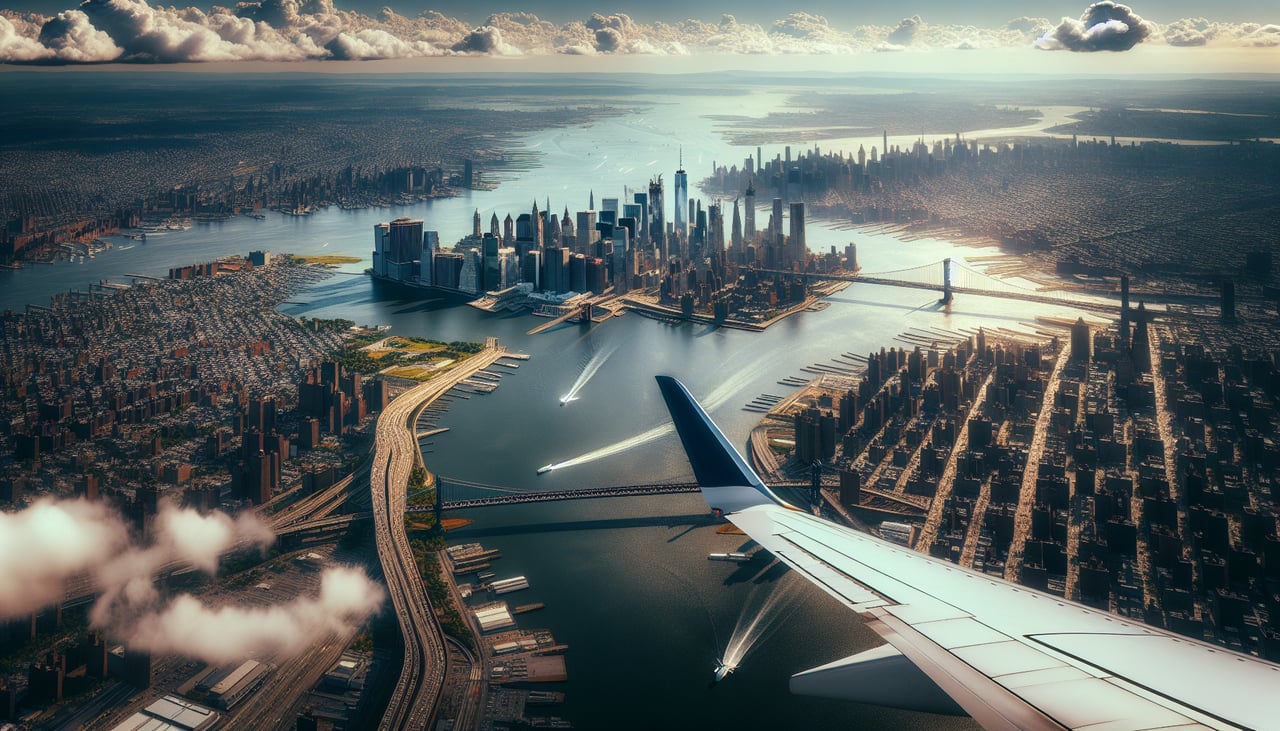
Takeoff from JFK
RIGHTDepartures from JFK toward the southwest typically use runway 13L/13R, banking right over Brooklyn and the harbor before turning onto course. This puts the Manhattan skyline, the Verrazzano-Narrows Bridge, and the Jersey Shore coastline on the right side of the aircraft during the initial climb.
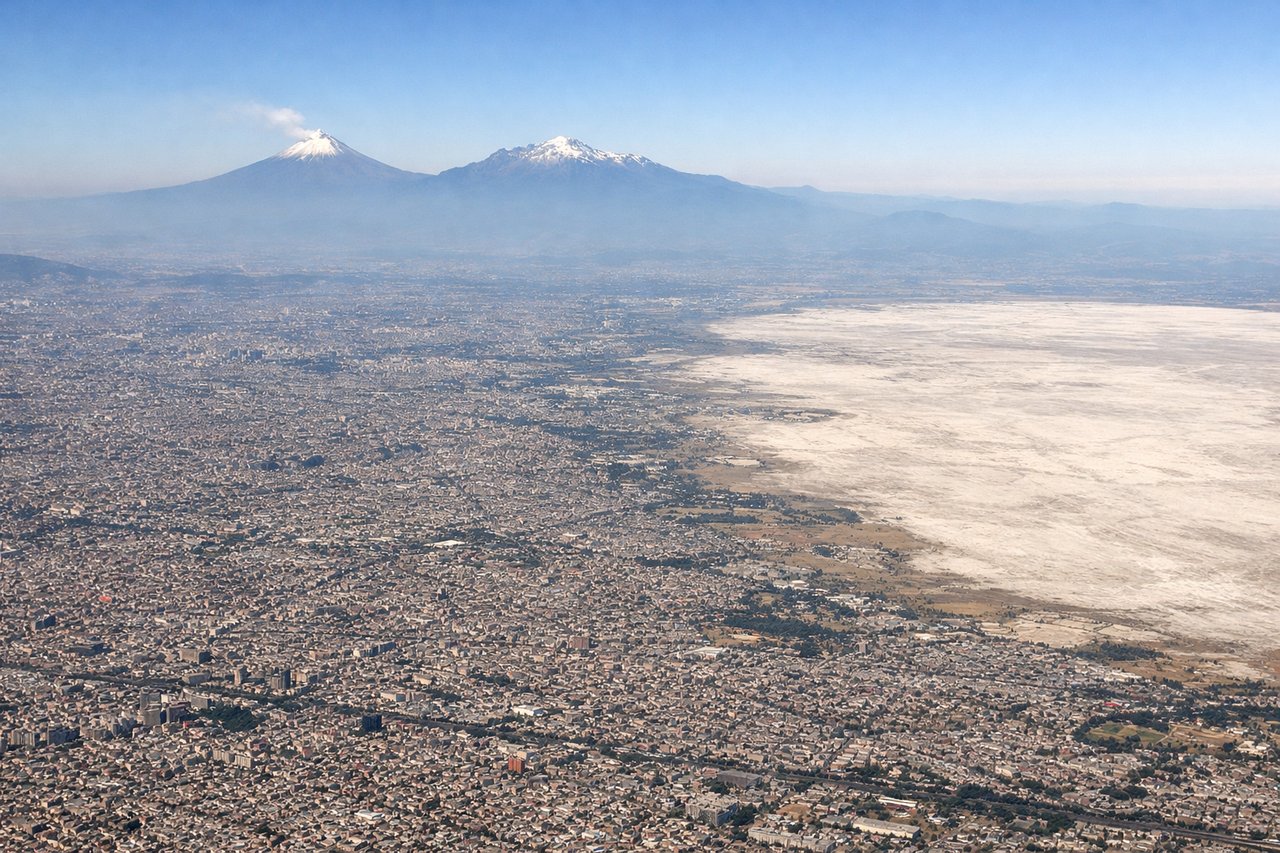
Landing at MEX
LEFTArriving from the northeast, the aircraft descends toward Mexico City with the snow-capped volcanoes Popocatépetl and Iztaccíhuatl visible to the south of the flight path, appearing on the left side as the plane aligns with the runway. These massive, dramatically isolated peaks rising above the high plateau make for a striking final descent.
Landmarks on this routeAll landmarks →
Will your flight be in sunlight?
See exactly which side of the plane gets sun and shade at your departure time.
About This Route
Which side of the plane should I sit on flying from John F Kennedy International (JFK) to Licenciado Benito Juarez International (MEX)?
Sit on the Left side of the plane for the best views on flights from New York to Mexico City. While the JFK takeoff favors the right side with the New York skyline, that view is brief compared to the dramatic volcanic approach into Mexico City on the left, which offers a longer, more visually striking sequence with Popocatépetl and Iztaccíhuatl dominating the descent.
What can I see during takeoff from John F Kennedy International in New York?
During takeoff from John F Kennedy International (JFK), sit on the Right side for the best views. Departures from JFK toward the southwest typically use runway 13L/13R, banking right over Brooklyn and the harbor before turning onto course. This puts the Manhattan skyline, the Verrazzano-Narrows Bridge, and the Jersey Shore coastline on the right side of the aircraft during the initial climb. Notable sights include: Manhattan skyline, Verrazzano-Narrows Bridge, Jamaica Bay, New Jersey coastline.
What can I see when landing at Licenciado Benito Juarez International in Mexico City?
When landing at Licenciado Benito Juarez International (MEX), sit on the Left side for the best views. Arriving from the northeast, the aircraft descends toward Mexico City with the snow-capped volcanoes Popocatépetl and Iztaccíhuatl visible to the south of the flight path, appearing on the left side as the plane aligns with the runway. These massive, dramatically isolated peaks rising above the high plateau make for a striking final descent. Notable sights include: Popocatépetl volcano, Iztaccíhuatl volcano, Sierra Nevada range, Valley of Mexico basin.
How long is the flight from New York to Mexico City?
The flight from John F Kennedy International (JFK) to Licenciado Benito Juarez International (MEX) takes 5h 05m.
What does the New York to Mexico City flight path pass over?
The route crosses the Appalachian foothills of Virginia, then heads out over the Gulf of Mexico before making landfall near the Mexican coast and climbing over the eastern edge of the Sierra Madre Oriental on the approach to the high central plateau.