While takeoff offers interesting coastal views, the landing approach provides more dramatic and distinctive scenery. The volcanic landscape of El Salvador—particularly San Salvador volcano and Lake Ilopango—offers more visually striking features than the relatively flat Long Island terrain at departure.
Flown JFK to SAL? Did we get it right?
Flight Path
New York to San Salvador is 2,094 miles (3,369 km), a flight of about 5 hours.
The flight path crosses the Caribbean Sea and passes over or near the Yucatan Peninsula (visible as a low-lying landmass with cenotes and limestone formations), then continues south over the Gulf of Honduras and the Caribbean coast of Central America. The Mesoamerican Barrier Reef system lies to the east of the flight path. As you approach El Salvador, the Sierra Madre mountain range becomes visible, running parallel to the Pacific coast.
Great circle distance and headings ›

Phase by phase
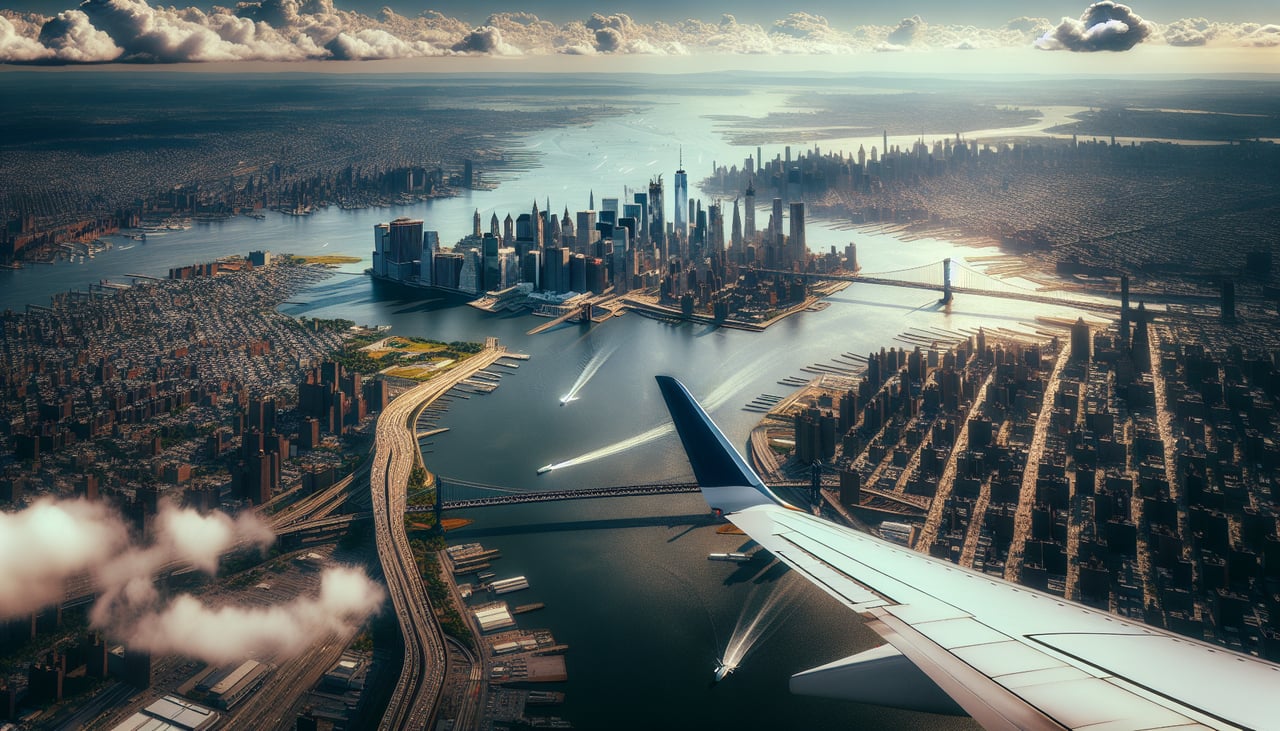
Takeoff from JFK
RIGHTRight-side seats offer views of Long Island Sound and the Connecticut coastline during the initial climb-out heading south-southwest. You'll see the intricate pattern of Long Island's north shore inlets and barrier islands receding beneath the aircraft.
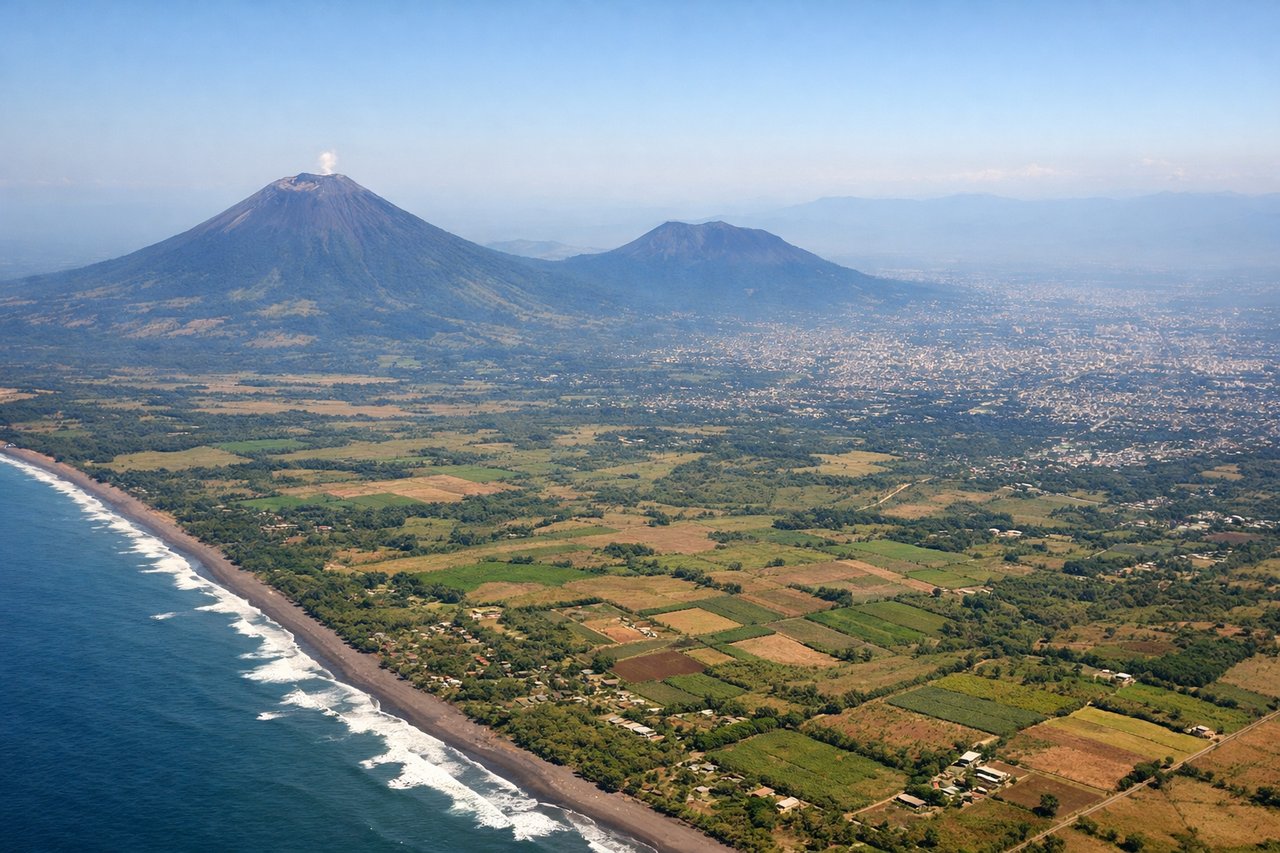
Landing at SAL
LEFTLeft-side seats provide excellent views of El Salvador's volcanic landscape during descent. You'll see the Central American highlands, including views of the volcanic peaks that ring San Salvador, and the approach over the Salvadoran countryside with its distinctive green valleys.
Will your flight be in sunlight?
Pick a date and time in the Sun Map to watch the sun move across your whole flight.
About This Route
Which side of the plane should I sit on flying from John F Kennedy International (JFK) to El Salvador International (SAL)?
Sit on the Left side of the plane for the best views on flights from New York to San Salvador. While takeoff offers interesting coastal views, the landing approach provides more dramatic and distinctive scenery. The volcanic landscape of El Salvador—particularly San Salvador volcano and Lake Ilopango—offers more visually striking features than the relatively flat Long Island terrain at departure.
What can I see during takeoff from John F Kennedy International in New York?
During takeoff from John F Kennedy International (JFK), sit on the Right side for the best views. Right-side seats offer views of Long Island Sound and the Connecticut coastline during the initial climb-out heading south-southwest. You'll see the intricate pattern of Long Island's north shore inlets and barrier islands receding beneath the aircraft. Notable sights include: Long Island Sound, Connecticut coastline, Jamaica Bay marshlands, Atlantic Ocean horizon.
What can I see when landing at El Salvador International in San Salvador?
When landing at El Salvador International (SAL), sit on the Left side for the best views. Left-side seats provide excellent views of El Salvador's volcanic landscape during descent. You'll see the Central American highlands, including views of the volcanic peaks that ring San Salvador, and the approach over the Salvadoran countryside with its distinctive green valleys. Notable sights include: Salvadoran volcanic highlands, San Salvador volcano, Lake Ilopango, Pacific coastal plains.
How long is the flight from New York to San Salvador?
The flight from John F Kennedy International (JFK) to El Salvador International (SAL) takes about 5 hours. The shortest flight path between them is 2,094 miles (3,369 km); winds and air traffic control usually add a few percent.
What does the New York to San Salvador flight path pass over?
The flight path crosses the Caribbean Sea and passes over or near the Yucatan Peninsula (visible as a low-lying landmass with cenotes and limestone formations), then continues south over the Gulf of Honduras and the Caribbean coast of Central America. The Mesoamerican Barrier Reef system lies to the east of the flight path. As you approach El Salvador, the Sierra Madre mountain range becomes visible, running parallel to the Pacific coast.