The right side wins narrowly because the Manhattan skyline view during takeoff is a longer, more dramatic sequence than the brief final-approach glimpse of Toronto, and the right side also has a chance at catching the Finger Lakes region during cruise.
Flight Path
Appalachian ridgelines over northeastern Pennsylvania, the Finger Lakes region of central New York (Seneca and Cayuga Lakes), and the southern shoreline of Lake Ontario before the descent into Toronto
Great circle distance and headings ›.jpg?width=600)
.jpeg?width=600)

Phase by phase
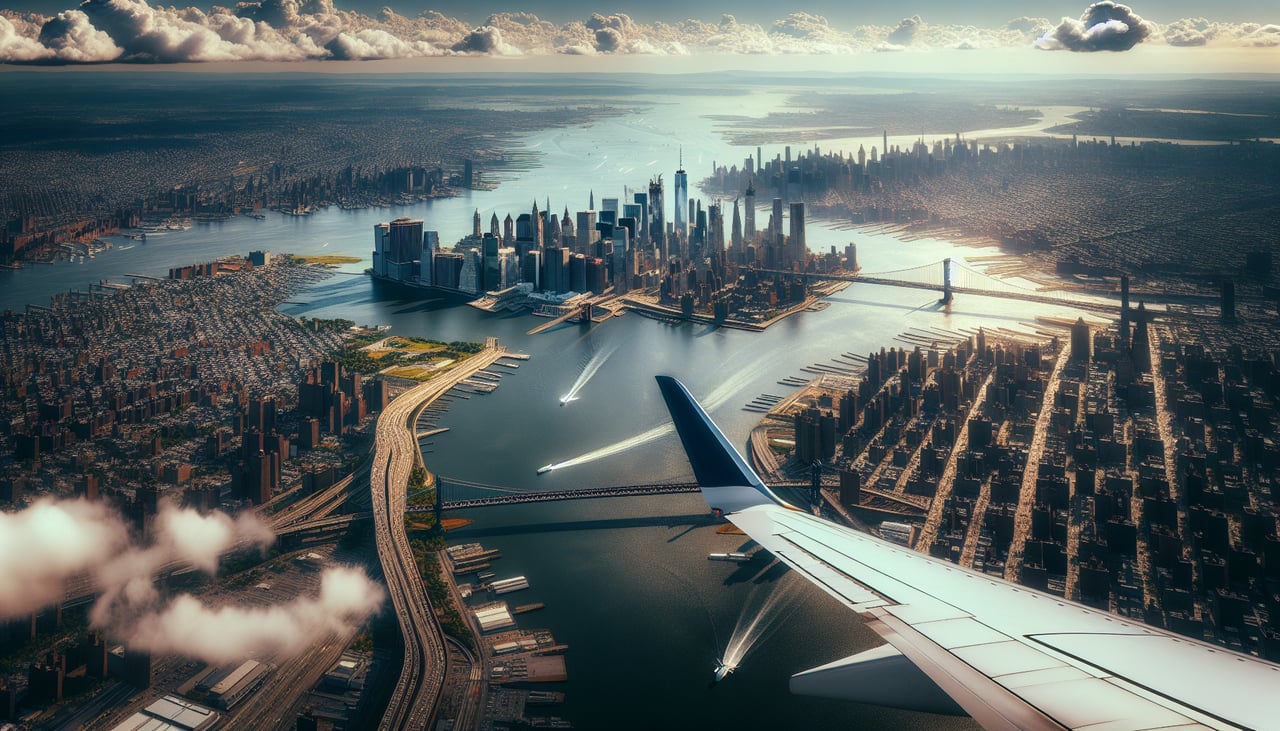
Takeoff from JFK
RIGHTDepartures from JFK heading northwest typically bank in a way that puts the Manhattan skyline and Jamaica Bay on the right side of the aircraft during initial climb. It's a brief but iconic urban view that most short domestic flights simply don't offer.
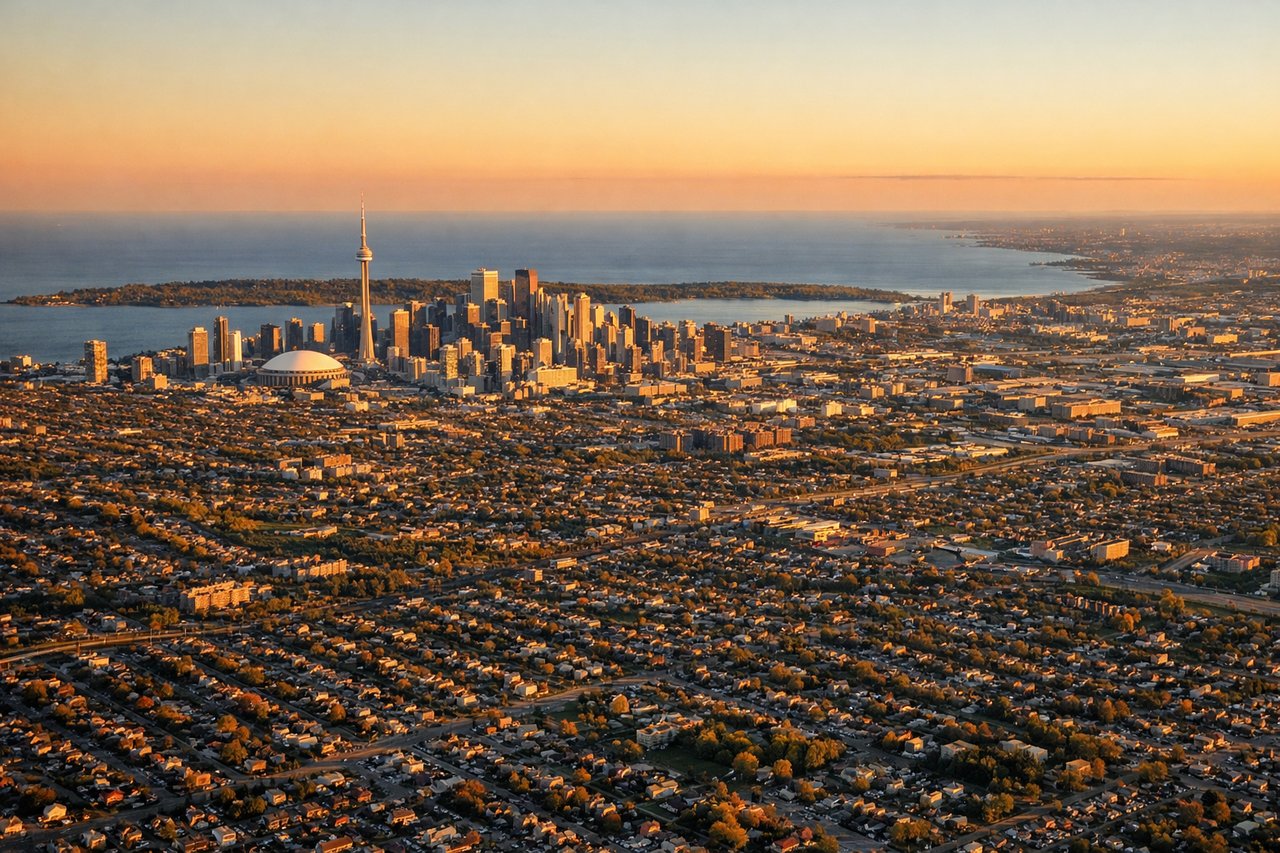
Landing at YYZ
LEFTOn the approach into Pearson from the east, arriving aircraft often turn onto final for the southwest-facing runways, putting downtown Toronto and the Lake Ontario shoreline on the left side during the descent. This gives a clear look at the CN Tower and waterfront just before touchdown.
Landmarks on this routeAll landmarks →
Will your flight be in sunlight?
See exactly which side of the plane gets sun and shade at your departure time.
About This Route
Which side of the plane should I sit on flying from John F Kennedy International (JFK) to Lester B Pearson International (YYZ)?
Sit on the Right side of the plane for the best views on flights from New York to Toronto. The right side wins narrowly because the Manhattan skyline view during takeoff is a longer, more dramatic sequence than the brief final-approach glimpse of Toronto, and the right side also has a chance at catching the Finger Lakes region during cruise.
What can I see during takeoff from John F Kennedy International in New York?
During takeoff from John F Kennedy International (JFK), sit on the Right side for the best views. Departures from JFK heading northwest typically bank in a way that puts the Manhattan skyline and Jamaica Bay on the right side of the aircraft during initial climb. It's a brief but iconic urban view that most short domestic flights simply don't offer. Notable sights include: Manhattan skyline (Empire State Building, One World Trade Center), Jamaica Bay, Hudson River mouth, Verrazzano-Narrows Bridge.
What can I see when landing at Lester B Pearson International in Toronto?
When landing at Lester B Pearson International (YYZ), sit on the Left side for the best views. On the approach into Pearson from the east, arriving aircraft often turn onto final for the southwest-facing runways, putting downtown Toronto and the Lake Ontario shoreline on the left side during the descent. This gives a clear look at the CN Tower and waterfront just before touchdown. Notable sights include: CN Tower, downtown Toronto skyline, Toronto Islands, Lake Ontario shoreline.
How long is the flight from New York to Toronto?
The flight from John F Kennedy International (JFK) to Lester B Pearson International (YYZ) takes 1h 35m.
What does the New York to Toronto flight path pass over?
Appalachian ridgelines over northeastern Pennsylvania, the Finger Lakes region of central New York (Seneca and Cayuga Lakes), and the southern shoreline of Lake Ontario before the descent into Toronto