The left side delivers both bookend highlights of the flight: Kilimanjaro's iconic snow-capped peak on departure and the Dar es Salaam coastline and harbor on arrival, while the right side offers only flat inland terrain during both phases.
Flight Path
The route crosses the dry Maasai Steppe and Mkomazi savanna, passing within sight of the Pare and Usambara Mountains off to the east before the terrain flattens into coastal plains approaching Dar es Salaam.
Great circle distance and headings ›


Phase by phase
Takeoff from JRO
LEFTDeparting JRO and turning southeast toward Dar es Salaam, the aircraft's climb puts Mount Kilimanjaro's snow-capped summit and jagged Mawenzi peak directly off the left side. This is one of the most striking natural landmarks visible from any commercial flight in East Africa.
Landing at DAR
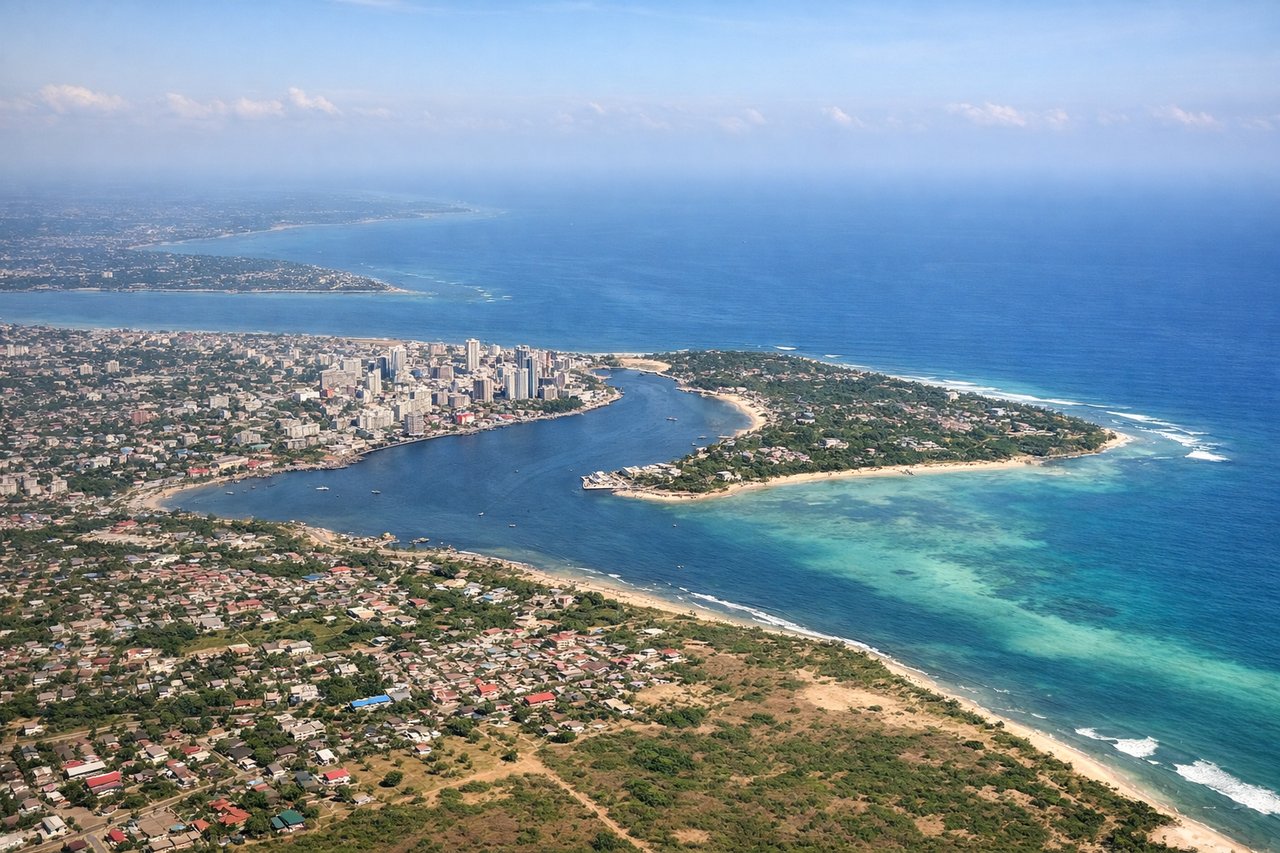
LEFTOn final approach into DAR, the descent path crosses the coastline before touchdown, giving left-side passengers a sweeping view of the Indian Ocean, the natural harbor, and the Dar es Salaam skyline against the water. The right side stays over inland suburbs with no coastal payoff.
Landmarks on this routeAll landmarks →
Will your flight be in sunlight?
See exactly which side of the plane gets sun and shade at your departure time.
About This Route
Which side of the plane should I sit on flying from Kilimanjaro International (JRO) to Dar Es Salaam (DAR)?
Sit on the Left side of the plane for the best views on flights from Kilimanjaro to Dar Es Salaam. The left side delivers both bookend highlights of the flight: Kilimanjaro's iconic snow-capped peak on departure and the Dar es Salaam coastline and harbor on arrival, while the right side offers only flat inland terrain during both phases.
What can I see during takeoff from Kilimanjaro International in Kilimanjaro?
During takeoff from Kilimanjaro International (JRO), sit on the Left side for the best views. Departing JRO and turning southeast toward Dar es Salaam, the aircraft's climb puts Mount Kilimanjaro's snow-capped summit and jagged Mawenzi peak directly off the left side. This is one of the most striking natural landmarks visible from any commercial flight in East Africa. Notable sights include: Mount Kilimanjaro's glaciated summit (Uhuru Peak), Mawenzi peak, forested lower slopes, savanna plains at the mountain's base.
What can I see when landing at Dar Es Salaam in Dar Es Salaam?
When landing at Dar Es Salaam (DAR), sit on the Left side for the best views. On final approach into DAR, the descent path crosses the coastline before touchdown, giving left-side passengers a sweeping view of the Indian Ocean, the natural harbor, and the Dar es Salaam skyline against the water. The right side stays over inland suburbs with no coastal payoff. Notable sights include: Indian Ocean coastline, Dar es Salaam harbor entrance, Msasani Peninsula, scattered offshore islands like Bongoyo Island.
How long is the flight from Kilimanjaro to Dar Es Salaam?
The flight from Kilimanjaro International (JRO) to Dar Es Salaam (DAR) takes 0h 55m.
What does the Kilimanjaro to Dar Es Salaam flight path pass over?
The route crosses the dry Maasai Steppe and Mkomazi savanna, passing within sight of the Pare and Usambara Mountains off to the east before the terrain flattens into coastal plains approaching Dar es Salaam.