While the LAX departure favors the right side, the long cruise segment crossing the Sierra Nevada, Rocky Mountains, and Great Lakes region is best appreciated from the left side given the flight's northeastern routing, and the coastal Rome approach adds further left-side interest, giving it the edge over the ocean-dominated right side.
Flight Path
Rocky Mountains and Great Plains give way to the Great Lakes region before the route crosses eastern Canada and the North Atlantic toward the coast of Portugal and the western Mediterranean approach to Italy.
Great circle distance and headings ›.jpg?width=600)


.jpg?width=600)
.jpeg?width=600)
.jpg?width=600)
_Panoramica_del_centro_della_citt%C3%A0_dal_lago.jpg?width=600)


_-_24_(50543603956).jpg?width=600)

Phase by phase
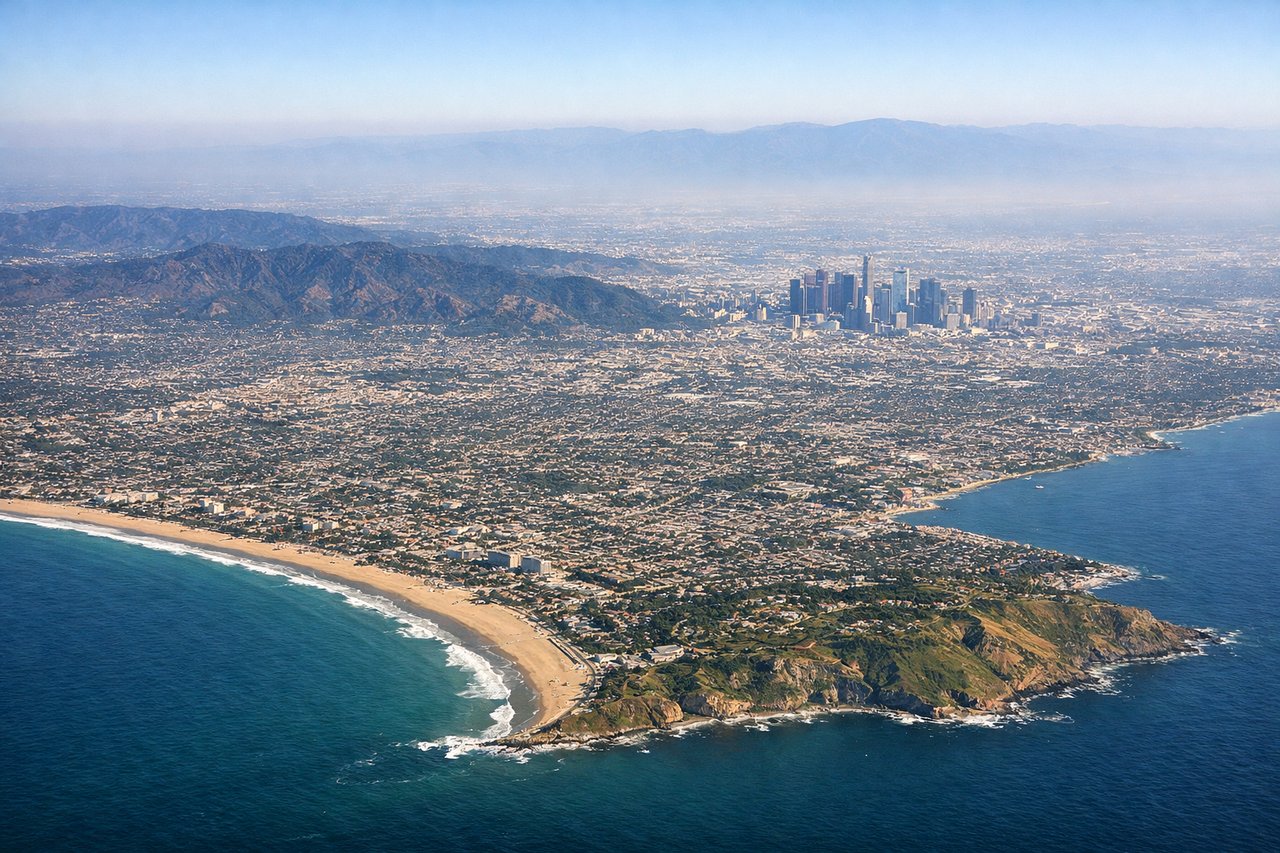
Takeoff from LAX
RIGHTIn LAX's typical west-flow departure, aircraft climb out over Santa Monica Bay and then bank right toward the northeast to begin the transcontinental routing. That right turn puts the Los Angeles basin, downtown skyline, and San Gabriel Mountains directly under the right-side windows as the plane climbs.
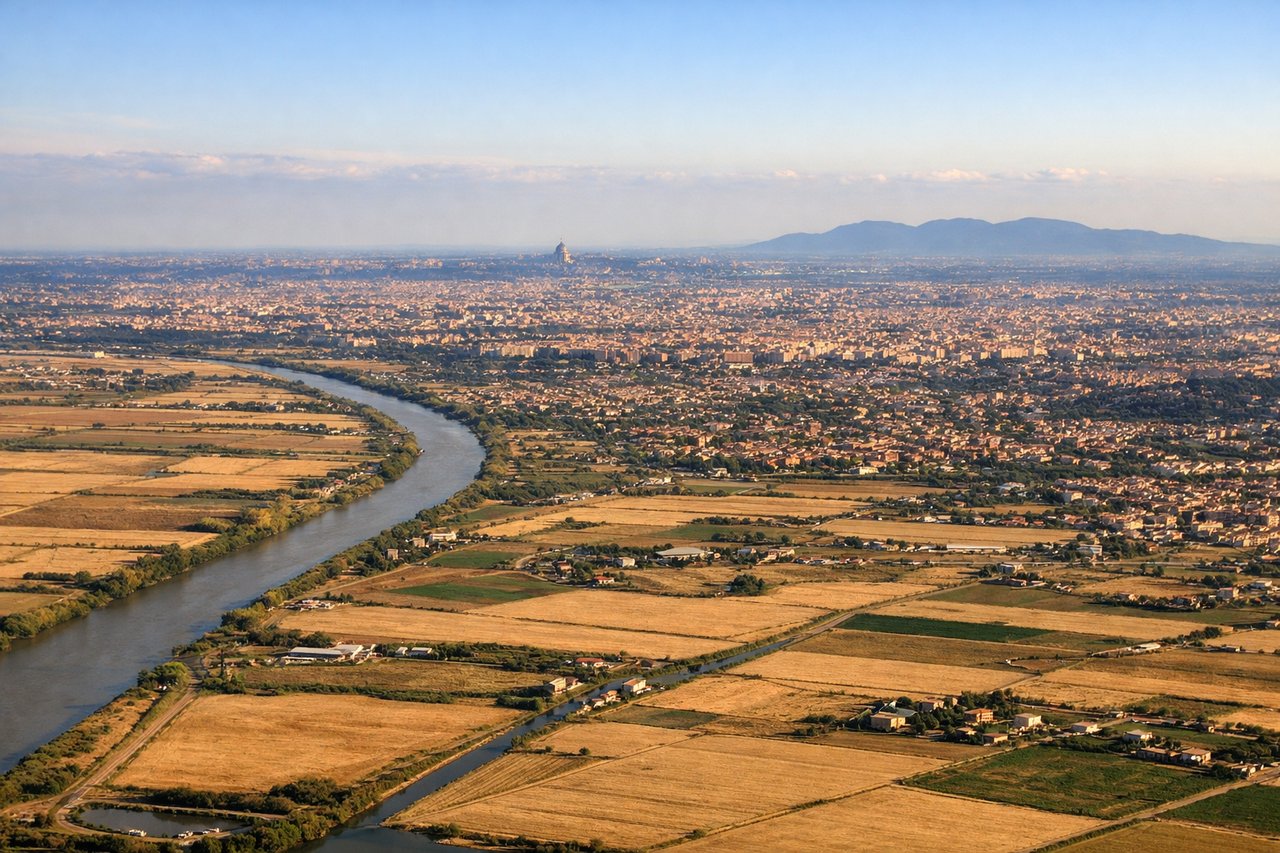
Landing at FCO
LEFTOn the descent into FCO, arrivals crossing the Italian coastline typically approach from the north or northwest, giving left-side passengers a clear view of the Tyrrhenian coastline, the Tiber River mouth near Fiumicino, and glimpses of Rome's urban sprawl before touchdown.
Landmarks on this routeAll landmarks →
Will your flight be in sunlight?
See exactly which side of the plane gets sun and shade at your departure time.
About This Route
Which side of the plane should I sit on flying from Los Angeles International (LAX) to Fiumicino (FCO)?
Sit on the Left side of the plane for the best views on flights from Los Angeles to Rome. While the LAX departure favors the right side, the long cruise segment crossing the Sierra Nevada, Rocky Mountains, and Great Lakes region is best appreciated from the left side given the flight's northeastern routing, and the coastal Rome approach adds further left-side interest, giving it the edge over the ocean-dominated right side.
What can I see during takeoff from Los Angeles International in Los Angeles?
During takeoff from Los Angeles International (LAX), sit on the Right side for the best views. In LAX's typical west-flow departure, aircraft climb out over Santa Monica Bay and then bank right toward the northeast to begin the transcontinental routing. That right turn puts the Los Angeles basin, downtown skyline, and San Gabriel Mountains directly under the right-side windows as the plane climbs. Notable sights include: Santa Monica Bay, Downtown Los Angeles skyline, San Gabriel Mountains, Griffith Park/Hollywood Hills.
What can I see when landing at Fiumicino in Rome?
When landing at Fiumicino (FCO), sit on the Left side for the best views. On the descent into FCO, arrivals crossing the Italian coastline typically approach from the north or northwest, giving left-side passengers a clear view of the Tyrrhenian coastline, the Tiber River mouth near Fiumicino, and glimpses of Rome's urban sprawl before touchdown. Notable sights include: Tyrrhenian Sea coastline, Tiber River delta near Fiumicino, outskirts of Rome, Roman countryside farmland patchwork.
How long is the flight from Los Angeles to Rome?
The flight from Los Angeles International (LAX) to Fiumicino (FCO) takes 11h 05m.
What does the Los Angeles to Rome flight path pass over?
Rocky Mountains and Great Plains give way to the Great Lakes region before the route crosses eastern Canada and the North Atlantic toward the coast of Portugal and the western Mediterranean approach to Italy.