The right side delivers the most memorable moments of the trip: the Los Angeles skyline and San Gabriel Mountains at departure, glimpses of the Gulf Coast and Sonoran Desert terrain during cruise, and a dramatic view of downtown Miami and Biscayne Bay on arrival. The left side spends most of the flight over flatter interior terrain with fewer distinct landmarks.
Flight Path
The route's midpoint lies over the arid terrain of West Texas or southern New Mexico, crossing the Chihuahuan Desert and near the Guadalupe Mountains before the flight path continues east toward the Gulf Coast.
Great circle distance and headings ›.jpg?width=600)
.jpg?width=600)


Phase by phase

Takeoff from LAX
RIGHTAs LAX flights typically depart west over the Pacific before turning east, the right-side (north-facing) window offers a sweeping view of the Los Angeles basin, downtown skyline, and the San Gabriel Mountains rising behind the city. The left side mostly shows open Pacific water and the Palos Verdes coastline, which is scenic but less varied.
Landing at MIA
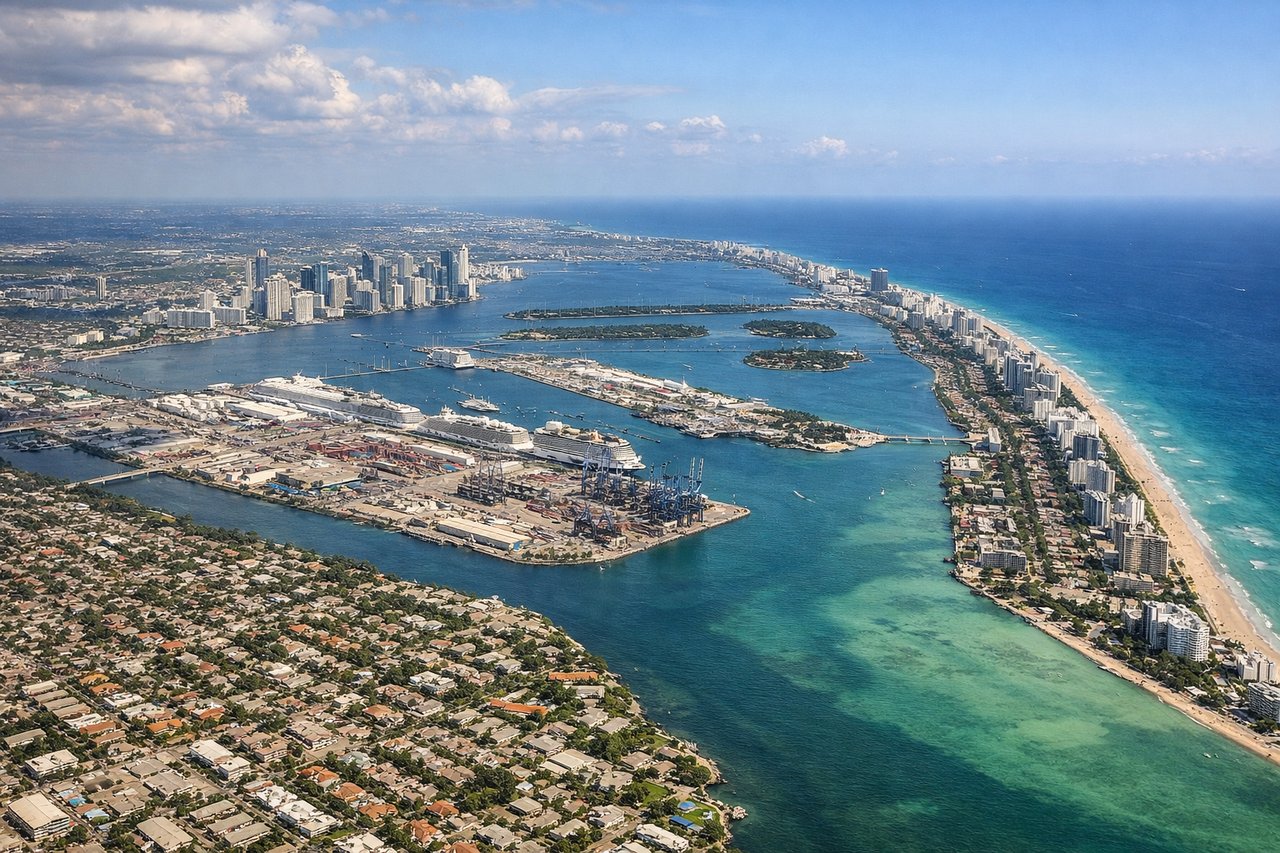
RIGHTOn the common eastbound approach into MIA, the flight path crosses the Everglades before turning to land on the east-facing runways, putting downtown Miami, Biscayne Bay, and the barrier islands off the right side of the aircraft. The left side mostly shows western suburban sprawl and flat wetlands with less visual interest.
Landmarks on this routeAll landmarks →
Will your flight be in sunlight?
See exactly which side of the plane gets sun and shade at your departure time.
About This Route
Which side of the plane should I sit on flying from Los Angeles International (LAX) to Miami International (MIA)?
Sit on the Right side of the plane for the best views on flights from Los Angeles to Miami. The right side delivers the most memorable moments of the trip: the Los Angeles skyline and San Gabriel Mountains at departure, glimpses of the Gulf Coast and Sonoran Desert terrain during cruise, and a dramatic view of downtown Miami and Biscayne Bay on arrival. The left side spends most of the flight over flatter interior terrain with fewer distinct landmarks.
What can I see during takeoff from Los Angeles International in Los Angeles?
During takeoff from Los Angeles International (LAX), sit on the Right side for the best views. As LAX flights typically depart west over the Pacific before turning east, the right-side (north-facing) window offers a sweeping view of the Los Angeles basin, downtown skyline, and the San Gabriel Mountains rising behind the city. The left side mostly shows open Pacific water and the Palos Verdes coastline, which is scenic but less varied. Notable sights include: Downtown Los Angeles skyline, San Gabriel Mountains, Santa Monica Bay, Griffith Park/Hollywood Hills.
What can I see when landing at Miami International in Miami?
When landing at Miami International (MIA), sit on the Right side for the best views. On the common eastbound approach into MIA, the flight path crosses the Everglades before turning to land on the east-facing runways, putting downtown Miami, Biscayne Bay, and the barrier islands off the right side of the aircraft. The left side mostly shows western suburban sprawl and flat wetlands with less visual interest. Notable sights include: Downtown Miami skyline, Biscayne Bay, Key Biscayne, South Beach/Miami Beach barrier island.
How long is the flight from Los Angeles to Miami?
The flight from Los Angeles International (LAX) to Miami International (MIA) takes 5h 05m.
What does the Los Angeles to Miami flight path pass over?
The route's midpoint lies over the arid terrain of West Texas or southern New Mexico, crossing the Chihuahuan Desert and near the Guadalupe Mountains before the flight path continues east toward the Gulf Coast.