The right side wins on the strength of LAX's departure sequence, which offers dramatic coastal mountain scenery during the climb-out turn, while the mid-Pacific cruise phase is scenically neutral on both sides and the PVG landing difference is comparatively minor.
Flight Path
The great-circle route passes south of the Aleutian Islands, near the Kamchatka Peninsula, and along the coastlines of Hokkaido and the Sea of Japan before making landfall near the Yangtze River delta.
Great circle distance and headings ›.jpg?width=600)

.jpg?width=600)

Phase by phase
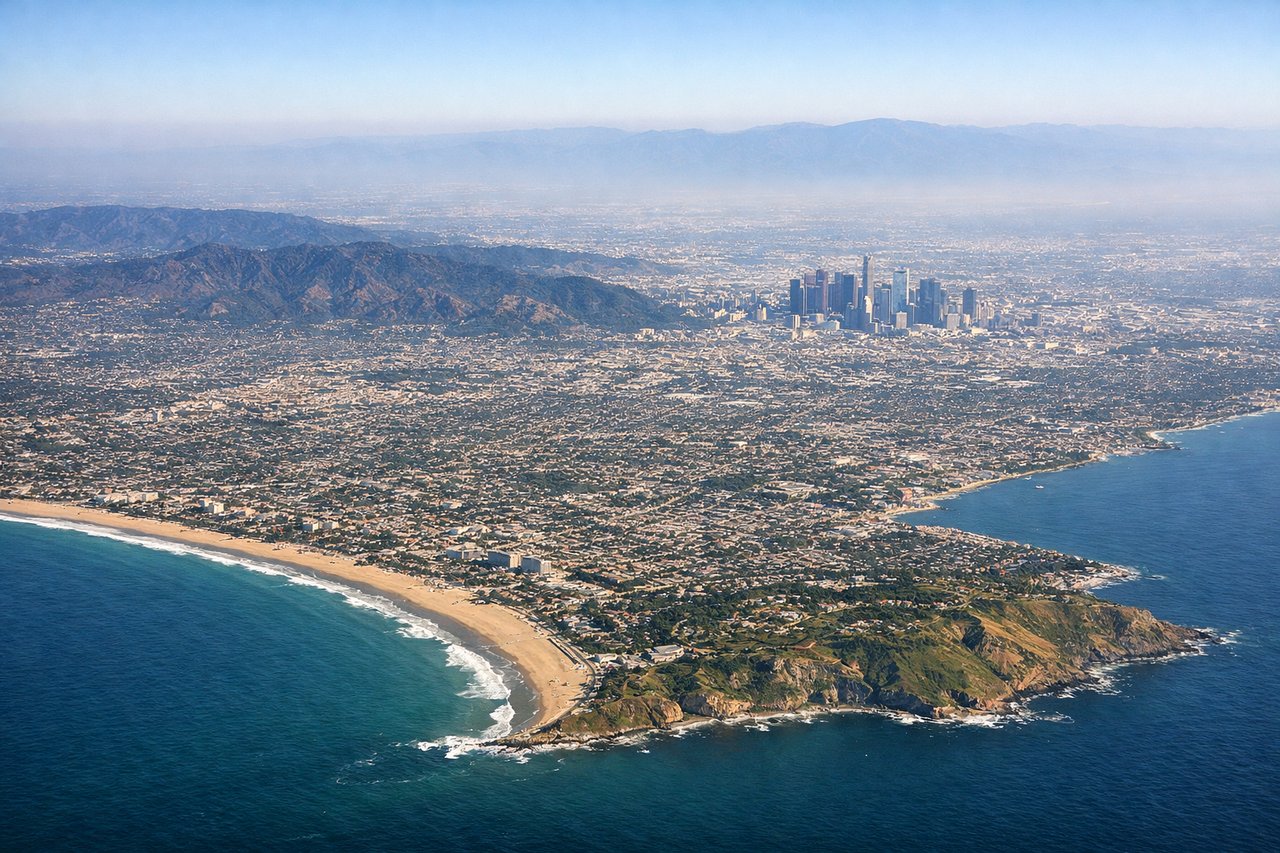
Takeoff from LAX
RIGHTIn LAX's normal west-flow departure, aircraft climb out over Santa Monica Bay and then bank right (north) to join the oceanic track toward Alaska/Asia. That turn puts the Santa Monica Mountains, Malibu coastline, and the Channel Islands on the right side, while the left side only sees open ocean and the Palos Verdes Peninsula receding behind.
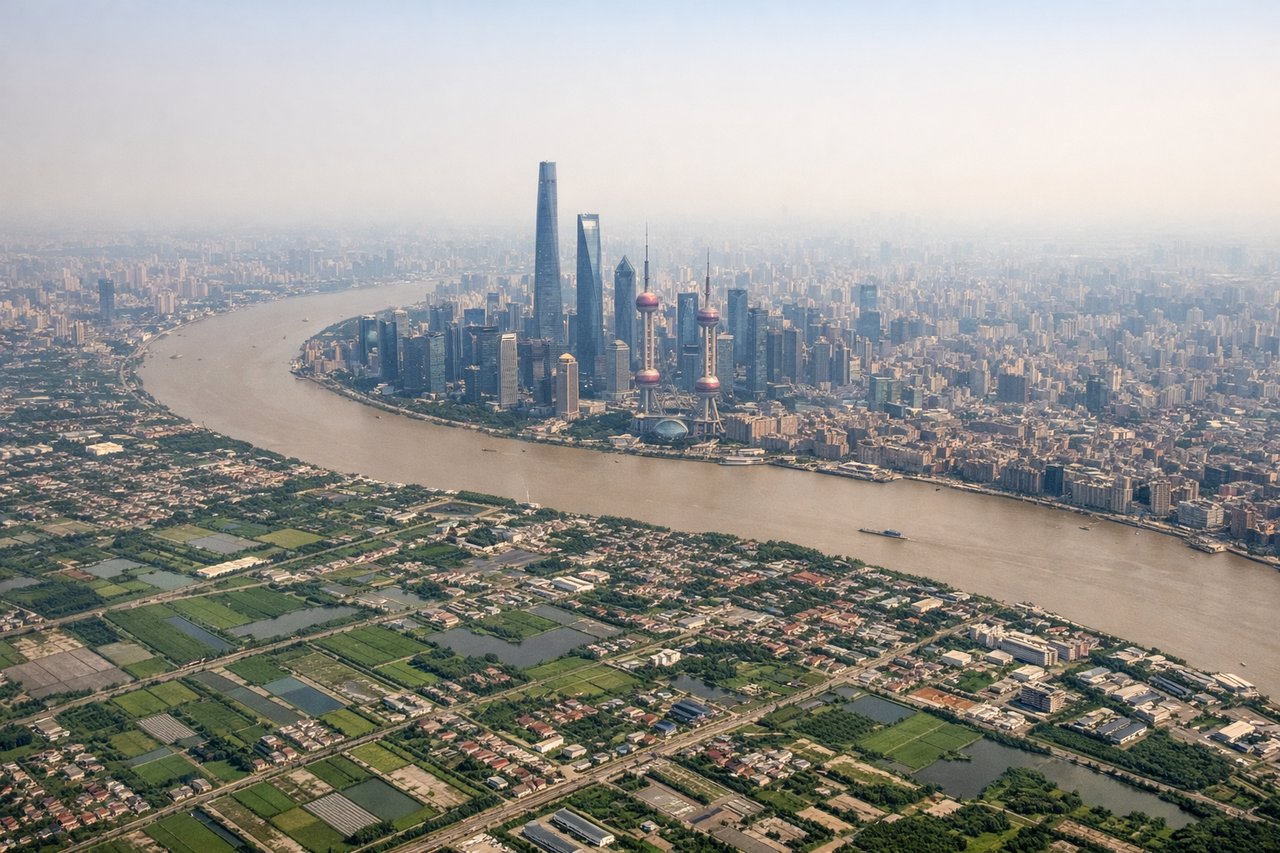
Landing at PVG
LEFTArrivals into PVG from the trans-Pacific track typically descend from the north and turn south to land, putting the Yangtze River estuary and Hangzhou Bay's coastal wetlands on the left side. The right side mostly shows flat, featureless Shanghai suburbs with little to distinguish it.
Landmarks on this routeAll landmarks →
Will your flight be in sunlight?
See exactly which side of the plane gets sun and shade at your departure time.
About This Route
Which side of the plane should I sit on flying from Los Angeles International (LAX) to Shanghai Pudong International (PVG)?
Sit on the Right side of the plane for the best views on flights from Los Angeles to Shanghai. The right side wins on the strength of LAX's departure sequence, which offers dramatic coastal mountain scenery during the climb-out turn, while the mid-Pacific cruise phase is scenically neutral on both sides and the PVG landing difference is comparatively minor.
What can I see during takeoff from Los Angeles International in Los Angeles?
During takeoff from Los Angeles International (LAX), sit on the Right side for the best views. In LAX's normal west-flow departure, aircraft climb out over Santa Monica Bay and then bank right (north) to join the oceanic track toward Alaska/Asia. That turn puts the Santa Monica Mountains, Malibu coastline, and the Channel Islands on the right side, while the left side only sees open ocean and the Palos Verdes Peninsula receding behind. Notable sights include: Santa Monica Mountains, Malibu coastline, Channel Islands, Santa Monica Bay.
What can I see when landing at Shanghai Pudong International in Shanghai?
When landing at Shanghai Pudong International (PVG), sit on the Left side for the best views. Arrivals into PVG from the trans-Pacific track typically descend from the north and turn south to land, putting the Yangtze River estuary and Hangzhou Bay's coastal wetlands on the left side. The right side mostly shows flat, featureless Shanghai suburbs with little to distinguish it. Notable sights include: Yangtze River estuary, Chongming Island, Hangzhou Bay coastline, East China Sea.
How long is the flight from Los Angeles to Shanghai?
The flight from Los Angeles International (LAX) to Shanghai Pudong International (PVG) takes 13h 25m.
What does the Los Angeles to Shanghai flight path pass over?
The great-circle route passes south of the Aleutian Islands, near the Kamchatka Peninsula, and along the coastlines of Hokkaido and the Sea of Japan before making landfall near the Yangtze River delta.