While left seats offer excellent London departure views, right seats dominate the landing experience with Dublin Bay, the Wicklow Mountains, and the Irish coastline. The landing views are more geographically distinctive and memorable than the takeoff.
Flown LCY to DUB? Did we get it right?
Flight Path
London to Dublin is 297 miles (478 km), a flight of about 1 hour 15 minutes.
The flight path crosses the Irish Sea at roughly 52.5°N, 3.5°W. At cruise altitude (around 15,000-20,000 feet), the Welsh coast (Snowdonia and Pembrokeshire) may be visible to the left/south on clear days, but the Irish Sea itself dominates the midpoint—open water with no distinctive landmarks. The flight typically passes over the Irish coast near Wicklow or Wexford before turning toward Dublin.
Great circle distance and headings ›Phase by phase
Takeoff from LCY
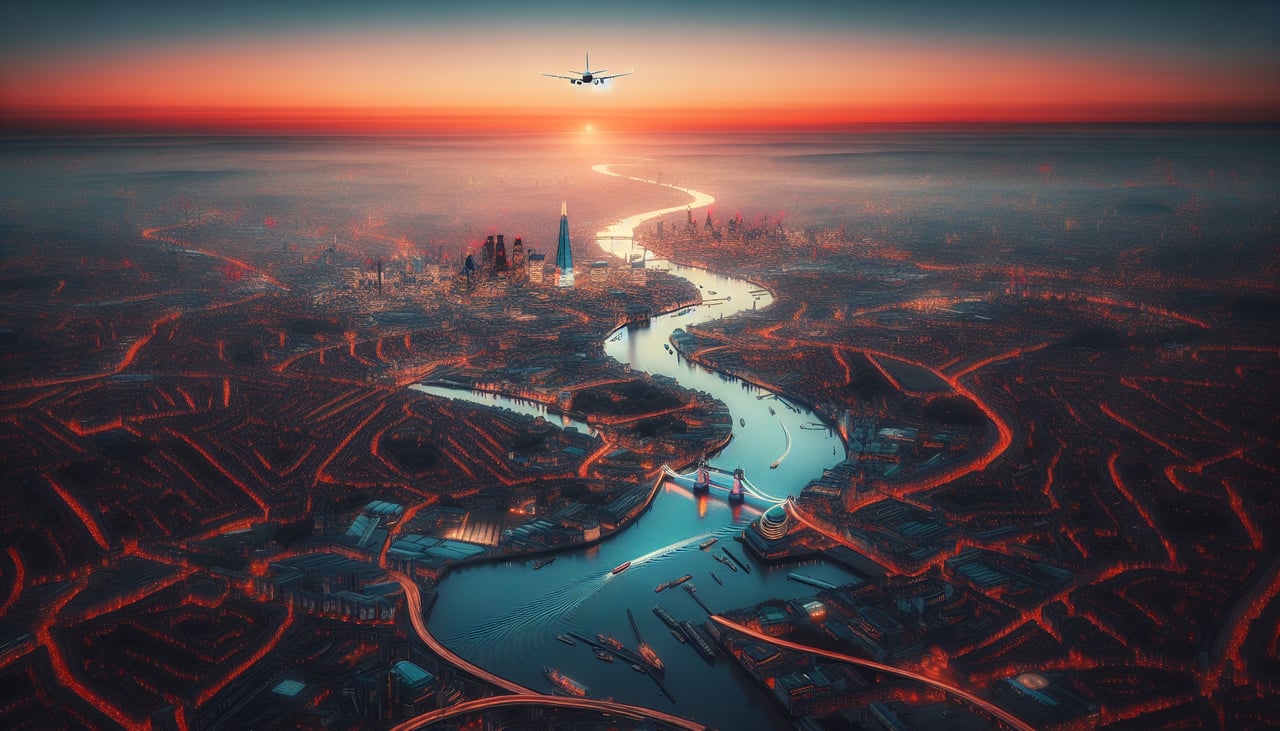
LEFTLCY typically departs eastbound (Runway 27) or westbound (Runway 09). Westbound departures are more common. Left seats face north during climb-out, giving views of central London's dense urban grid, the Thames meanders, and the North London suburbs spreading toward Hertfordshire. Right seats see the southern suburbs and Kent, which are less distinctive.
Landing at DUB
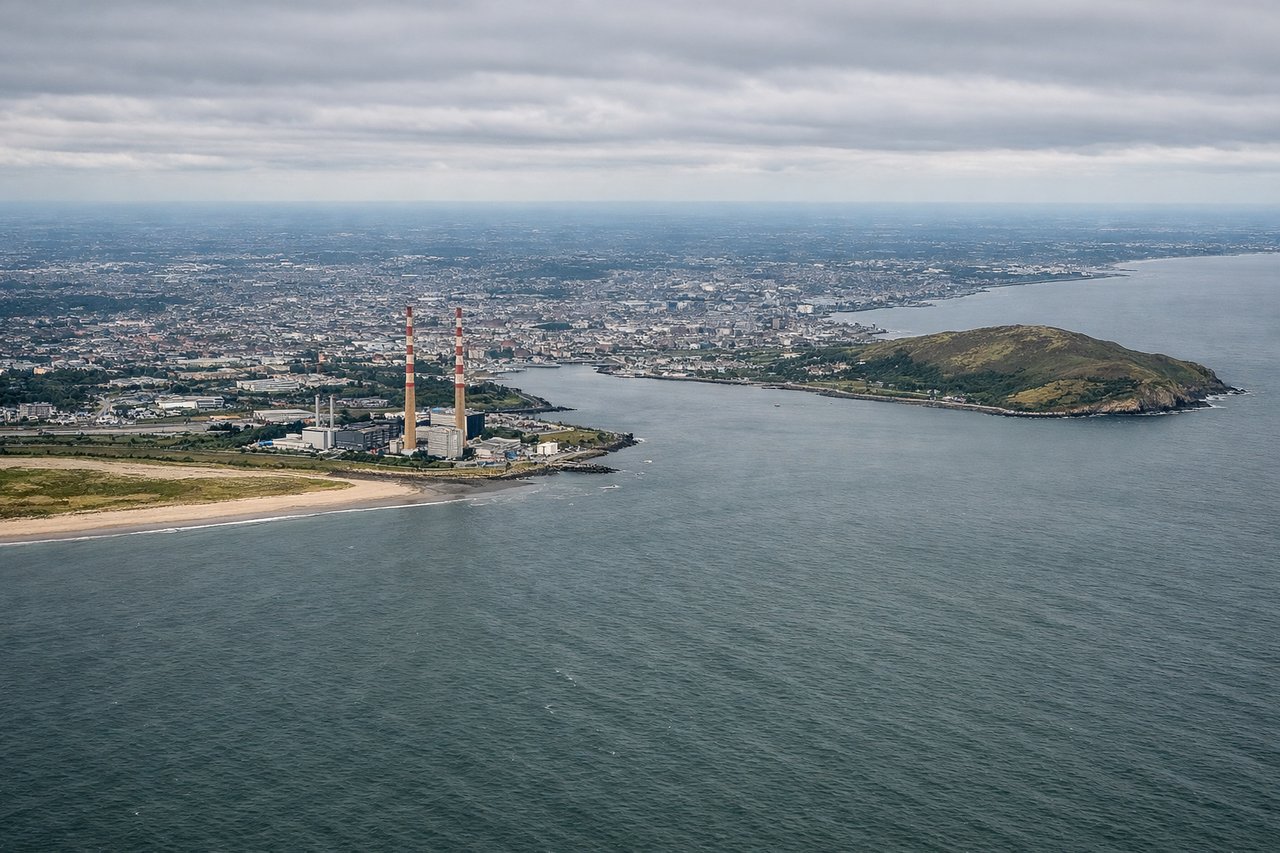
RIGHTDublin approaches typically use Runway 28 (eastbound) or Runway 10 (westbound). Eastbound approaches are standard. Right seats face south during descent into Dublin, offering views of the Irish Sea coast, Dublin Bay's distinctive curved shoreline, and the Wicklow Mountains rising inland. Left seats see only the Irish interior and are less visually rewarding.
Will your flight be in sunlight?
Pick a date and time in the Sun Map to watch the sun move across your whole flight.
About This Route
Which side of the plane should I sit on flying from City (LCY) to Dublin (DUB)?
Sit on the Right side of the plane for the best views on flights from London to Dublin. While left seats offer excellent London departure views, right seats dominate the landing experience with Dublin Bay, the Wicklow Mountains, and the Irish coastline. The landing views are more geographically distinctive and memorable than the takeoff.
What can I see during takeoff from City in London?
During takeoff from City (LCY), sit on the Left side for the best views. LCY typically departs eastbound (Runway 27) or westbound (Runway 09). Westbound departures are more common. Left seats face north during climb-out, giving views of central London's dense urban grid, the Thames meanders, and the North London suburbs spreading toward Hertfordshire. Right seats see the southern suburbs and Kent, which are less distinctive. Notable sights include: River Thames (multiple loops visible below), Central London's street grid and parks (Hyde Park, Regent's Park visible as green rectangles), Canary Wharf and Isle of Dogs (distinctive peninsular development), North London urban sprawl fading toward the horizon.
What can I see when landing at Dublin in Dublin?
When landing at Dublin (DUB), sit on the Right side for the best views. Dublin approaches typically use Runway 28 (eastbound) or Runway 10 (westbound). Eastbound approaches are standard. Right seats face south during descent into Dublin, offering views of the Irish Sea coast, Dublin Bay's distinctive curved shoreline, and the Wicklow Mountains rising inland. Left seats see only the Irish interior and are less visually rewarding. Notable sights include: Dublin Bay (curved coastal inlet with North and South Bull walls visible), Wicklow Mountains (distant ridge on southern horizon), Irish Sea (open water to the east), Dublin city sprawl and the Liffey estuary.
How long is the flight from London to Dublin?
The flight from City (LCY) to Dublin (DUB) takes about 1 hour 15 minutes. The shortest flight path between them is 297 miles (478 km); winds and air traffic control usually add a few percent.
What does the London to Dublin flight path pass over?
The flight path crosses the Irish Sea at roughly 52.5°N, 3.5°W. At cruise altitude (around 15,000-20,000 feet), the Welsh coast (Snowdonia and Pembrokeshire) may be visible to the left/south on clear days, but the Irish Sea itself dominates the midpoint—open water with no distinctive landmarks. The flight typically passes over the Irish coast near Wicklow or Wexford before turning toward Dublin.