The right side wins at takeoff for the Guanacaste volcanoes, but the left side delivers the superior overall experience: over the Caribbean Sea during cruise, views of Cuba and the Bahamas archipelago from the left side as the flight tracks northeast, and the spectacular Manhattan approach on arrival. The Manhattan skyline on final into EWR is hard to beat.
Flown LIR to EWR? Did we get it right?
Flight Path
Liberia to Newark is 2,192 miles (3,528 km), a flight of about 5 hours 30 minutes.
After departing Costa Rica, the flight tracks northeast over Nicaragua and Honduras, then crosses the western Caribbean Sea. Cuba passes to the left (east) side roughly mid-flight, with the Bahamas chain visible as shallow turquoise water and low sandy cays. The flight then crosses the Florida Straits and tracks up the US East Coast, passing over or near the Carolinas and Virginia before descending into the New York metro area.
Great circle distance and headings ›


Phase by phase
Takeoff from LIR
RIGHTLIR's primary runway 07/25 means northbound departures typically climb out heading east or northeast. A right-side seat gives you views over the Guanacaste volcanic chain as the aircraft turns north. You'll see the broad Gulf of Nicoya opening up to the south while the volcanoes dominate the right side.
Landing at EWR
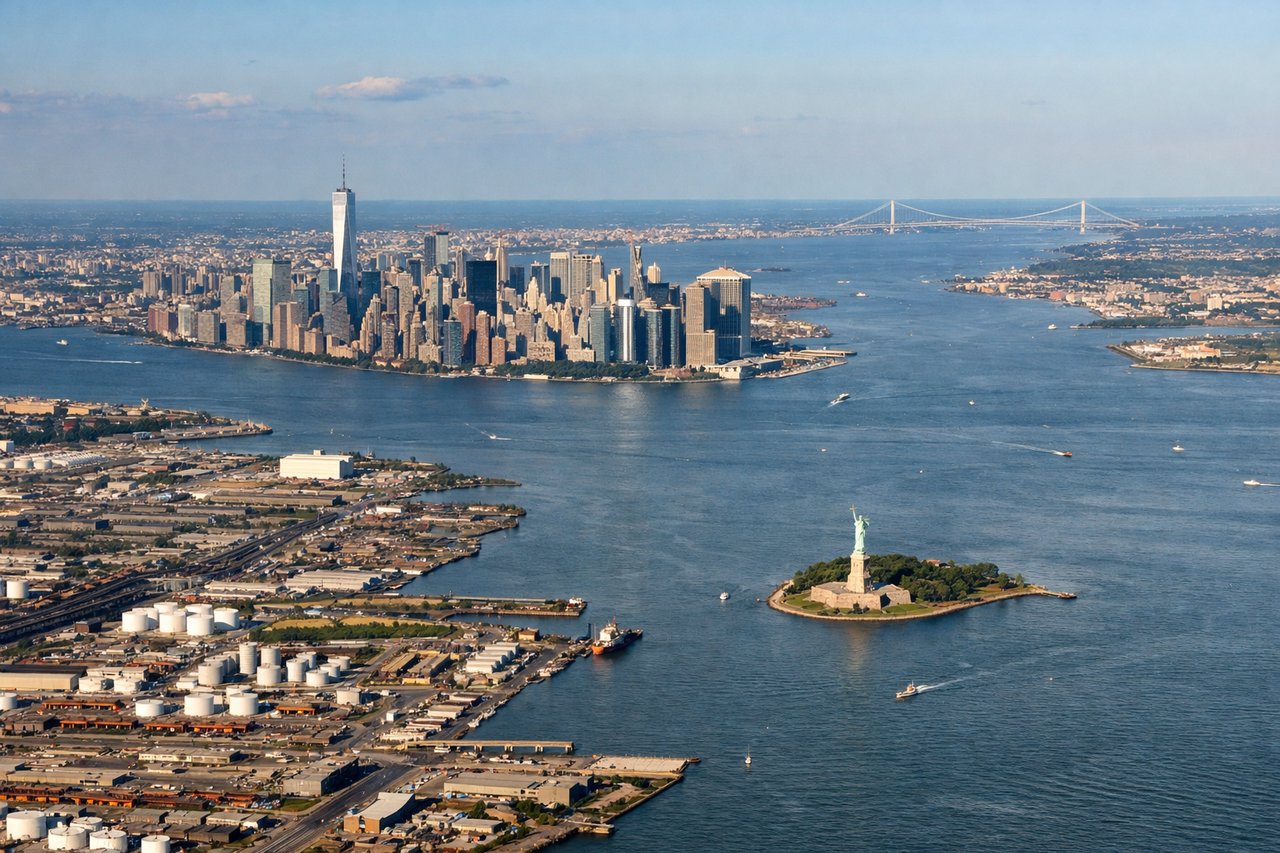
LEFTArrivals into EWR from the south typically use runway 22L/22R or 29, with approaches over New Jersey from the southwest. A left-side seat gives you the Manhattan skyline across the Hudson River, clearly visible during the final approach descent over Newark Bay. This is one of the most iconic urban approach views in commercial aviation.
Will your flight be in sunlight?
Pick a date and time in the Sun Map to watch the sun move across your whole flight.
About This Route
Which side of the plane should I sit on flying from Daniel Oduber Quiros International (LIR) to Newark Liberty International (EWR)?
Sit on the Left side of the plane for the best views on flights from Liberia to Newark. The right side wins at takeoff for the Guanacaste volcanoes, but the left side delivers the superior overall experience: over the Caribbean Sea during cruise, views of Cuba and the Bahamas archipelago from the left side as the flight tracks northeast, and the spectacular Manhattan approach on arrival. The Manhattan skyline on final into EWR is hard to beat.
What can I see during takeoff from Daniel Oduber Quiros International in Liberia?
During takeoff from Daniel Oduber Quiros International (LIR), sit on the Right side for the best views. LIR's primary runway 07/25 means northbound departures typically climb out heading east or northeast. A right-side seat gives you views over the Guanacaste volcanic chain as the aircraft turns north. You'll see the broad Gulf of Nicoya opening up to the south while the volcanoes dominate the right side. Notable sights include: Volcán Rincón de la Vieja (1,916m), Volcán Miravalles, Gulf of Nicoya to the south, Guanacaste lowland cattle plains.
What can I see when landing at Newark Liberty International in Newark?
When landing at Newark Liberty International (EWR), sit on the Left side for the best views. Arrivals into EWR from the south typically use runway 22L/22R or 29, with approaches over New Jersey from the southwest. A left-side seat gives you the Manhattan skyline across the Hudson River, clearly visible during the final approach descent over Newark Bay. This is one of the most iconic urban approach views in commercial aviation. Notable sights include: Manhattan skyline (Midtown and Lower Manhattan), Hudson River, Newark Bay, Verrazano-Narrows Bridge visible to the south.
How long is the flight from Liberia to Newark?
The flight from Daniel Oduber Quiros International (LIR) to Newark Liberty International (EWR) takes about 5 hours 30 minutes. The shortest flight path between them is 2,192 miles (3,528 km); winds and air traffic control usually add a few percent.
What does the Liberia to Newark flight path pass over?
After departing Costa Rica, the flight tracks northeast over Nicaragua and Honduras, then crosses the western Caribbean Sea. Cuba passes to the left (east) side roughly mid-flight, with the Bahamas chain visible as shallow turquoise water and low sandy cays. The flight then crosses the Florida Straits and tracks up the US East Coast, passing over or near the Carolinas and Virginia before descending into the New York metro area.