La Rochelle to Dublin is 549 miles (884 km), a flight of about 1 hour 50 minutes.
The left side wins both the departure and arrival sequences, combining La Rochelle's coastal and island scenery at takeoff with Dublin Bay, the city skyline, and the Wicklow Mountains on approach, while the right side offers only flat farmland and open sea for most of the flight.
Flight Path
The route crosses the English Channel between Brittany and Cornwall, passing near the Channel Islands (Jersey and Guernsey) before continuing over the Celtic Sea toward the Irish coast.
Great circle distance and headings ›Phase by phase
Takeoff from LRH
LEFTDepartures from La Rochelle typically climb out toward the coast, putting the Atlantic shoreline, the La Rochelle harbor, and Île de Ré on the left side as the aircraft turns north toward Ireland. The right side shows only the flat farmland of the Aunis interior.
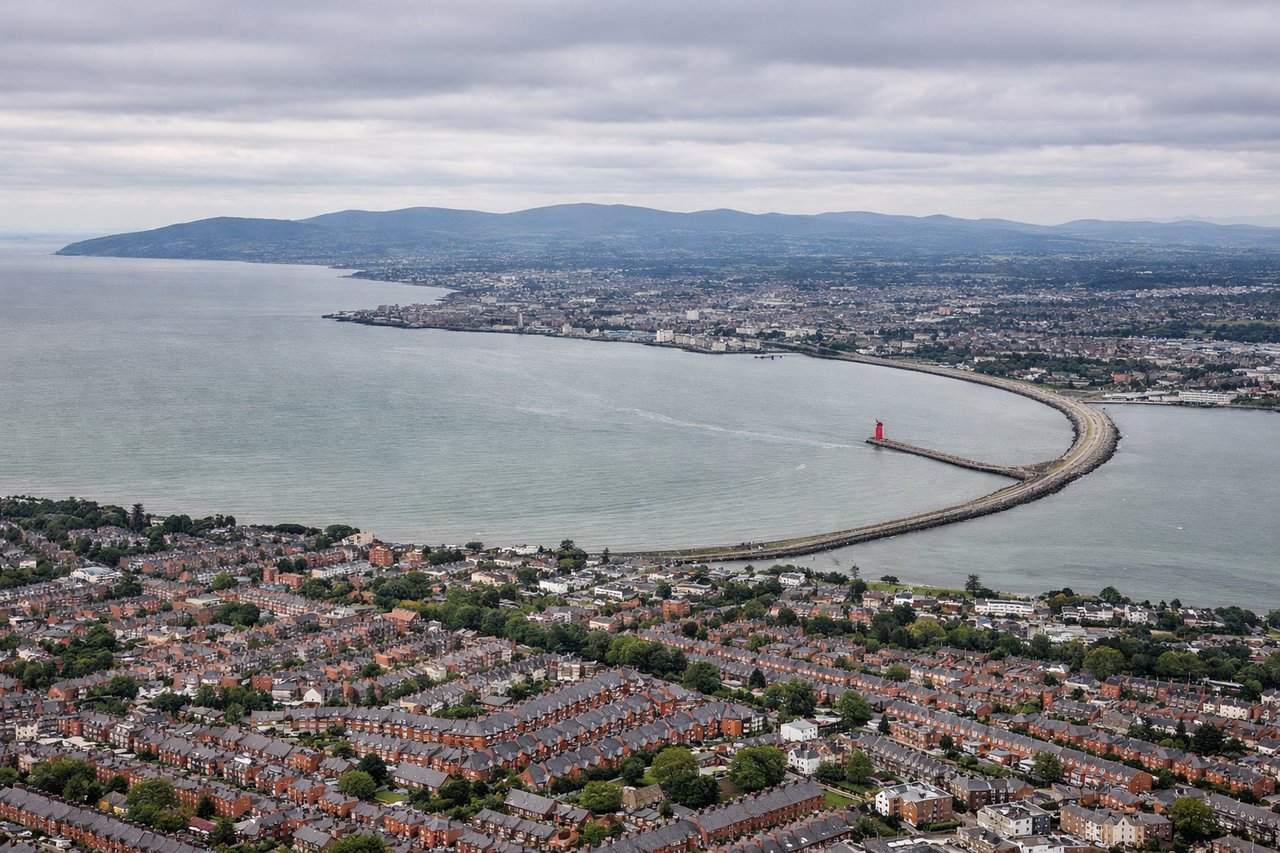
Landing at DUB
LEFTDublin's westerly landing configuration brings aircraft in from the east over Dublin Bay, and on the left (south-facing) side passengers see the city center, the Liffey estuary, and the Wicklow Mountains rising beyond. The right side only shows the flatter Howth peninsula and Irish Sea coastline.
Landmarks on this routeAll landmarks →
Will your flight be in sunlight?
Pick a date and time in the Sun Map to watch the sun move across your whole flight.
About This Route
Which side of the plane should I sit on flying from La Rochelle Île de Ré Airport (LRH) to Dublin (DUB)?
Sit on the Left side of the plane for the best views on flights from La Rochelle to Dublin. The left side wins both the departure and arrival sequences, combining La Rochelle's coastal and island scenery at takeoff with Dublin Bay, the city skyline, and the Wicklow Mountains on approach, while the right side offers only flat farmland and open sea for most of the flight.
What can I see during takeoff from La Rochelle Île de Ré Airport in La Rochelle?
During takeoff from La Rochelle Île de Ré Airport (LRH), sit on the Left side for the best views. Departures from La Rochelle typically climb out toward the coast, putting the Atlantic shoreline, the La Rochelle harbor, and Île de Ré on the left side as the aircraft turns north toward Ireland. The right side shows only the flat farmland of the Aunis interior. Notable sights include: La Rochelle old harbor, Île de Ré and its bridge, Atlantic coastline, Bay of Biscay.
What can I see when landing at Dublin in Dublin?
When landing at Dublin (DUB), sit on the Left side for the best views. Dublin's westerly landing configuration brings aircraft in from the east over Dublin Bay, and on the left (south-facing) side passengers see the city center, the Liffey estuary, and the Wicklow Mountains rising beyond. The right side only shows the flatter Howth peninsula and Irish Sea coastline. Notable sights include: Dublin Bay, River Liffey and docklands, Dublin city center, Wicklow Mountains.
How long is the flight from La Rochelle to Dublin?
The flight from La Rochelle Île de Ré Airport (LRH) to Dublin (DUB) takes about 1 hour 50 minutes. The shortest flight path between them is 549 miles (884 km); winds and air traffic control usually add a few percent.
What does the La Rochelle to Dublin flight path pass over?
The route crosses the English Channel between Brittany and Cornwall, passing near the Channel Islands (Jersey and Guernsey) before continuing over the Celtic Sea toward the Irish coast.