Perpignan to Taipei is 6,331 miles (10,188 km), a flight of about 13 hours.
While takeoff offers the Pyrenees, the landing view over the Taiwan Strait and Taipei Basin is more visually dramatic and geographically distinctive. The contrast between open water and one of Asia's densest urban centers provides stronger visual interest than the departure.
Flight Path
Flight path crosses the Mediterranean (Balearic Islands visible if routed south), then over southern Europe and the Alps (if northern routing), across the Middle East (Persian Gulf region), over the Arabian Sea, and into South Asia. The most notable midpoint visual features are the Alps (if visible during daylight), the Persian Gulf coastlines (UAE/Oman), and the Indian subcontinent's western coast. Most of this flight occurs over open ocean or sparsely populated regions with limited ground landmarks visible at cruise altitude.
Great circle distance and headings ›

.jpg?width=600)


Phase by phase
Takeoff from PGF
LEFTPGF typically departs runway 16 (northwest heading). Left seats face the Pyrenees mountain range directly ahead during climb-out, with the Mediterranean visible to the right. The dramatic north-south ridge of the Pyrenees is the dominant visual feature from this departure.
Landing at TPE
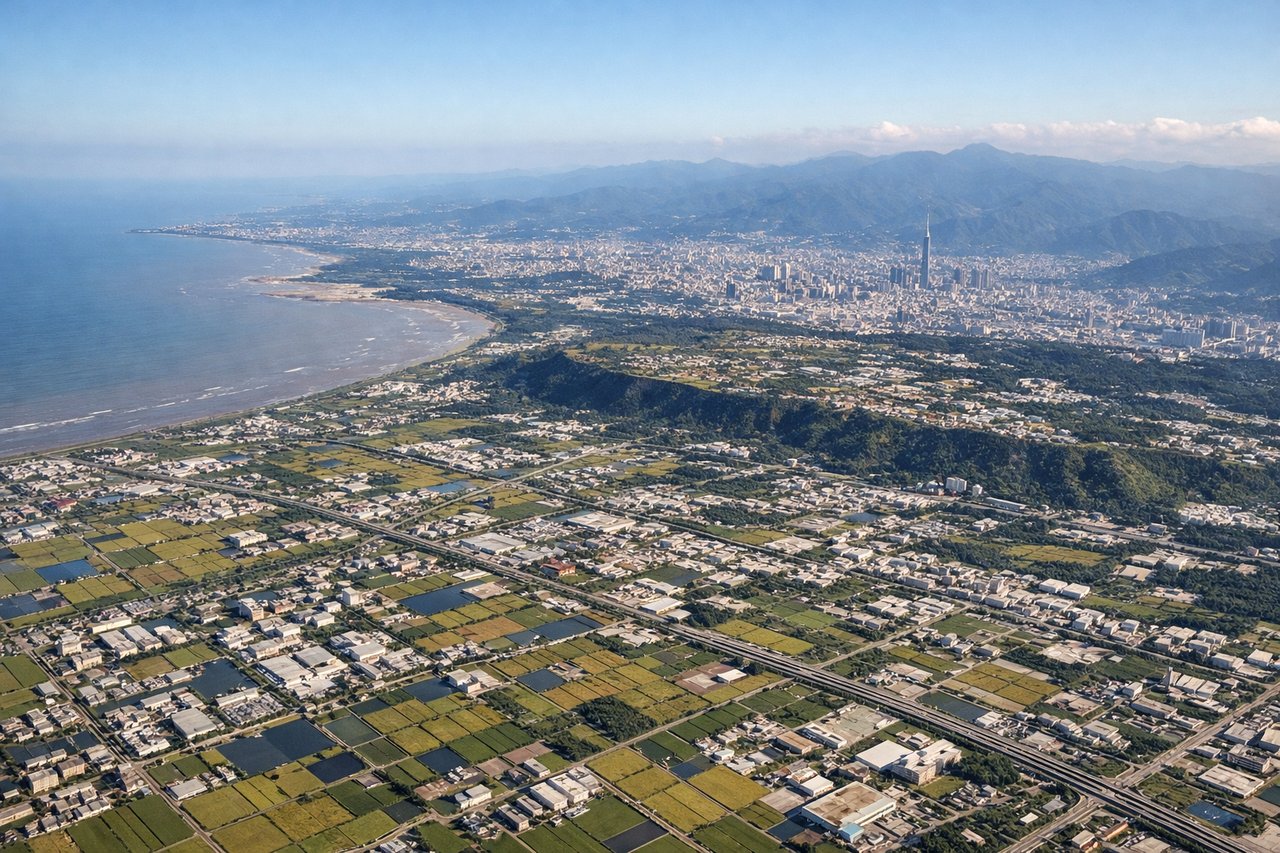
RIGHTTPE (Taoyuan) typically lands on runway 05L or 05R (northeast heading). Right seats during descent offer views of the Taiwan Strait, the northern Taiwan coast, and the approach over Taipei Basin. The contrast between water and urban sprawl is visually striking.
Landmarks on this routeAll landmarks →
Will your flight be in sunlight?
Pick a date and time in the Sun Map to watch the sun move across your whole flight.
About This Route
Which side of the plane should I sit on flying from Rivesaltes (PGF) to Chiang Kai Shek International (TPE)?
Sit on the Right side of the plane for the best views on flights from Perpignan to Taipei. While takeoff offers the Pyrenees, the landing view over the Taiwan Strait and Taipei Basin is more visually dramatic and geographically distinctive. The contrast between open water and one of Asia's densest urban centers provides stronger visual interest than the departure.
What can I see during takeoff from Rivesaltes in Perpignan?
During takeoff from Rivesaltes (PGF), sit on the Left side for the best views. PGF typically departs runway 16 (northwest heading). Left seats face the Pyrenees mountain range directly ahead during climb-out, with the Mediterranean visible to the right. The dramatic north-south ridge of the Pyrenees is the dominant visual feature from this departure. Notable sights include: Pyrenees Mountains (especially Pic de Cabardes and Pic de la Serrera to the west), Mediterranean Sea (southern horizon), Perpignan city sprawl (directly below during initial climb), Tech River valley (visible cutting through foothills).
What can I see when landing at Chiang Kai Shek International in Taipei?
When landing at Chiang Kai Shek International (TPE), sit on the Right side for the best views. TPE (Taoyuan) typically lands on runway 05L or 05R (northeast heading). Right seats during descent offer views of the Taiwan Strait, the northern Taiwan coast, and the approach over Taipei Basin. The contrast between water and urban sprawl is visually striking. Notable sights include: Taiwan Strait (to the right/north during approach), Taipei 101 and downtown Taipei skyline (visible in the basin below), Yangmingshan volcanic peaks (northwest of approach path), Keelung port and harbor (northern coastal feature).
How long is the flight from Perpignan to Taipei?
The flight from Rivesaltes (PGF) to Chiang Kai Shek International (TPE) takes about 13 hours. The shortest flight path between them is 6,331 miles (10,188 km); winds and air traffic control usually add a few percent.
What does the Perpignan to Taipei flight path pass over?
Flight path crosses the Mediterranean (Balearic Islands visible if routed south), then over southern Europe and the Alps (if northern routing), across the Middle East (Persian Gulf region), over the Arabian Sea, and into South Asia. The most notable midpoint visual features are the Alps (if visible during daylight), the Persian Gulf coastlines (UAE/Oman), and the Indian subcontinent's western coast. Most of this flight occurs over open ocean or sparsely populated regions with limited ground landmarks visible at cruise altitude.