While takeoff offers good Delaware River views on the right, the landing approach into DCA on the left provides more dramatic and iconic scenery—the Potomac River, National Mall, and Washington Monument are far more visually distinctive than the suburban landscape north of Philadelphia.
Flown PHL to DCA? Did we get it right?
Flight Path
Philadelphia to Washington is 119 miles (192 km), a flight of about 1 hour 10 minutes.
The flight path typically follows a southwest corridor over central Maryland. Notable features include the Chesapeake Bay visible to the east (left side) during cruise, the rolling terrain of Maryland's piedmont region, and occasional glimpses of Baltimore's urban area if the flight path carries slightly northwest. The landscape transitions from Philadelphia's dense suburban ring through rural Maryland farmland and forested areas before descending toward the Potomac River valley and Washington, D.C.
Great circle distance and headings ›Phase by phase
Takeoff from PHL
RIGHTRight-side seats offer views of the Delaware River and Philadelphia's urban core as you climb out. The river curves distinctly eastward from PHL, and you'll see the city skyline and surrounding suburban sprawl spread across the landscape.
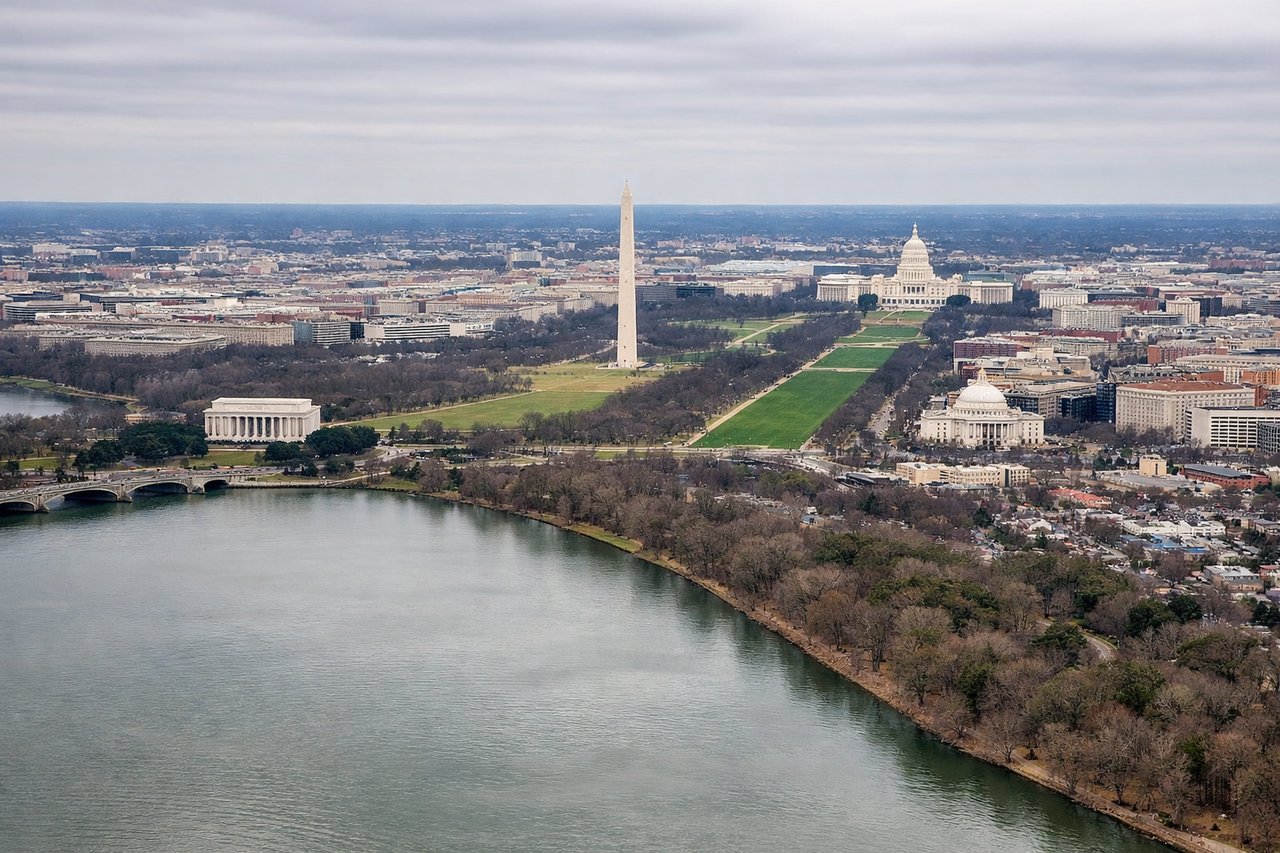
Landing at DCA
LEFTLeft seats provide excellent views during descent into DCA. You'll see the Potomac River prominently, the National Mall and Washington Monument area, and the distinctive geography of the District as you approach from the northeast on typical arrival vectors.
Will your flight be in sunlight?
Pick a date and time in the Sun Map to watch the sun move across your whole flight.
About This Route
Which side of the plane should I sit on flying from Philadelphia International (PHL) to Ronald Reagan Washington National (DCA)?
Sit on the Left side of the plane for the best views on flights from Philadelphia to Washington. While takeoff offers good Delaware River views on the right, the landing approach into DCA on the left provides more dramatic and iconic scenery—the Potomac River, National Mall, and Washington Monument are far more visually distinctive than the suburban landscape north of Philadelphia.
What can I see during takeoff from Philadelphia International in Philadelphia?
During takeoff from Philadelphia International (PHL), sit on the Right side for the best views. Right-side seats offer views of the Delaware River and Philadelphia's urban core as you climb out. The river curves distinctly eastward from PHL, and you'll see the city skyline and surrounding suburban sprawl spread across the landscape. Notable sights include: Delaware River, Philadelphia skyline and downtown district, Schuylkill River, suburban development extending north toward Bucks County.
What can I see when landing at Ronald Reagan Washington National in Washington?
When landing at Ronald Reagan Washington National (DCA), sit on the Left side for the best views. Left seats provide excellent views during descent into DCA. You'll see the Potomac River prominently, the National Mall and Washington Monument area, and the distinctive geography of the District as you approach from the northeast on typical arrival vectors. Notable sights include: Potomac River, Washington Monument and National Mall, Arlington and Pentagon area, Anacostia River confluence.
How long is the flight from Philadelphia to Washington?
The flight from Philadelphia International (PHL) to Ronald Reagan Washington National (DCA) takes about 1 hour 10 minutes. The shortest flight path between them is 119 miles (192 km); winds and air traffic control usually add a few percent.
What does the Philadelphia to Washington flight path pass over?
The flight path typically follows a southwest corridor over central Maryland. Notable features include the Chesapeake Bay visible to the east (left side) during cruise, the rolling terrain of Maryland's piedmont region, and occasional glimpses of Baltimore's urban area if the flight path carries slightly northwest. The landscape transitions from Philadelphia's dense suburban ring through rural Maryland farmland and forested areas before descending toward the Potomac River valley and Washington, D.C.