Right side dominates both segments—Philadelphia's urban core and river system on departure, then the Atlantic coastline and Port Everglades on arrival. Left side offers only suburban sprawl northbound and inland swamp views southbound.
Flown PHL to FLL? Did we get it right?
Flight Path
Philadelphia to Fort Lauderdale is 995 miles (1,601 km), a flight of about 3 hours 15 minutes.
The flight path crosses the Appalachian foothills of North Carolina and Virginia (visible as rolling terrain with ridge lines), then transitions over the Piedmont region. The Outer Banks of North Carolina may be visible off the right wing during cruise if flying a slightly eastern routing. The flight crosses into South Carolina airspace before descending toward Florida, with the coastal plain becoming increasingly flat and vegetation shifting to pine forests and wetlands as you approach the peninsula.
Great circle distance and headings ›Phase by phase
Takeoff from PHL
RIGHTRight side seats capture the Delaware River and Philadelphia's downtown skyline during the initial climb-out. PHL typically departs eastbound (Runways 27L/27R or 26L/26R), so right-side passengers get an immediate view of the city grid and river before banking south toward Florida.
Landing at FLL
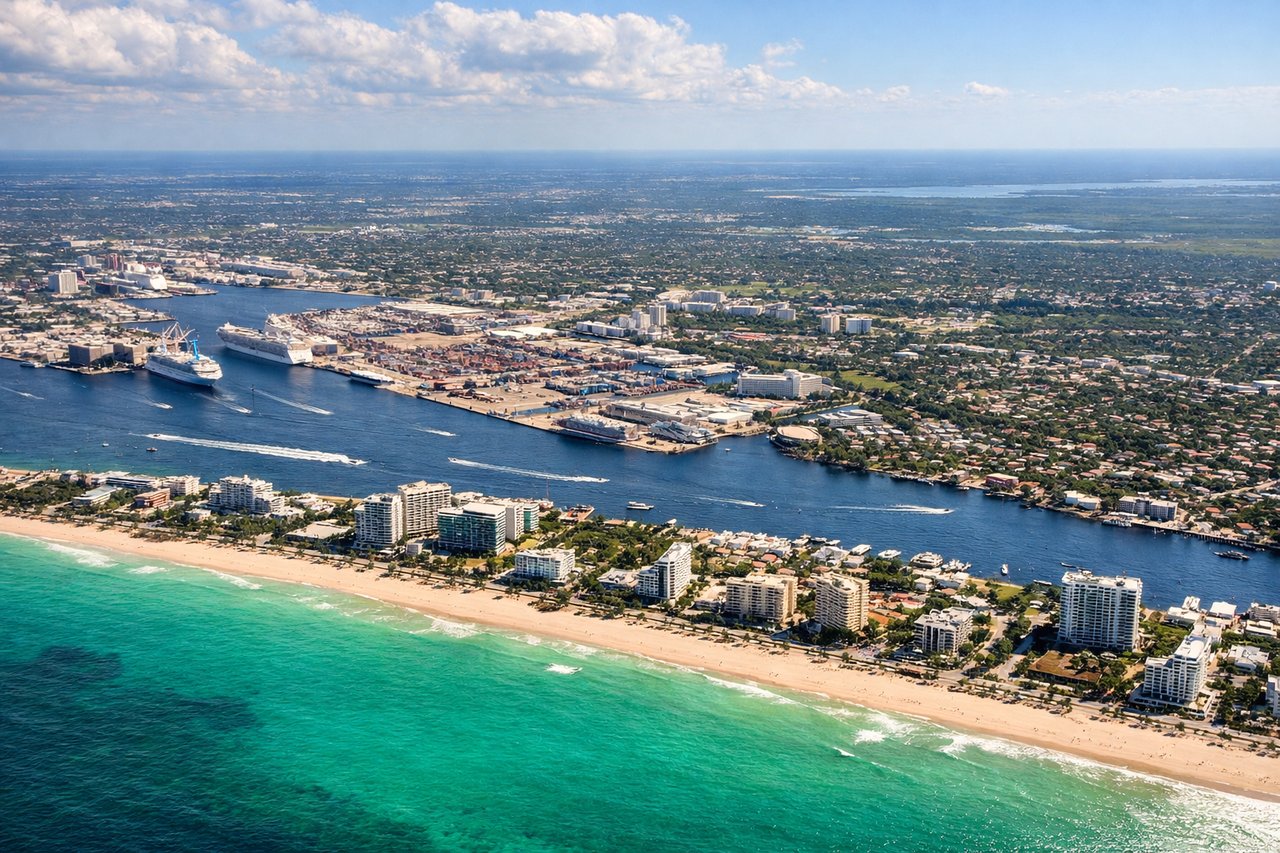
RIGHTRight side offers superior views of the Fort Lauderdale coastline and approach corridor. Typical arrivals use Runways 26L/26R or 27L/27R (eastbound approaches), positioning right-side passengers to see the Atlantic Ocean, coastal development, and the final descent over Broward County.
Will your flight be in sunlight?
Pick a date and time in the Sun Map to watch the sun move across your whole flight.
About This Route
Which side of the plane should I sit on flying from Philadelphia International (PHL) to Fort Lauderdale Hollywood International (FLL)?
Sit on the Right side of the plane for the best views on flights from Philadelphia to Fort Lauderdale. Right side dominates both segments—Philadelphia's urban core and river system on departure, then the Atlantic coastline and Port Everglades on arrival. Left side offers only suburban sprawl northbound and inland swamp views southbound.
What can I see during takeoff from Philadelphia International in Philadelphia?
During takeoff from Philadelphia International (PHL), sit on the Right side for the best views. Right side seats capture the Delaware River and Philadelphia's downtown skyline during the initial climb-out. PHL typically departs eastbound (Runways 27L/27R or 26L/26R), so right-side passengers get an immediate view of the city grid and river before banking south toward Florida. Notable sights include: Delaware River, Philadelphia downtown skyline, Ben Franklin Bridge, Schuylkill River.
What can I see when landing at Fort Lauderdale Hollywood International in Fort Lauderdale?
When landing at Fort Lauderdale Hollywood International (FLL), sit on the Right side for the best views. Right side offers superior views of the Fort Lauderdale coastline and approach corridor. Typical arrivals use Runways 26L/26R or 27L/27R (eastbound approaches), positioning right-side passengers to see the Atlantic Ocean, coastal development, and the final descent over Broward County. Notable sights include: Atlantic Ocean, Fort Lauderdale Beach, Port Everglades, Intracoastal Waterway.
How long is the flight from Philadelphia to Fort Lauderdale?
The flight from Philadelphia International (PHL) to Fort Lauderdale Hollywood International (FLL) takes about 3 hours 15 minutes. The shortest flight path between them is 995 miles (1,601 km); winds and air traffic control usually add a few percent.
What does the Philadelphia to Fort Lauderdale flight path pass over?
The flight path crosses the Appalachian foothills of North Carolina and Virginia (visible as rolling terrain with ridge lines), then transitions over the Piedmont region. The Outer Banks of North Carolina may be visible off the right wing during cruise if flying a slightly eastern routing. The flight crosses into South Carolina airspace before descending toward Florida, with the coastal plain becoming increasingly flat and vegetation shifting to pine forests and wetlands as you approach the peninsula.