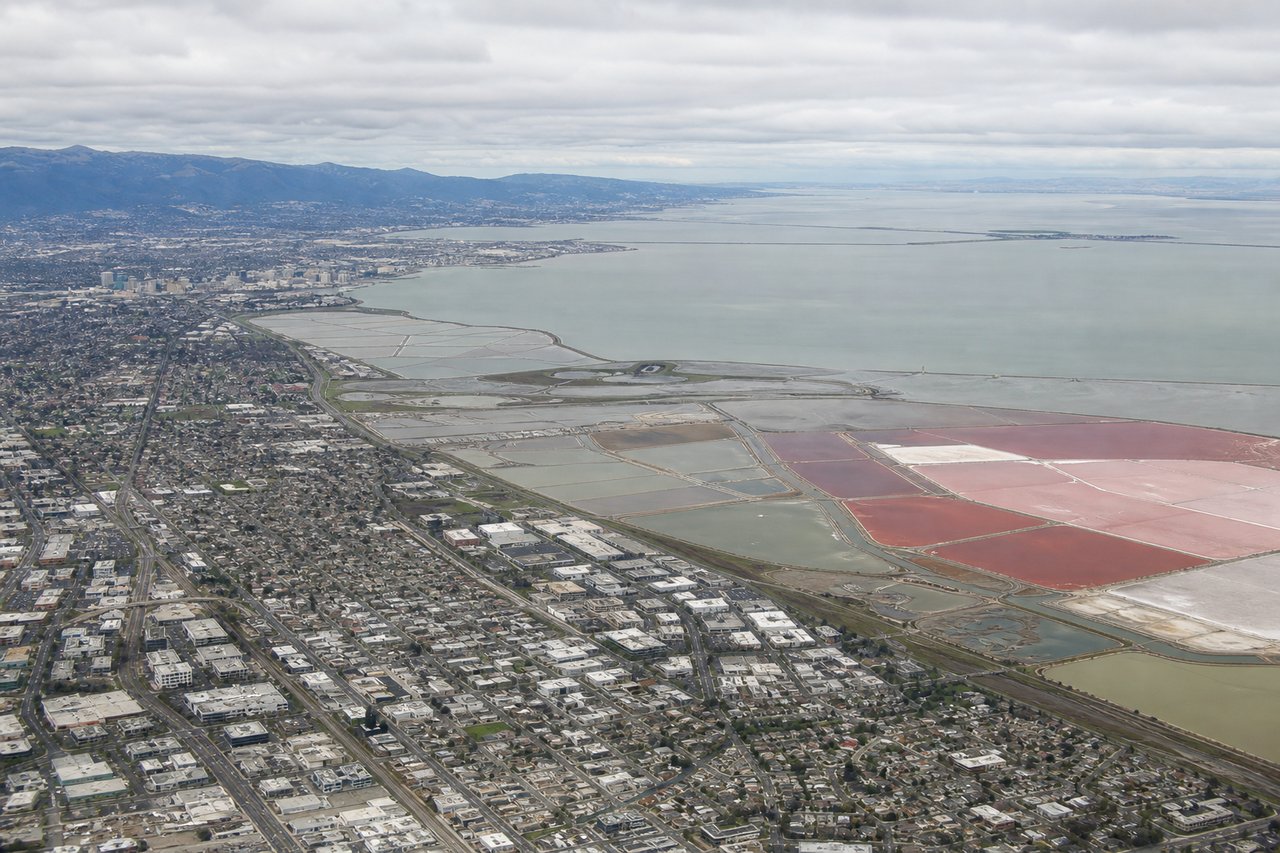
South Bay salt ponds, San Francisco Bay open water, Diablo Range hills
Downtown San Jose skyline, Mt. Hamilton and Lick Observatory, Diablo Range foothills
🛫 Taking Off from San Jose (SJC)
🛬 Landing at San Jose (SJC)
 Right Side
SJC is a mid-sized airport with two terminals (A and B) connected by a walkway, known for being conveniently close to downtown San Jose and popular with business travelers heading to Silicon Valley tech campuses. It has a modern, art-filled terminal design and generally shorter security lines than SFO or OAK.
Landmarks on routes from San JoseAll landmarks →
Connecting at SJC?
Find out if your layover is long enough at Norman Y Mineta San Jose International.
Check layover times →Popular Routes from Norman Y Mineta San Jose International (SJC)
North America
Europe
Asia
Oceania
About This Airport
Which side of the plane has the best views at Norman Y Mineta San Jose International (SJC)?
At Norman Y Mineta San Jose International in San Jose: for takeoff, sit on the Right side; for landing, sit on the Right side. Notable views include: South Bay salt ponds (Don Edwards National Wildlife Refuge), San Francisco Bay open water, Diablo Range hills, Mission Peak near Fremont.
What can I see during takeoff from Norman Y Mineta San Jose International in San Jose?
When taking off from Norman Y Mineta San Jose International (SJC), sit on the Right side for the best views. Departing to the northwest on runway 30R, the right side of the plane faces northeast, giving a clear view over the southern San Francisco Bay with its colorful salt ponds and levees near Fremont and Newark, backed by the Diablo Range hills. It's a more open, distinctive view than the left side, which mostly shows the Santa Cruz Mountains' western foothills. Notable sights include: South Bay salt ponds (Don Edwards National Wildlife Refuge), San Francisco Bay open water, Diablo Range hills, Mission Peak near Fremont.
What can I see when landing at Norman Y Mineta San Jose International in San Jose?
When landing at Norman Y Mineta San Jose International (SJC), sit on the Right side for the best views. Landing on runway 30L means approaching from the southeast and flying northwest over south San Jose. Right-side (northeast-facing) windows get a good look at downtown San Jose's skyline passing below and the Diablo Range foothills with Mt. Hamilton's white observatory dome visible on the horizon. Notable sights include: Downtown San Jose skyline, Mt. Hamilton and Lick Observatory, Diablo Range foothills, Guadalupe River corridor.
What factors affect the best window seat at Norman Y Mineta San Jose International?
The best window seat at Norman Y Mineta San Jose International (SJC) depends on several factors: the typical runway used for your departure or arrival, the geographic features around San Jose (mountains, coastlines, city skylines), weather conditions, and time of day. Morning and evening flights often offer the best lighting for scenic views.