While takeoff offers Caribbean views, the landing approach over the San Jacinto Mountains and Coachella Valley provides more dramatic and visually distinctive terrain. The westbound flight path crosses the continental US interior with limited notable landmarks, making the final descent the highlight.
Flown SJU to PSP? Did we get it right?
Flight Path
San Juan to Palm Springs is 3,273 miles (5,267 km), a flight of about 5 hours 15 minutes.
The flight crosses the Gulf of Mexico (2-3 hours of open water with minimal visual interest), then the Louisiana/Texas coast near the Mississippi Delta, followed by the flat terrain of Texas and New Mexico. The Rocky Mountain foothills appear as the aircraft approaches Arizona, with the Colorado Plateau visible in the distance. The Mojave Desert dominates the final 90 minutes of flight, with increasingly rugged terrain as the aircraft approaches Southern California.
Great circle distance and headings ›


Phase by phase
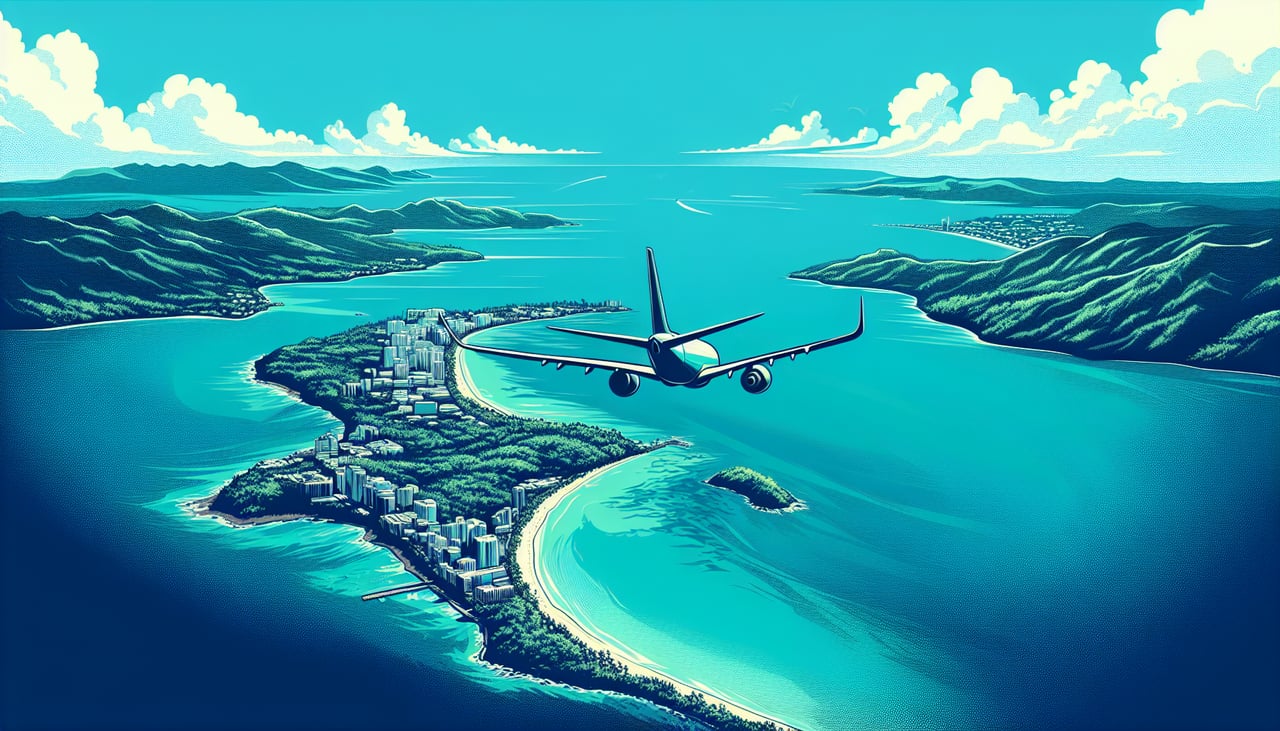
Takeoff from SJU
RIGHTRight-side seats capture the immediate Caribbean coastline and the northern Puerto Rico shelf as the aircraft climbs northwest. SJU typically departs runway 10 (heading northwest), so right windows face toward the Atlantic and the island's northern coast during initial climb.
Landing at PSP
LEFTLeft-side seats offer the best view of the San Jacinto Mountains and the Coachella Valley approach. PSP typically lands runway 31 (heading northwest) or runway 13 (heading southwest); on either approach, left windows face toward the dramatic mountain terrain that frames the airport.
Will your flight be in sunlight?
Pick a date and time in the Sun Map to watch the sun move across your whole flight.
About This Route
Which side of the plane should I sit on flying from Luis Munoz Marin International (SJU) to Palm Springs International (PSP)?
Sit on the Left side of the plane for the best views on flights from San Juan to Palm Springs. While takeoff offers Caribbean views, the landing approach over the San Jacinto Mountains and Coachella Valley provides more dramatic and visually distinctive terrain. The westbound flight path crosses the continental US interior with limited notable landmarks, making the final descent the highlight.
What can I see during takeoff from Luis Munoz Marin International in San Juan?
During takeoff from Luis Munoz Marin International (SJU), sit on the Right side for the best views. Right-side seats capture the immediate Caribbean coastline and the northern Puerto Rico shelf as the aircraft climbs northwest. SJU typically departs runway 10 (heading northwest), so right windows face toward the Atlantic and the island's northern coast during initial climb. Notable sights include: Northern Puerto Rico coastline with reef systems, Atlantic Ocean horizon, El Yunque National Forest ridge (visible as green elevation to the west), San Juan metropolitan area receding below.
What can I see when landing at Palm Springs International in Palm Springs?
When landing at Palm Springs International (PSP), sit on the Left side for the best views. Left-side seats offer the best view of the San Jacinto Mountains and the Coachella Valley approach. PSP typically lands runway 31 (heading northwest) or runway 13 (heading southwest); on either approach, left windows face toward the dramatic mountain terrain that frames the airport. Notable sights include: San Jacinto Mountains (prominent ridge to the west/northwest), Coachella Valley floor with agricultural grid patterns, Mount San Gorgonio (visible as distant peak to the north on clear days), Palm Springs city lights and development.
How long is the flight from San Juan to Palm Springs?
The flight from Luis Munoz Marin International (SJU) to Palm Springs International (PSP) takes about 5 hours 15 minutes. The shortest flight path between them is 3,273 miles (5,267 km); winds and air traffic control usually add a few percent.
What does the San Juan to Palm Springs flight path pass over?
The flight crosses the Gulf of Mexico (2-3 hours of open water with minimal visual interest), then the Louisiana/Texas coast near the Mississippi Delta, followed by the flat terrain of Texas and New Mexico. The Rocky Mountain foothills appear as the aircraft approaches Arizona, with the Colorado Plateau visible in the distance. The Mojave Desert dominates the final 90 minutes of flight, with increasingly rugged terrain as the aircraft approaches Southern California.