The right side wins both ends of the flight: a dramatic harbour departure from Sydney and an island-studded coastal approach into Incheon, while the ten-plus hour cruise over open Pacific and Philippine Sea waters offers little differentiation either way.
Flight Path
Coral Sea, Papua New Guinea's southern coastline, Philippine Sea, and the East China Sea approach toward the Korean peninsula, mostly open ocean with limited landmark visibility
Great circle distance and headings ›.jpg?width=600)

Phase by phase
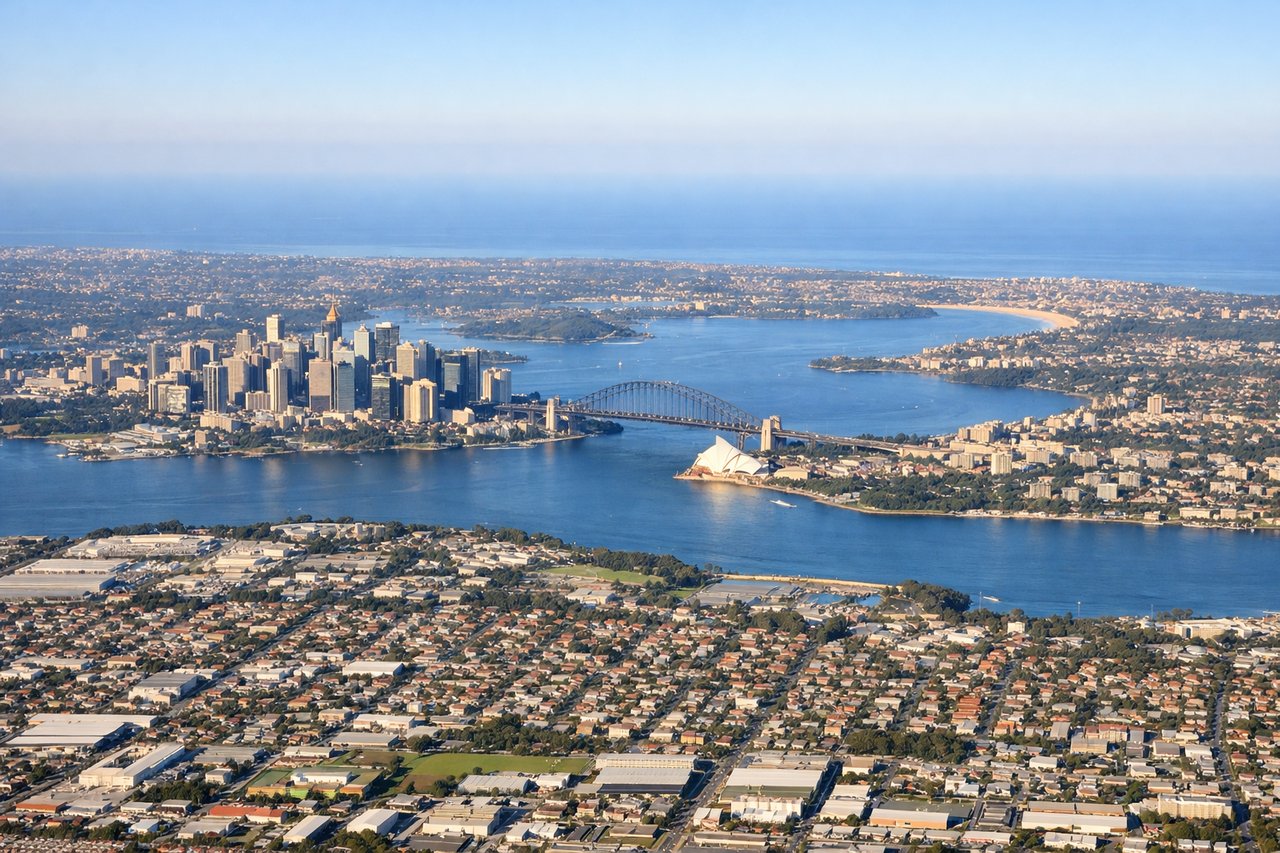
Takeoff from SYD
RIGHTDeparting Sydney on the northerly plan, the climb-out curves over Sydney Harbour and the CBD skyline before the aircraft turns north toward Asia. Passengers on the right get a clear view of the Opera House, Harbour Bridge, and the northern beaches coastline receding below.
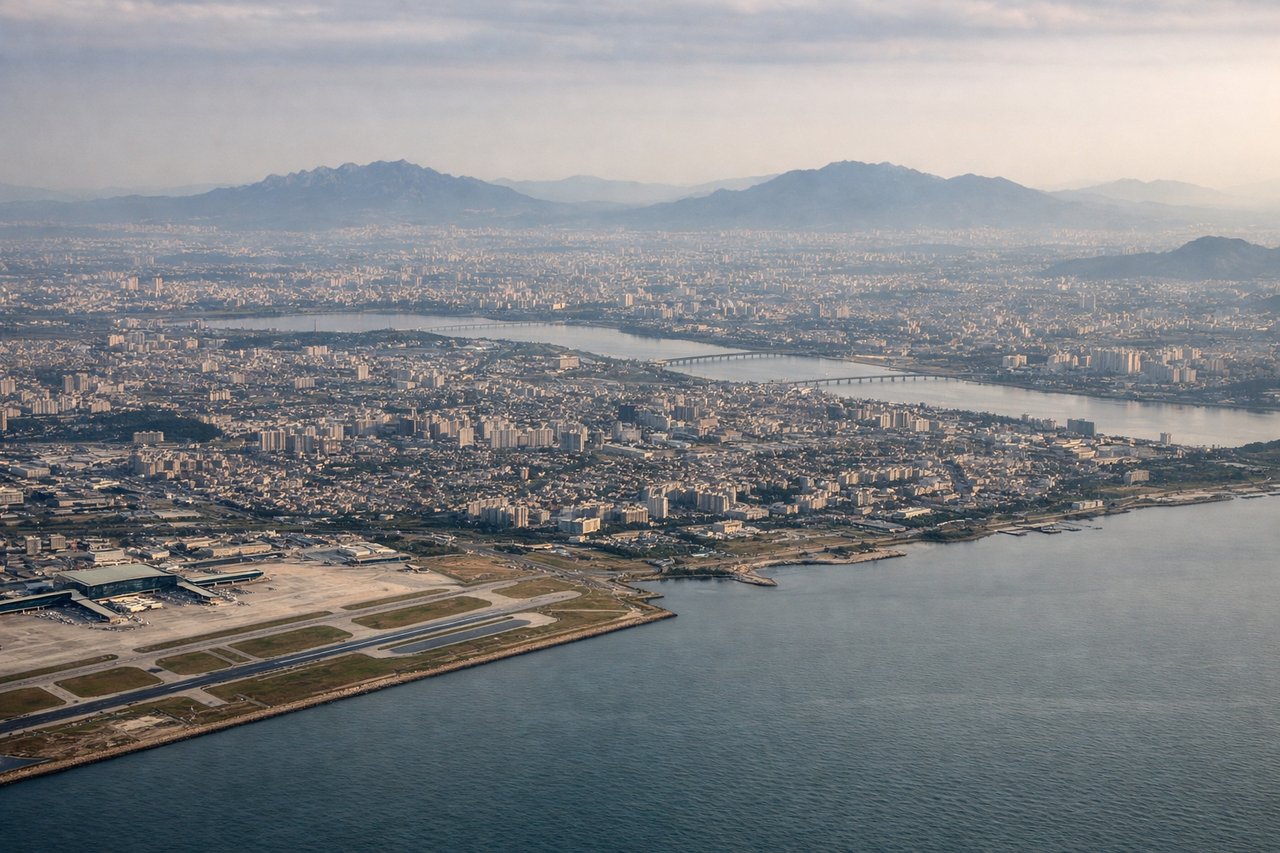
Landing at ICN
RIGHTOn approach into Incheon from the south over the Yellow Sea, the aircraft tracks north toward the 33/34 runways, and the right side offers views of the Korean mainland coastline and the many small islands dotting Incheon Bay, with Seoul's distant skyline visible across the estuary.
Landmarks on this routeAll landmarks →
Will your flight be in sunlight?
See exactly which side of the plane gets sun and shade at your departure time.
About This Route
Which side of the plane should I sit on flying from Kingsford Smith International Airport (SYD) to Incheon International (ICN)?
Sit on the Right side of the plane for the best views on flights from Sydney to Seoul. The right side wins both ends of the flight: a dramatic harbour departure from Sydney and an island-studded coastal approach into Incheon, while the ten-plus hour cruise over open Pacific and Philippine Sea waters offers little differentiation either way.
What can I see during takeoff from Kingsford Smith International Airport in Sydney?
During takeoff from Kingsford Smith International Airport (SYD), sit on the Right side for the best views. Departing Sydney on the northerly plan, the climb-out curves over Sydney Harbour and the CBD skyline before the aircraft turns north toward Asia. Passengers on the right get a clear view of the Opera House, Harbour Bridge, and the northern beaches coastline receding below. Notable sights include: Sydney Harbour Bridge, Opera House, Sydney CBD skyline, Northern Beaches coastline.
What can I see when landing at Incheon International in Seoul?
When landing at Incheon International (ICN), sit on the Right side for the best views. On approach into Incheon from the south over the Yellow Sea, the aircraft tracks north toward the 33/34 runways, and the right side offers views of the Korean mainland coastline and the many small islands dotting Incheon Bay, with Seoul's distant skyline visible across the estuary. Notable sights include: Incheon Bay islands (Yeongjong, Deokjeokdo), Yellow Sea coastline, distant Seoul skyline, Han River estuary.
How long is the flight from Sydney to Seoul?
The flight from Kingsford Smith International Airport (SYD) to Incheon International (ICN) takes 10h 25m.
What does the Sydney to Seoul flight path pass over?
Coral Sea, Papua New Guinea's southern coastline, Philippine Sea, and the East China Sea approach toward the Korean peninsula, mostly open ocean with limited landmark visibility