Right-side seats dominate both segments: Montreal departure shows the St. Lawrence and Laurentians, while the Caribbean approach and Cartagena arrival offer consistent water and island views. The flight path itself crosses the Atlantic and Caribbean, so right seats maintain better sightlines to the coastlines and water features throughout.
Flown YUL to CTG? Did we get it right?
Flight Path
Montreal to Cartagena is 2,422 miles (3,898 km), a flight of about 5 hours.
The flight crosses the Atlantic Ocean heading southeast. Notable waypoints include passing east of Florida (visible as a low peninsula on the left/east side around 2-3 hours into flight), then the Bahamas archipelago (scattered islands and shallow banks), and finally the northern Caribbean with Cuba visible to the left on approach to Colombian airspace. The Yucatan Peninsula may be visible on the left side during the southern portion of the flight. Most of the midpoint is open ocean with occasional cloud formations.
Great circle distance and headings ›


Phase by phase
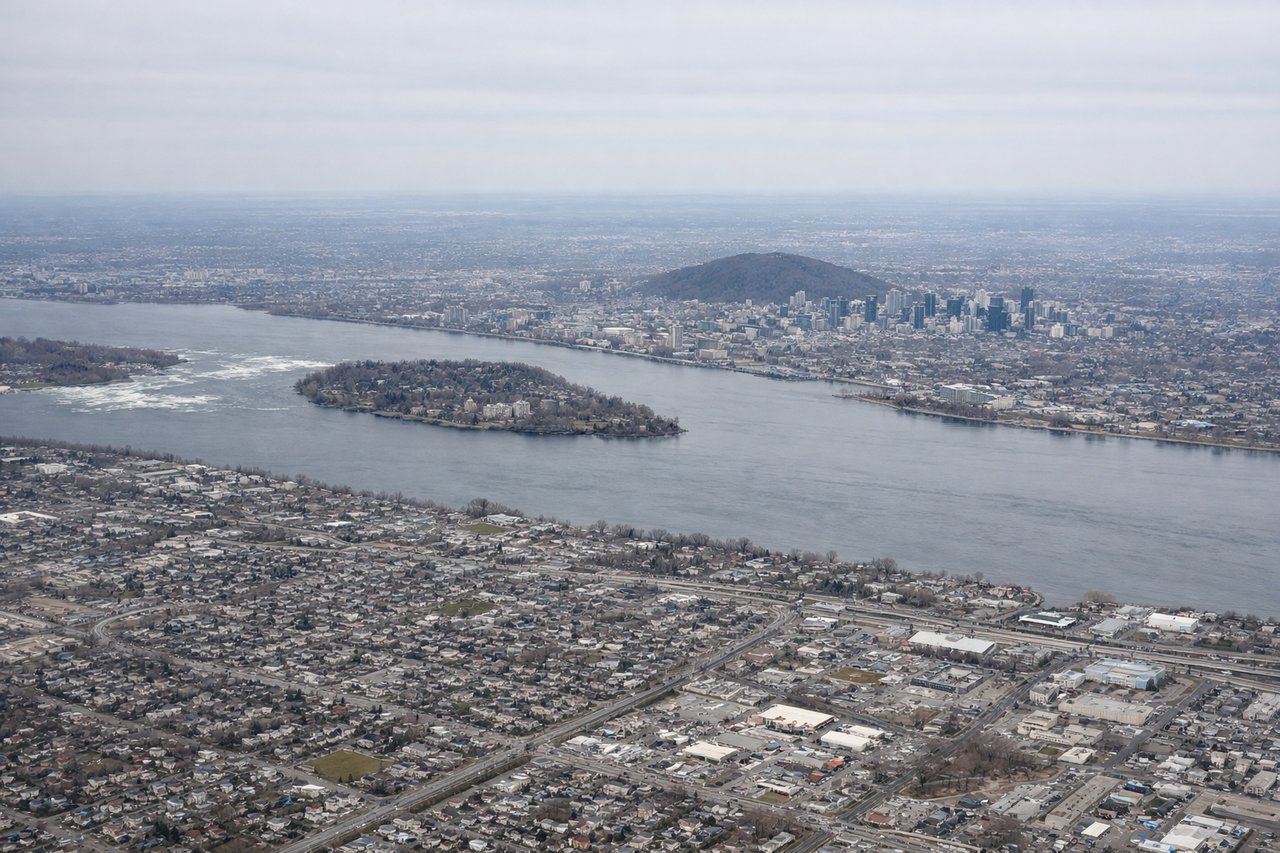
Takeoff from YUL
RIGHTMontreal typically departs eastbound (Runways 06L/06R or 24L/24R depending on wind). Right-side seats offer views of the St. Lawrence River valley and the Laurentian Mountains to the north as you climb out. Left seats face inland toward less dramatic terrain.
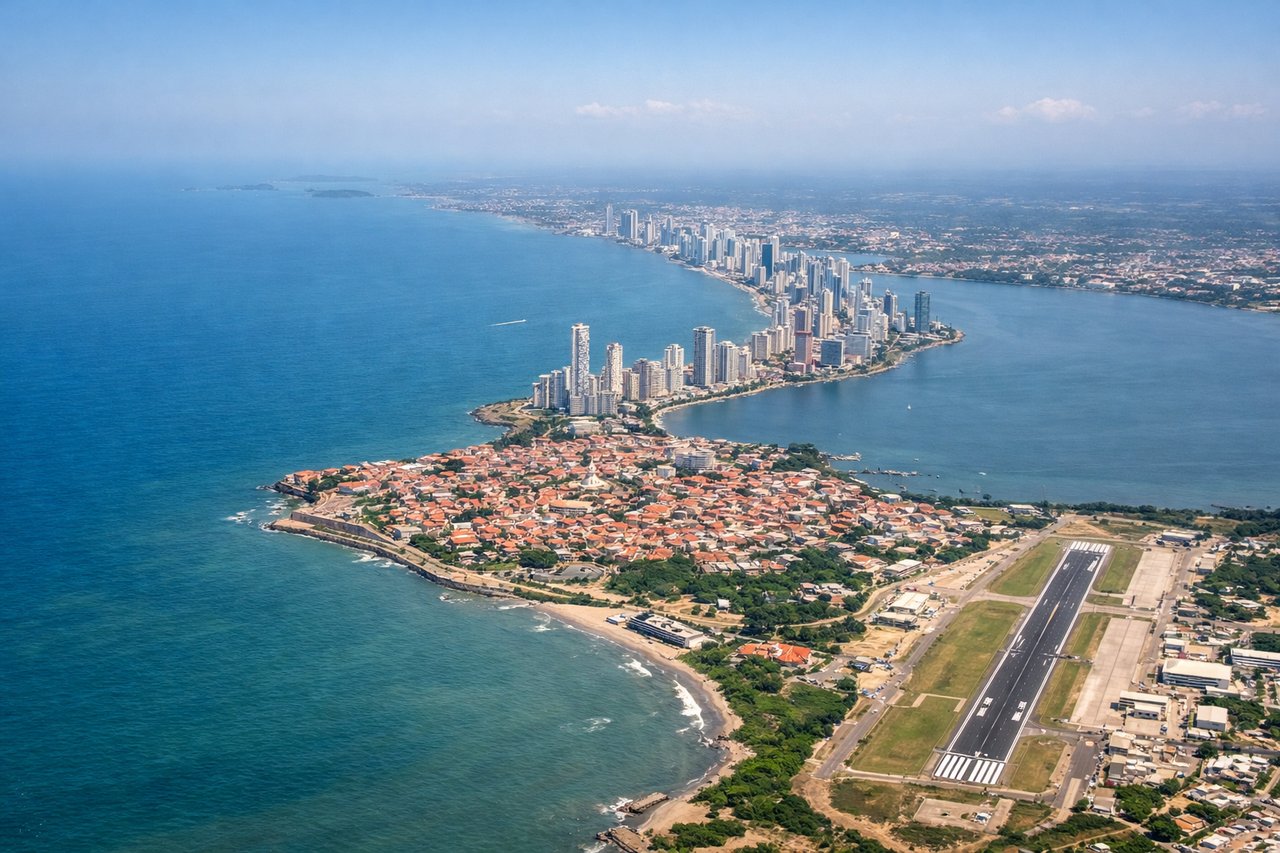
Landing at CTG
RIGHTCartagena approaches typically use Runway 13 (northeast heading) or Runway 31 (southwest heading) depending on wind. Right-side seats on descent show the Caribbean coastline, Cartagena's walled old city, and the archipelago of Rosario Islands. The approach path crosses the Caribbean, offering water views throughout descent.
Will your flight be in sunlight?
Pick a date and time in the Sun Map to watch the sun move across your whole flight.
About This Route
Which side of the plane should I sit on flying from Montreal International Dorval (YUL) to Rafael Nunez (CTG)?
Sit on the Right side of the plane for the best views on flights from Montreal to Cartagena. Right-side seats dominate both segments: Montreal departure shows the St. Lawrence and Laurentians, while the Caribbean approach and Cartagena arrival offer consistent water and island views. The flight path itself crosses the Atlantic and Caribbean, so right seats maintain better sightlines to the coastlines and water features throughout.
What can I see during takeoff from Montreal International Dorval in Montreal?
During takeoff from Montreal International Dorval (YUL), sit on the Right side for the best views. Montreal typically departs eastbound (Runways 06L/06R or 24L/24R depending on wind). Right-side seats offer views of the St. Lawrence River valley and the Laurentian Mountains to the north as you climb out. Left seats face inland toward less dramatic terrain. Notable sights include: St. Lawrence River (flowing southeast below), Laurentian Mountains (northern horizon), Montreal urban sprawl (receding westward), Île Perrot (visible in river to the west).
What can I see when landing at Rafael Nunez in Cartagena?
When landing at Rafael Nunez (CTG), sit on the Right side for the best views. Cartagena approaches typically use Runway 13 (northeast heading) or Runway 31 (southwest heading) depending on wind. Right-side seats on descent show the Caribbean coastline, Cartagena's walled old city, and the archipelago of Rosario Islands. The approach path crosses the Caribbean, offering water views throughout descent. Notable sights include: Caribbean Sea (turquoise waters), Cartagena's walled old town (distinctive grid pattern on peninsula), Rosario Islands archipelago (scattered islands to the south), Boca Grande channel (narrow passage between islands).
How long is the flight from Montreal to Cartagena?
The flight from Montreal International Dorval (YUL) to Rafael Nunez (CTG) takes about 5 hours. The shortest flight path between them is 2,422 miles (3,898 km); winds and air traffic control usually add a few percent.
What does the Montreal to Cartagena flight path pass over?
The flight crosses the Atlantic Ocean heading southeast. Notable waypoints include passing east of Florida (visible as a low peninsula on the left/east side around 2-3 hours into flight), then the Bahamas archipelago (scattered islands and shallow banks), and finally the northern Caribbean with Cuba visible to the left on approach to Colombian airspace. The Yucatan Peninsula may be visible on the left side during the southern portion of the flight. Most of the midpoint is open ocean with occasional cloud formations.