The right side wins on both ends of the flight: a skyline-and-river departure from Montreal and a genuine Rocky Mountain approach into Calgary, while the left side only offers flat prairie and boreal forest throughout.
Flown YUL to YYC? Did we get it right?
Flight Path
Montreal to Calgary is 1,867 miles (3,005 km), a flight of about 4 hours 15 minutes.
Canadian Shield lakes and boreal forest of northern Ontario, the plains of Manitoba and Saskatchewan, and the Qu'Appelle River valley before the land rises toward the Alberta foothills
Great circle distance and headings ›Phase by phase
Takeoff from YUL
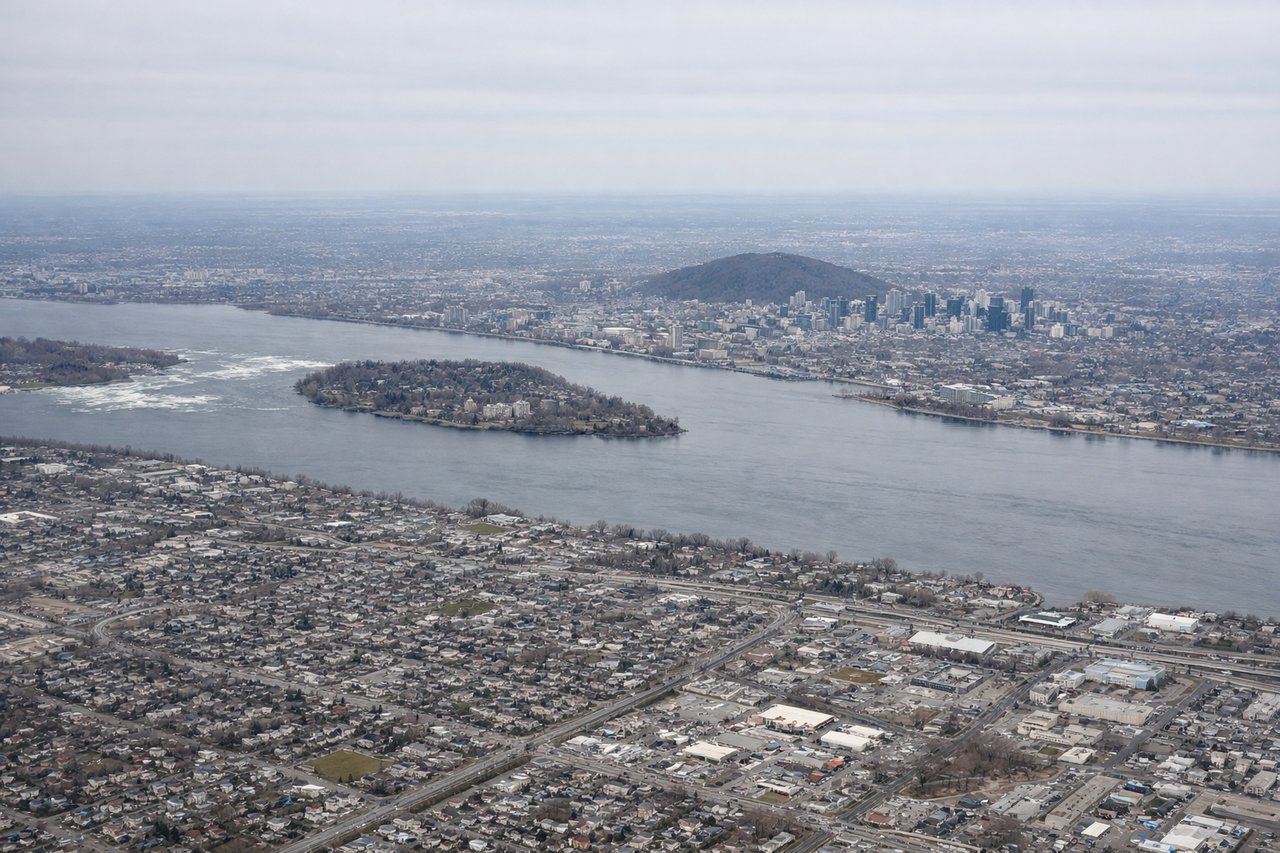
RIGHTDeparting on runway 24 southwest over Lake Saint-Louis, the aircraft banks right to head west toward Calgary, swinging the wing toward downtown Montreal. Passengers on the right get a good look at the St. Lawrence River, the Montreal skyline, and Mount Royal before the city falls away into farmland.
Landing at YYC
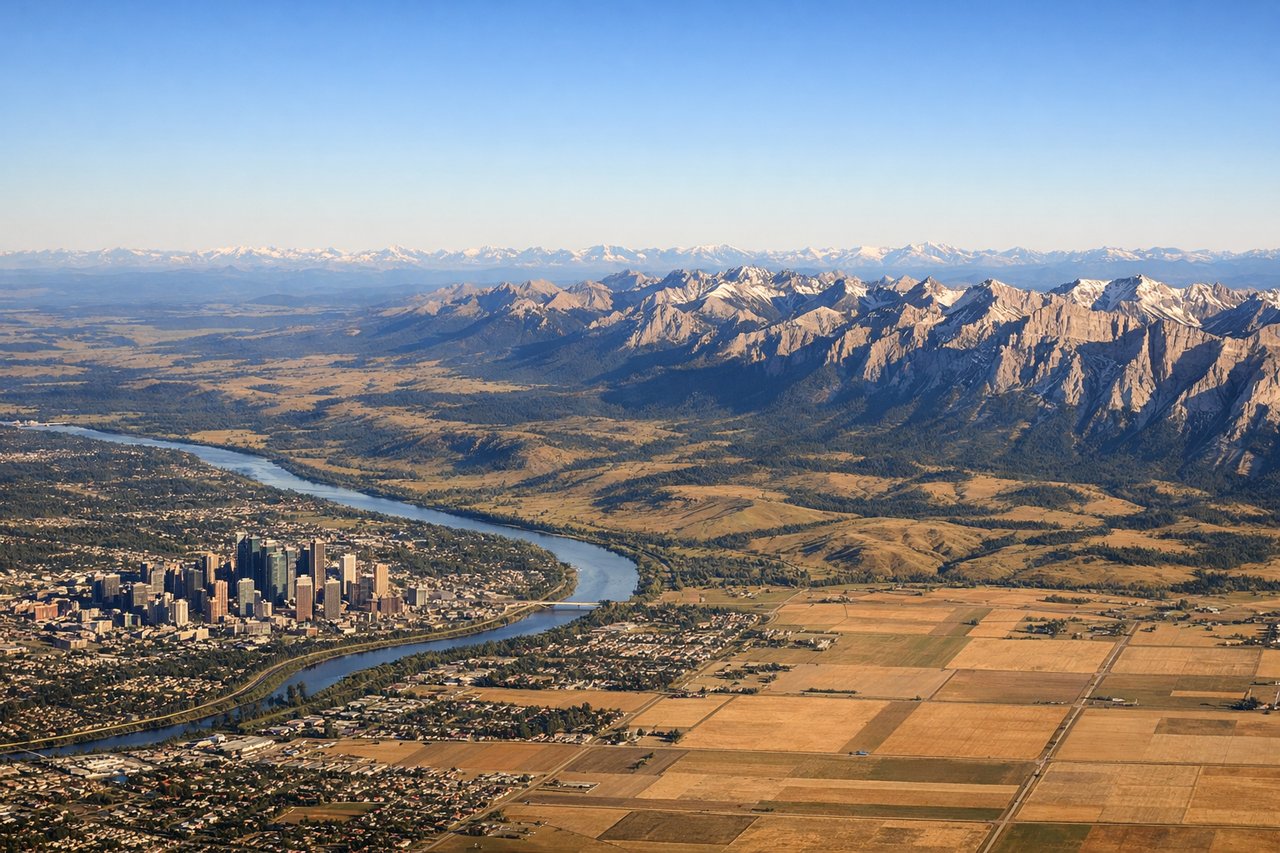
RIGHTCalgary's typical southbound landing on runway 17 means the final approach faces south with the Canadian Rockies stacked along the western horizon, squarely on the right side of the aircraft. It's one of the most dramatic mountain approaches in Canadian domestic flying.
Will your flight be in sunlight?
Pick a date and time in the Sun Map to watch the sun move across your whole flight.
About This Route
Which side of the plane should I sit on flying from Montreal International Dorval (YUL) to Calgary International (YYC)?
Sit on the Right side of the plane for the best views on flights from Montreal to Calgary. The right side wins on both ends of the flight: a skyline-and-river departure from Montreal and a genuine Rocky Mountain approach into Calgary, while the left side only offers flat prairie and boreal forest throughout.
What can I see during takeoff from Montreal International Dorval in Montreal?
During takeoff from Montreal International Dorval (YUL), sit on the Right side for the best views. Departing on runway 24 southwest over Lake Saint-Louis, the aircraft banks right to head west toward Calgary, swinging the wing toward downtown Montreal. Passengers on the right get a good look at the St. Lawrence River, the Montreal skyline, and Mount Royal before the city falls away into farmland. Notable sights include: St. Lawrence River, Montreal skyline, Mount Royal, Lake Saint-Louis.
What can I see when landing at Calgary International in Calgary?
When landing at Calgary International (YYC), sit on the Right side for the best views. Calgary's typical southbound landing on runway 17 means the final approach faces south with the Canadian Rockies stacked along the western horizon, squarely on the right side of the aircraft. It's one of the most dramatic mountain approaches in Canadian domestic flying. Notable sights include: Canadian Rockies front range, Bow River valley, Calgary skyline, foothill ridgelines.
How long is the flight from Montreal to Calgary?
The flight from Montreal International Dorval (YUL) to Calgary International (YYC) takes about 4 hours 15 minutes. The shortest flight path between them is 1,867 miles (3,005 km); winds and air traffic control usually add a few percent.
What does the Montreal to Calgary flight path pass over?
Canadian Shield lakes and boreal forest of northern Ontario, the plains of Manitoba and Saskatchewan, and the Qu'Appelle River valley before the land rises toward the Alberta foothills