Antigua to London is 4,079 miles (6,564 km), a flight of about 8 hours 45 minutes.
Left side wins both ends of the flight. At takeoff you get Antigua's lagoons and Barbuda; at landing you get the South Downs and the Sussex coast. Over the Atlantic the difference is minimal, but the left side also faces slightly more toward the Azores archipelago in the mid-Atlantic, which occasionally appears as dark volcanic peaks on the horizon on clear days.
Flight Path
The flight tracks northeast from Antigua across the open North Atlantic, passing well south of Bermuda, then northeast toward the Azores (which may be visible to the left on clear days as dark volcanic peaks), before crossing into European airspace over Portugal or northern Spain. The Bay of Biscay is crossed in the later stages, followed by the French interior — the Loire Valley and Normandy farmland — before crossing the English Channel into southern England.
Great circle distance and headings ›Phase by phase
Takeoff from ANU
LEFTV C Bird's primary runway 07/25 means departures heading northeast give the left (north) side a view back over Antigua's lagoons and the island's irregular coastline. You'll also catch Barbuda sitting low on the horizon about 30 miles north — a flat coral island that's surprisingly distinct from altitude.
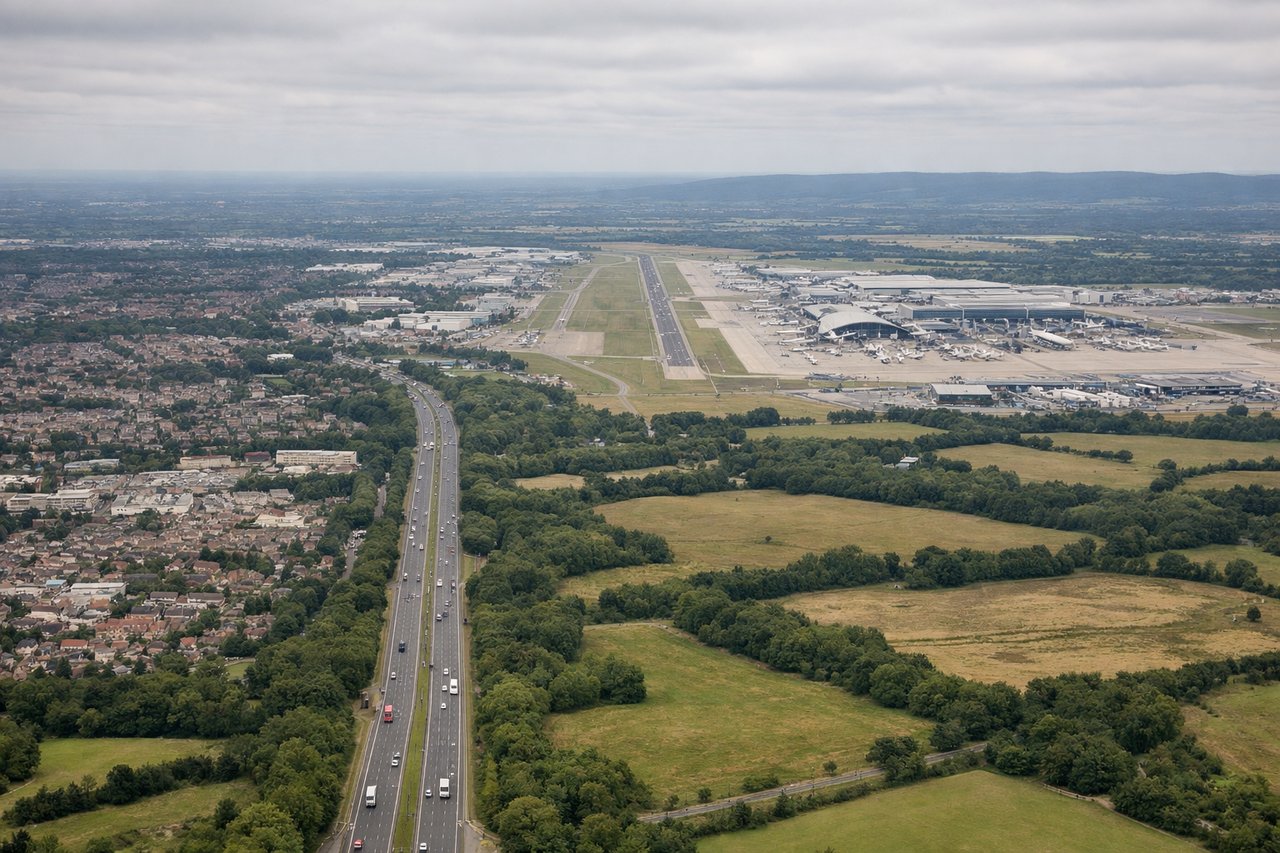
Landing at LGW
LEFTGatwick's runway 08L/26R means arrivals typically come in from the east heading west, putting the left side facing south over the Surrey and Sussex countryside. You get a clear view of the South Downs ridge and the English Channel coast near Brighton as you descend, which is more visually interesting than the suburban sprawl to the north.
Landmarks on this routeAll landmarks →
Will your flight be in sunlight?
Pick a date and time in the Sun Map to watch the sun move across your whole flight.
About This Route
Which side of the plane should I sit on flying from V C Bird International (ANU) to Gatwick (LGW)?
Sit on the Left side of the plane for the best views on flights from Antigua to London. Left side wins both ends of the flight. At takeoff you get Antigua's lagoons and Barbuda; at landing you get the South Downs and the Sussex coast. Over the Atlantic the difference is minimal, but the left side also faces slightly more toward the Azores archipelago in the mid-Atlantic, which occasionally appears as dark volcanic peaks on the horizon on clear days.
What can I see during takeoff from V C Bird International in Antigua?
During takeoff from V C Bird International (ANU), sit on the Left side for the best views. V C Bird's primary runway 07/25 means departures heading northeast give the left (north) side a view back over Antigua's lagoons and the island's irregular coastline. You'll also catch Barbuda sitting low on the horizon about 30 miles north — a flat coral island that's surprisingly distinct from altitude. Notable sights include: Antigua's Deep Bay and Five Islands Harbour, Barbuda to the north, St. John's Harbour and the cruise ship terminal, the reef-fringed northeast coast of Antigua.
What can I see when landing at Gatwick in London?
When landing at Gatwick (LGW), sit on the Left side for the best views. Gatwick's runway 08L/26R means arrivals typically come in from the east heading west, putting the left side facing south over the Surrey and Sussex countryside. You get a clear view of the South Downs ridge and the English Channel coast near Brighton as you descend, which is more visually interesting than the suburban sprawl to the north. Notable sights include: The South Downs ridge running east-west, Brighton and the Sussex coast, the Weald farmland patchwork below, the North Downs visible further north.
How long is the flight from Antigua to London?
The flight from V C Bird International (ANU) to Gatwick (LGW) takes about 8 hours 45 minutes. The shortest flight path between them is 4,079 miles (6,564 km); winds and air traffic control usually add a few percent.
What does the Antigua to London flight path pass over?
The flight tracks northeast from Antigua across the open North Atlantic, passing well south of Bermuda, then northeast toward the Azores (which may be visible to the left on clear days as dark volcanic peaks), before crossing into European airspace over Portugal or northern Spain. The Bay of Biscay is crossed in the later stages, followed by the French interior — the Loire Valley and Normandy farmland — before crossing the English Channel into southern England.