Atlanta to Johannesburg is 8,429 miles (13,566 km), a flight of about 16 hours 30 minutes.
The right side wins overall because the Atlanta departure offers the more dramatic single moment — the city skyline and Stone Mountain — while the landing views on the left are compelling but more subtle. Over the Atlantic and Africa the views are largely ocean and Sahel, so departure quality tips the balance.
Flight Path
The route crosses the Gulf of Mexico briefly, then the Caribbean, before tracking southeast over the open South Atlantic. The equator is crossed roughly over the mid-Atlantic. The route passes west of the African continent before making landfall near Angola or Namibia, then crossing the Kalahari Basin and Botswana's flat semi-arid scrubland before descending into the Highveld plateau of Gauteng.
Great circle distance and headings ›.jpeg?width=600)


Phase by phase
Takeoff from ATL
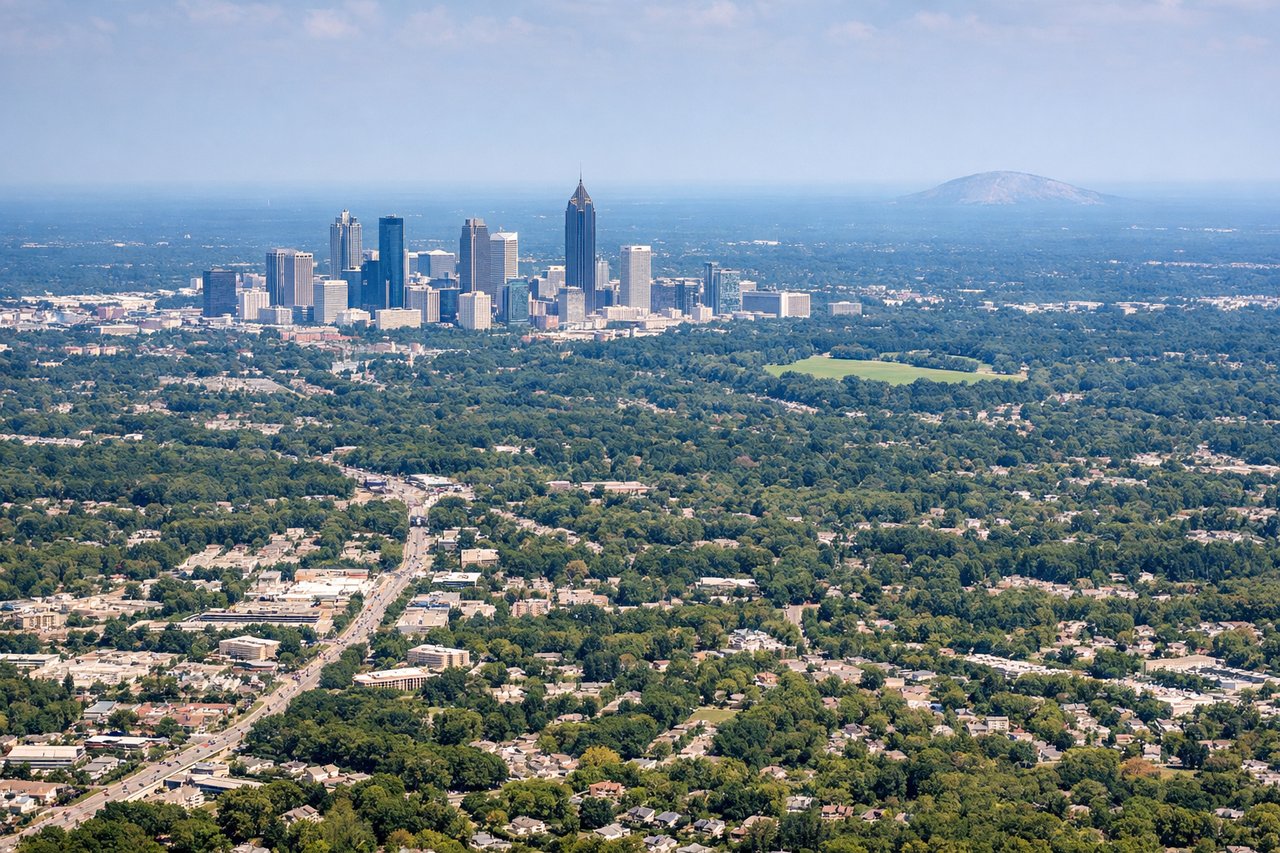
RIGHTATL's primary departure runways (8L/8R/9L/9R heading east, or 26L/26R/27L/27R heading west) mean a right-side seat gives you views over downtown Atlanta's skyline to the north during the eastbound climb-out. On westbound departures, the right side tracks over the southern suburbs toward the Chattahoochee River corridor.
Landing at GCJ
LEFTGrand Central Airport (GCJ) sits northeast of Johannesburg. Approaches typically come in from the east or northeast, meaning a left-side seat looks south toward the Johannesburg CBD skyline and the Witwatersrand ridge. The Magaliesberg range is visible to the northwest on the left side during descent.
Landmarks on this routeAll landmarks →
Will your flight be in sunlight?
Pick a date and time in the Sun Map to watch the sun move across your whole flight.
About This Route
Which side of the plane should I sit on flying from The William B Hartsfield Atlanta International (ATL) to Grand Central (GCJ)?
Sit on the Right side of the plane for the best views on flights from Atlanta to Johannesburg. The right side wins overall because the Atlanta departure offers the more dramatic single moment — the city skyline and Stone Mountain — while the landing views on the left are compelling but more subtle. Over the Atlantic and Africa the views are largely ocean and Sahel, so departure quality tips the balance.
What can I see during takeoff from The William B Hartsfield Atlanta International in Atlanta?
During takeoff from The William B Hartsfield Atlanta International (ATL), sit on the Right side for the best views. ATL's primary departure runways (8L/8R/9L/9R heading east, or 26L/26R/27L/27R heading west) mean a right-side seat gives you views over downtown Atlanta's skyline to the north during the eastbound climb-out. On westbound departures, the right side tracks over the southern suburbs toward the Chattahoochee River corridor. Notable sights include: Downtown Atlanta skyline (Peachtree Street cluster), Stone Mountain (visible to the east as a granite dome), Hartsfield-Jackson terminal complex below, Chattahoochee River winding northwest.
What can I see when landing at Grand Central in Johannesburg?
When landing at Grand Central (GCJ), sit on the Left side for the best views. Grand Central Airport (GCJ) sits northeast of Johannesburg. Approaches typically come in from the east or northeast, meaning a left-side seat looks south toward the Johannesburg CBD skyline and the Witwatersrand ridge. The Magaliesberg range is visible to the northwest on the left side during descent. Notable sights include: Johannesburg CBD skyline (Hillbrow Tower, Carlton Centre), Witwatersrand ridge running east-west, Hartbeespoort Dam visible to the northwest, Midrand industrial corridor below.
How long is the flight from Atlanta to Johannesburg?
The flight from The William B Hartsfield Atlanta International (ATL) to Grand Central (GCJ) takes about 16 hours 30 minutes. The shortest flight path between them is 8,429 miles (13,566 km); winds and air traffic control usually add a few percent.
What does the Atlanta to Johannesburg flight path pass over?
The route crosses the Gulf of Mexico briefly, then the Caribbean, before tracking southeast over the open South Atlantic. The equator is crossed roughly over the mid-Atlantic. The route passes west of the African continent before making landfall near Angola or Namibia, then crossing the Kalahari Basin and Botswana's flat semi-arid scrubland before descending into the Highveld plateau of Gauteng.