Left side wins at both ends of the flight. During the transpacific cruise at 35,000 feet over the North Pacific, neither side offers dramatically different views — mostly ocean and occasional cloud cover — but the left side tracks slightly closer to the Aleutian Island chain on some routing, offering occasional glimpses of volcanic island peaks. The decisive advantage is at both departure and arrival.
Flight Path
The great circle route arcs north over the central United States, crosses the Pacific Northwest coast near British Columbia or southern Alaska, then tracks across the North Pacific passing south of the Aleutian Islands chain. The route passes over or near Kamchatka Peninsula's volcanic terrain before descending toward Honshu and Tokyo Bay. Mid-flight scenery is predominantly open ocean with occasional cloud systems and, on clear days near the Aleutians, volcanic island silhouettes.
Great circle distance and headings ›.jpeg?width=600)

.jpg?width=600)


Phase by phase
Takeoff from ATL
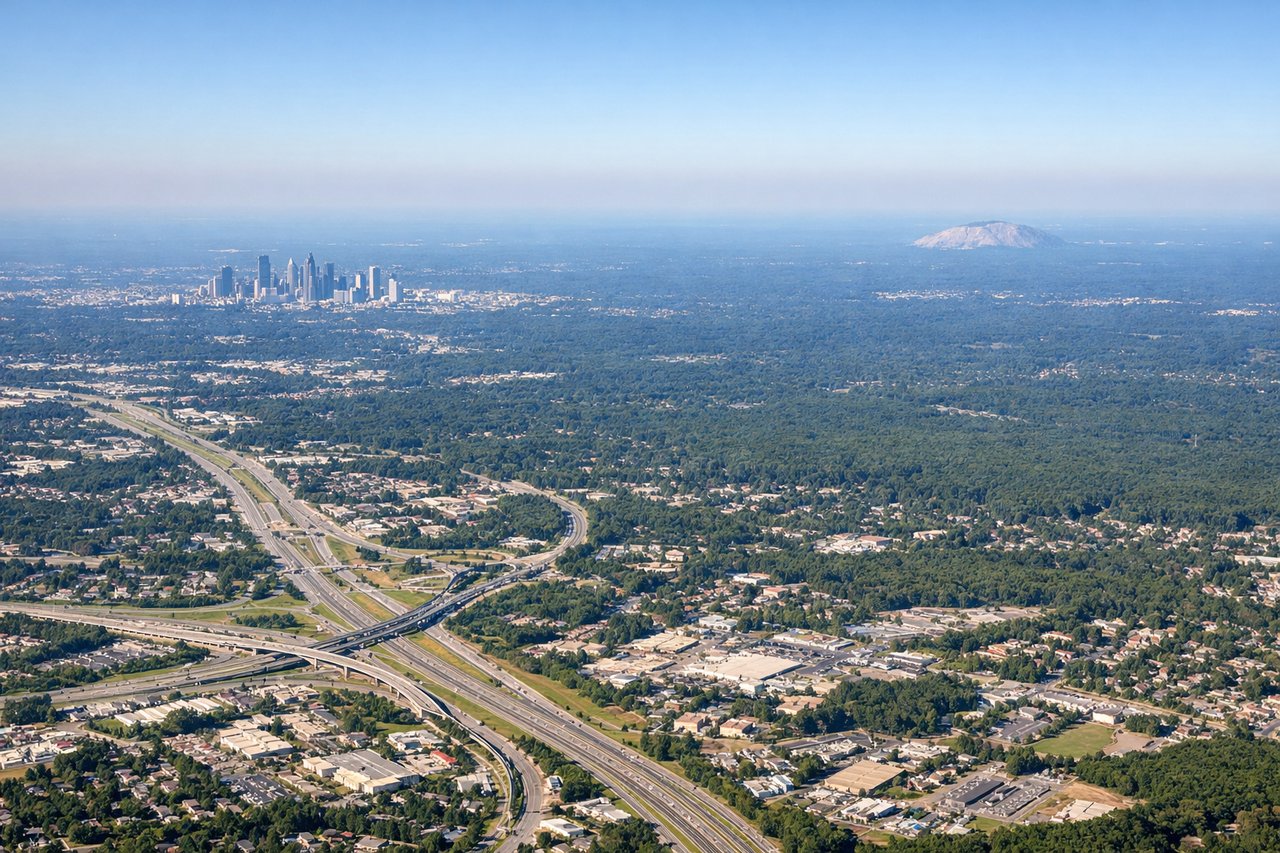
LEFTATL primarily departs westbound on runways 26L/26R or northbound on 28, then turns north. Left side gives you the Atlanta skyline to the northeast as you climb out, plus Stone Mountain's distinctive granite dome is clearly visible to the east. Right side faces south toward flat suburban sprawl.
Landing at HND
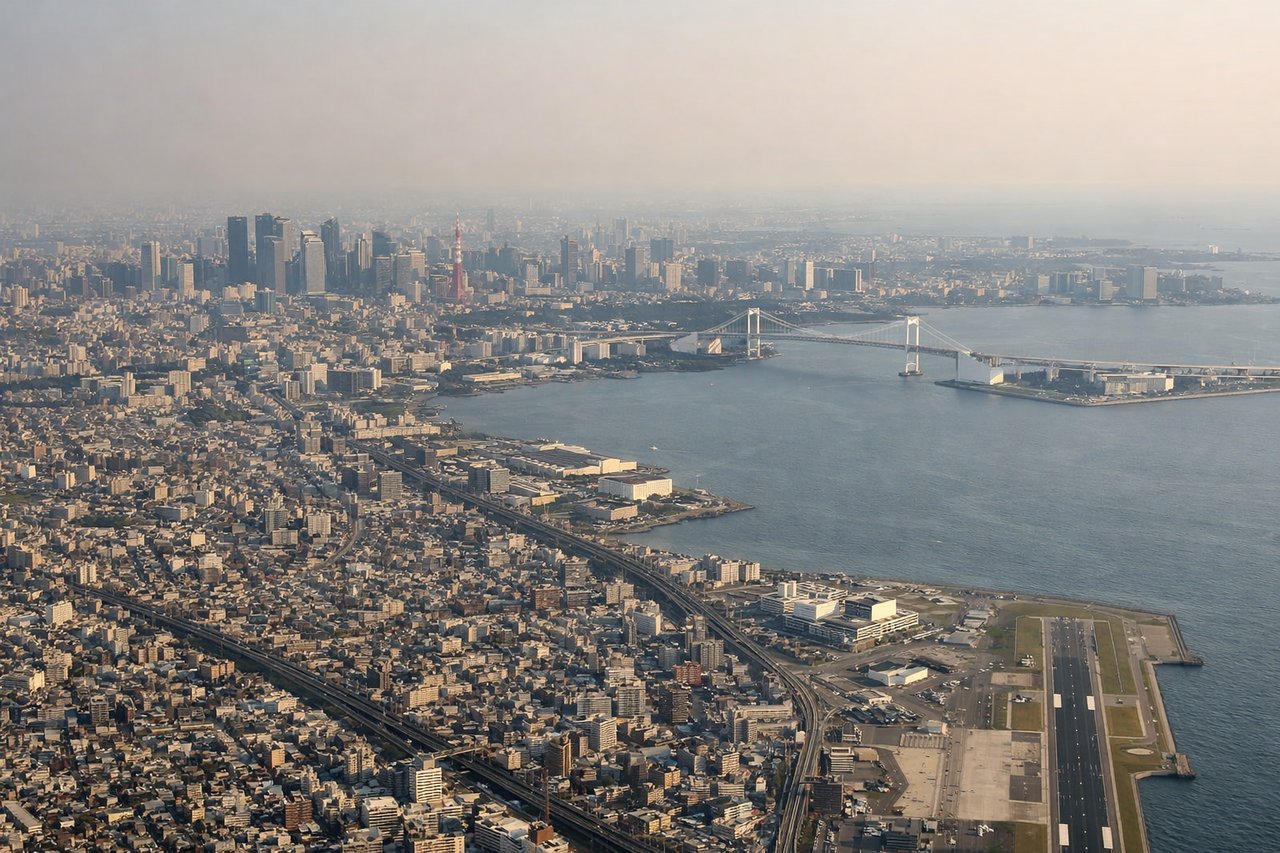
LEFTHND sits on Tokyo Bay's western shore and typically lands from the south or east on runways 34L/34R or 22. On approach from the south or southeast, the left side faces west toward central Tokyo, giving clear views of the city grid, Tokyo Bay waterfront, and on clear days Mount Fuji on the far horizon. Right side looks out over the bay and Chiba.
Landmarks on this routeAll landmarks →
Will your flight be in sunlight?
See exactly which side of the plane gets sun and shade at your departure time.
About This Route
Which side of the plane should I sit on flying from The William B Hartsfield Atlanta International (ATL) to Tokyo International (HND)?
Sit on the Left side of the plane for the best views on flights from Atlanta to Tokyo. Left side wins at both ends of the flight. During the transpacific cruise at 35,000 feet over the North Pacific, neither side offers dramatically different views — mostly ocean and occasional cloud cover — but the left side tracks slightly closer to the Aleutian Island chain on some routing, offering occasional glimpses of volcanic island peaks. The decisive advantage is at both departure and arrival.
What can I see during takeoff from The William B Hartsfield Atlanta International in Atlanta?
During takeoff from The William B Hartsfield Atlanta International (ATL), sit on the Left side for the best views. ATL primarily departs westbound on runways 26L/26R or northbound on 28, then turns north. Left side gives you the Atlanta skyline to the northeast as you climb out, plus Stone Mountain's distinctive granite dome is clearly visible to the east. Right side faces south toward flat suburban sprawl. Notable sights include: Atlanta downtown skyline, Stone Mountain granite dome, Lake Lanier reservoir to the north, Kennesaw Mountain ridge.
What can I see when landing at Tokyo International in Tokyo?
When landing at Tokyo International (HND), sit on the Left side for the best views. HND sits on Tokyo Bay's western shore and typically lands from the south or east on runways 34L/34R or 22. On approach from the south or southeast, the left side faces west toward central Tokyo, giving clear views of the city grid, Tokyo Bay waterfront, and on clear days Mount Fuji on the far horizon. Right side looks out over the bay and Chiba. Notable sights include: Mount Fuji on western horizon, Tokyo city grid and Shinjuku towers, Tokyo Bay waterfront and reclaimed land, Rainbow Bridge and Odaiba.
How long is the flight from Atlanta to Tokyo?
The flight from The William B Hartsfield Atlanta International (ATL) to Tokyo International (HND) takes Approximately 14 to 15 hours.
What does the Atlanta to Tokyo flight path pass over?
The great circle route arcs north over the central United States, crosses the Pacific Northwest coast near British Columbia or southern Alaska, then tracks across the North Pacific passing south of the Aleutian Islands chain. The route passes over or near Kamchatka Peninsula's volcanic terrain before descending toward Honshu and Tokyo Bay. Mid-flight scenery is predominantly open ocean with occasional cloud systems and, on clear days near the Aleutians, volcanic island silhouettes.