Bangor to Chicago is 975 miles (1,569 km), a flight of about 2 hours 15 minutes.
Left side wins both ends of the flight. At takeoff you get the Penobscot River and bay coastline, and at landing you get the full Chicago skyline and Lake Michigan approach. The mid-flight view over the Adirondacks and Great Lakes region also slightly favors the left side for Lake Ontario and Lake Erie glimpses.
Flight Path
The flight tracks southwest over central Maine, then crosses the White Mountains of New Hampshire and the Adirondacks of upstate New York. Over central New York state the route passes near the Finger Lakes region. The southern shore of Lake Ontario and then Lake Erie may be visible depending on exact routing. Northern Indiana's flat agricultural grid precedes the Chicago metro descent.
Great circle distance and headings ›.jpeg?width=600)


Phase by phase
Takeoff from BGR
LEFTBGR's primary departure runway is 33 (heading northwest), so a left-side seat looks southwest over the Penobscot River and Penobscot Bay as the aircraft climbs out. You get a clear view of the bay's island-dotted coastline and the river winding south toward the coast.
Landing at ORD
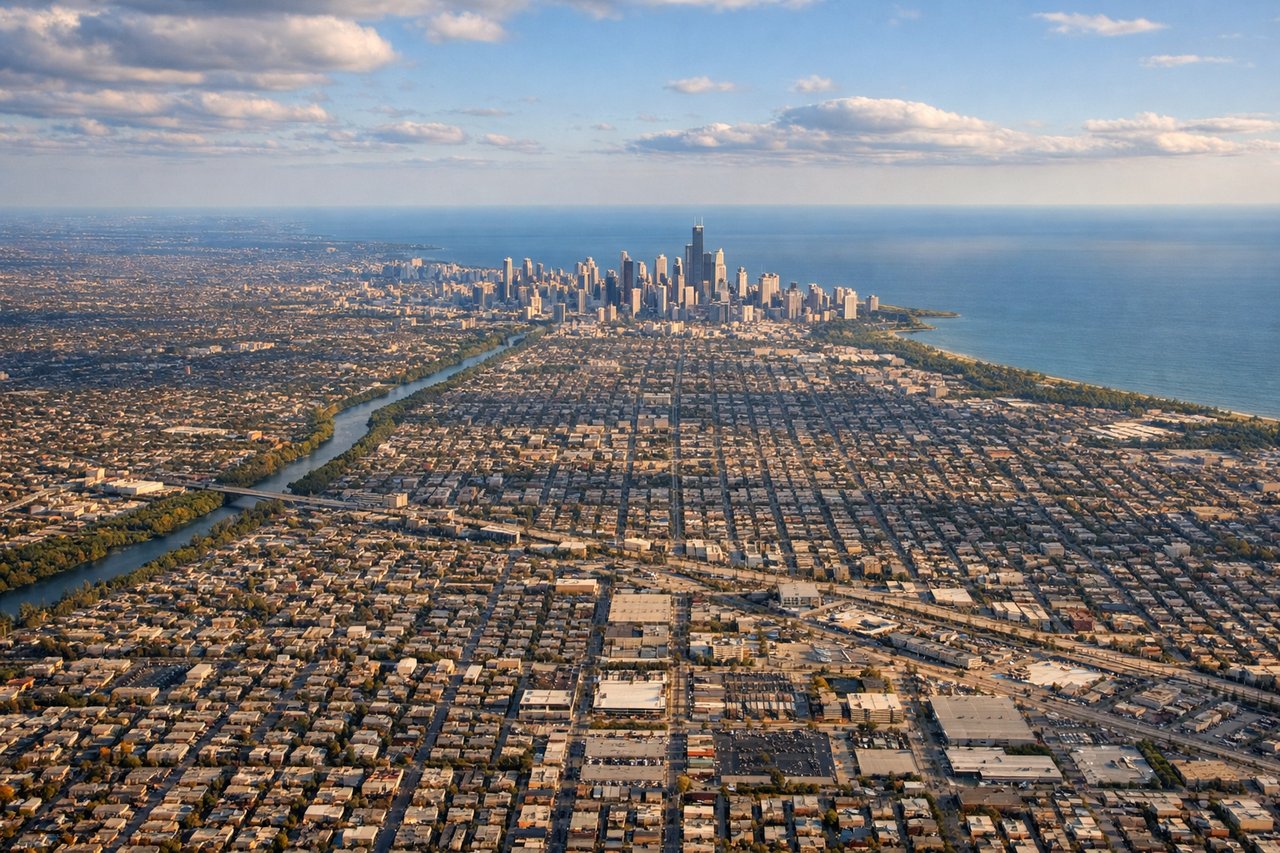
LEFTArrivals into O'Hare commonly use runway 10L/10R (heading east) or 28L/28R (heading west). On a westbound approach from the east, left-side seats look south over the Chicago lakefront, Grant Park, and the downtown skyline as the aircraft descends over Lake Michigan and turns onto final. This is one of the most dramatic urban approaches in the US.
Landmarks on this routeAll landmarks →
Will your flight be in sunlight?
Pick a date and time in the Sun Map to watch the sun move across your whole flight.
About This Route
Which side of the plane should I sit on flying from Bangor International (BGR) to Chicago Ohare International (ORD)?
Sit on the Left side of the plane for the best views on flights from Bangor to Chicago. Left side wins both ends of the flight. At takeoff you get the Penobscot River and bay coastline, and at landing you get the full Chicago skyline and Lake Michigan approach. The mid-flight view over the Adirondacks and Great Lakes region also slightly favors the left side for Lake Ontario and Lake Erie glimpses.
What can I see during takeoff from Bangor International in Bangor?
During takeoff from Bangor International (BGR), sit on the Left side for the best views. BGR's primary departure runway is 33 (heading northwest), so a left-side seat looks southwest over the Penobscot River and Penobscot Bay as the aircraft climbs out. You get a clear view of the bay's island-dotted coastline and the river winding south toward the coast. Notable sights include: Penobscot River, Penobscot Bay, Acadia National Park ridgeline to the southeast, Bangor city grid below.
What can I see when landing at Chicago Ohare International in Chicago?
When landing at Chicago Ohare International (ORD), sit on the Left side for the best views. Arrivals into O'Hare commonly use runway 10L/10R (heading east) or 28L/28R (heading west). On a westbound approach from the east, left-side seats look south over the Chicago lakefront, Grant Park, and the downtown skyline as the aircraft descends over Lake Michigan and turns onto final. This is one of the most dramatic urban approaches in the US. Notable sights include: Chicago downtown skyline (Willis Tower, John Hancock), Lake Michigan shoreline, Grant Park and Museum Campus, suburban grid of Cook County.
How long is the flight from Bangor to Chicago?
The flight from Bangor International (BGR) to Chicago Ohare International (ORD) takes about 2 hours 15 minutes. The shortest flight path between them is 975 miles (1,569 km); winds and air traffic control usually add a few percent.
What does the Bangor to Chicago flight path pass over?
The flight tracks southwest over central Maine, then crosses the White Mountains of New Hampshire and the Adirondacks of upstate New York. Over central New York state the route passes near the Finger Lakes region. The southern shore of Lake Ontario and then Lake Erie may be visible depending on exact routing. Northern Indiana's flat agricultural grid precedes the Chicago metro descent.