The great-circle routing over eastern Canada, Hudson Bay, Alaska's mountainous interior, and the Bering Sea/Kamchatka coastline offers far more terrain variety on the left side during the long cruise phase than the right side's largely open North Pacific, making it the stronger seat choice despite the harbor takeoff and Fuji view favoring the right at the endpoints.
Flight Path
Hudson Bay coastline, the Canadian tundra and boreal forest of Nunavut, the Alaska Range near Denali, and the volcanic Kamchatka Peninsula coastline before the long Pacific crossing to Japan
Great circle distance and headings ›.jpeg?width=600)

Phase by phase
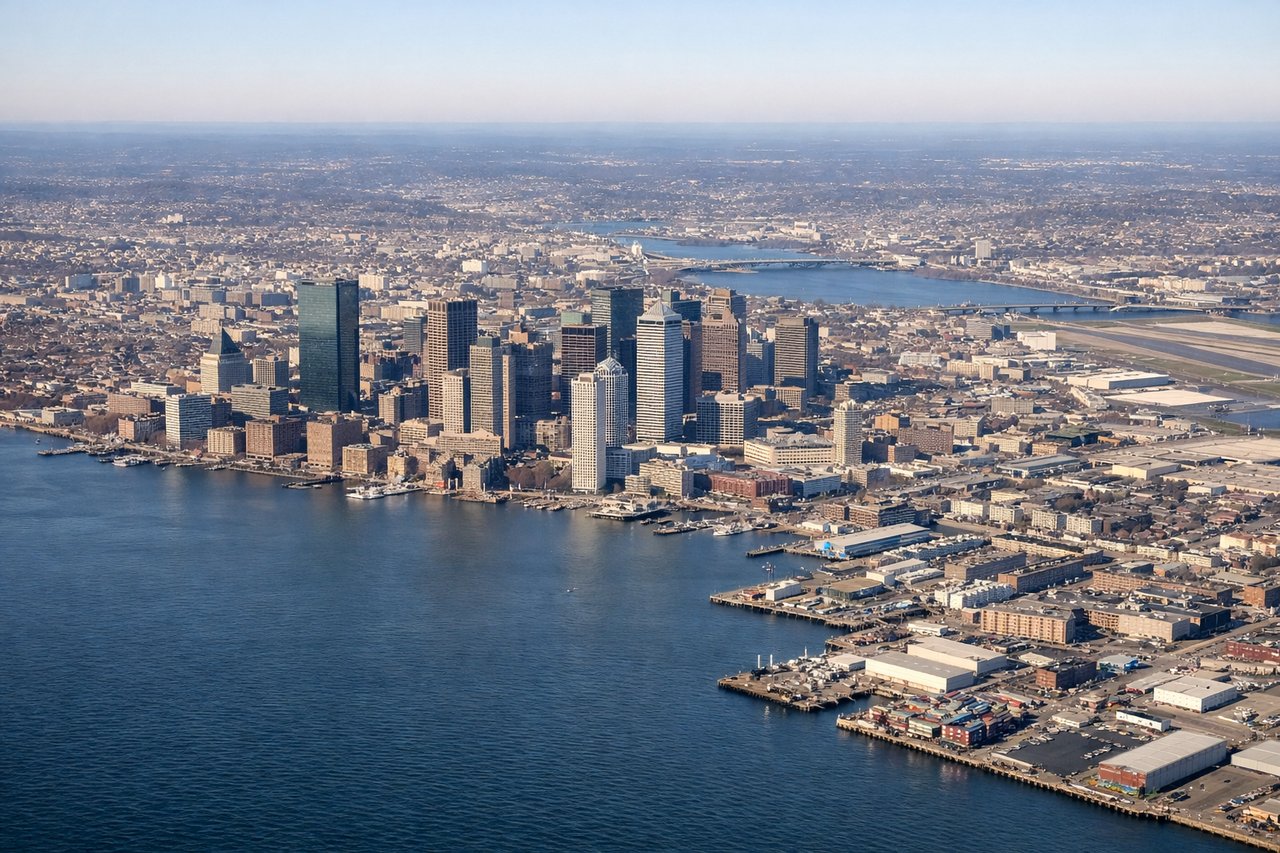
Takeoff from BOS
RIGHTBoston departures head north over the harbor before turning toward Canada, putting Boston Harbor, the Financial District skyline, and the Atlantic coastline directly below on the right side of the aircraft during the initial climb.
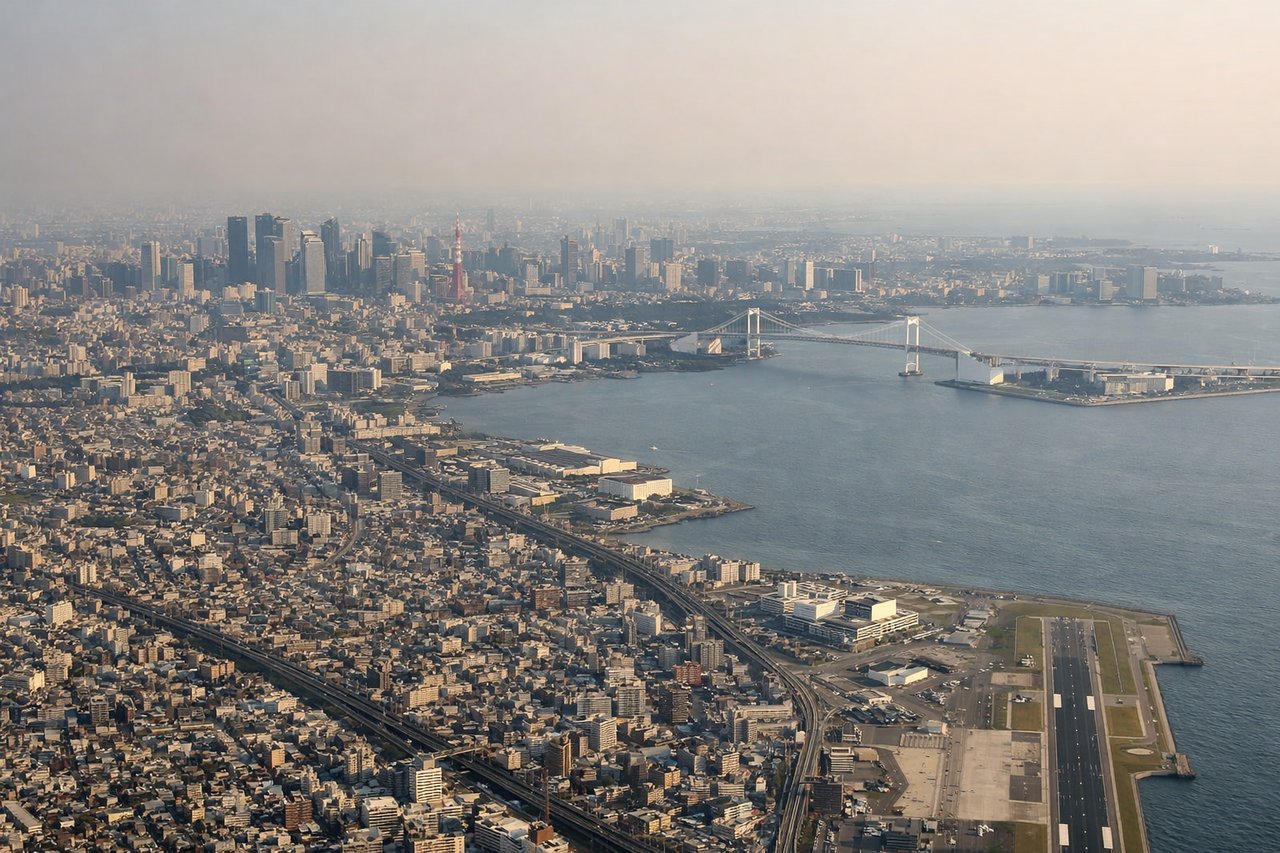
Landing at HND
LEFTOn the common south-wind arrival into Haneda, aircraft descend from the north over Tokyo Bay before turning onto final for 34L/34R, and Mount Fuji's snow-capped cone is visible off to the west on the left side during this turn, along with the dense Tokyo cityscape.
Landmarks on this routeAll landmarks →
Will your flight be in sunlight?
See exactly which side of the plane gets sun and shade at your departure time.
About This Route
Which side of the plane should I sit on flying from General Edward Lawrence Logan International (BOS) to Tokyo International (HND)?
Sit on the Left side of the plane for the best views on flights from Boston to Tokyo. The great-circle routing over eastern Canada, Hudson Bay, Alaska's mountainous interior, and the Bering Sea/Kamchatka coastline offers far more terrain variety on the left side during the long cruise phase than the right side's largely open North Pacific, making it the stronger seat choice despite the harbor takeoff and Fuji view favoring the right at the endpoints.
What can I see during takeoff from General Edward Lawrence Logan International in Boston?
During takeoff from General Edward Lawrence Logan International (BOS), sit on the Right side for the best views. Boston departures head north over the harbor before turning toward Canada, putting Boston Harbor, the Financial District skyline, and the Atlantic coastline directly below on the right side of the aircraft during the initial climb. Notable sights include: Boston Harbor, Downtown Boston skyline, Logan Airport's harbor-side runways, Massachusetts Bay coastline.
What can I see when landing at Tokyo International in Tokyo?
When landing at Tokyo International (HND), sit on the Left side for the best views. On the common south-wind arrival into Haneda, aircraft descend from the north over Tokyo Bay before turning onto final for 34L/34R, and Mount Fuji's snow-capped cone is visible off to the west on the left side during this turn, along with the dense Tokyo cityscape. Notable sights include: Mount Fuji, Tokyo Bay, Tokyo skyline (Shinjuku/Shibuya towers), Yokohama waterfront.
How long is the flight from Boston to Tokyo?
The flight from General Edward Lawrence Logan International (BOS) to Tokyo International (HND) takes 13h 45m.
What does the Boston to Tokyo flight path pass over?
Hudson Bay coastline, the Canadian tundra and boreal forest of Nunavut, the Alaska Range near Denali, and the volcanic Kamchatka Peninsula coastline before the long Pacific crossing to Japan