During the long cruise phase, the great-circle route from Baltimore to Las Vegas tracks south of Denver through the southern Rockies and Utah's canyon country, features that lie to the south of the flight path and are therefore visible on the left side for a westbound flight, giving that side more sustained dramatic terrain across the middle hours of the flight.
Flight Path
Southern Appalachian ridges over West Virginia, the Ohio River valley, the Great Plains of Kansas, the southern Colorado Rockies, and the red-rock canyon country of eastern Utah near the Colorado River
Great circle distance and headings ›.jpeg?width=600)
.jpg?width=600)

.jpg?width=600)

.jpeg?width=600)


Phase by phase
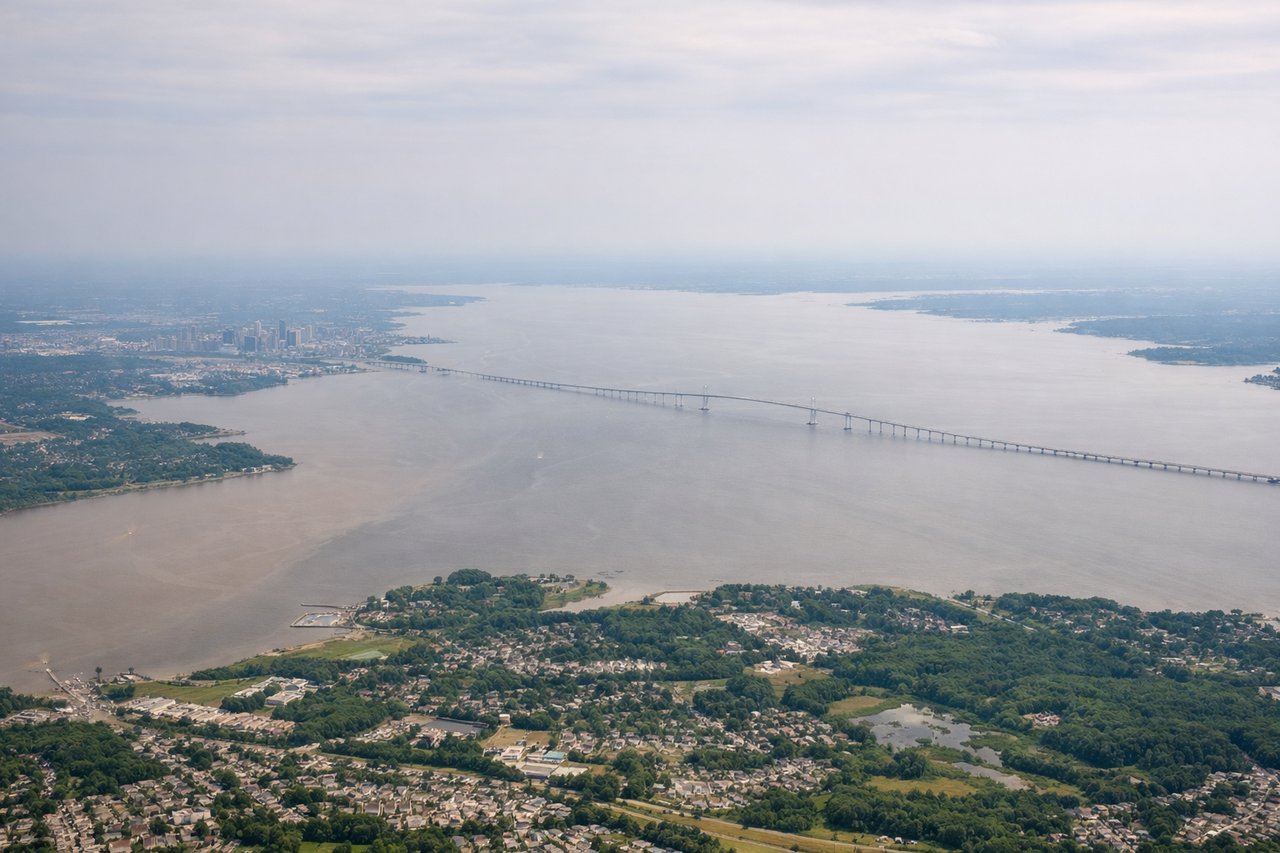
Takeoff from BWI
RIGHTDepartures off BWI's Runway 28 climb west, but controllers often turn aircraft north-of-course initially to sequence with DC-area traffic, giving right-side passengers a brief look back at the Chesapeake Bay and Baltimore's harbor and downtown skyline before the turn onto the westbound route.
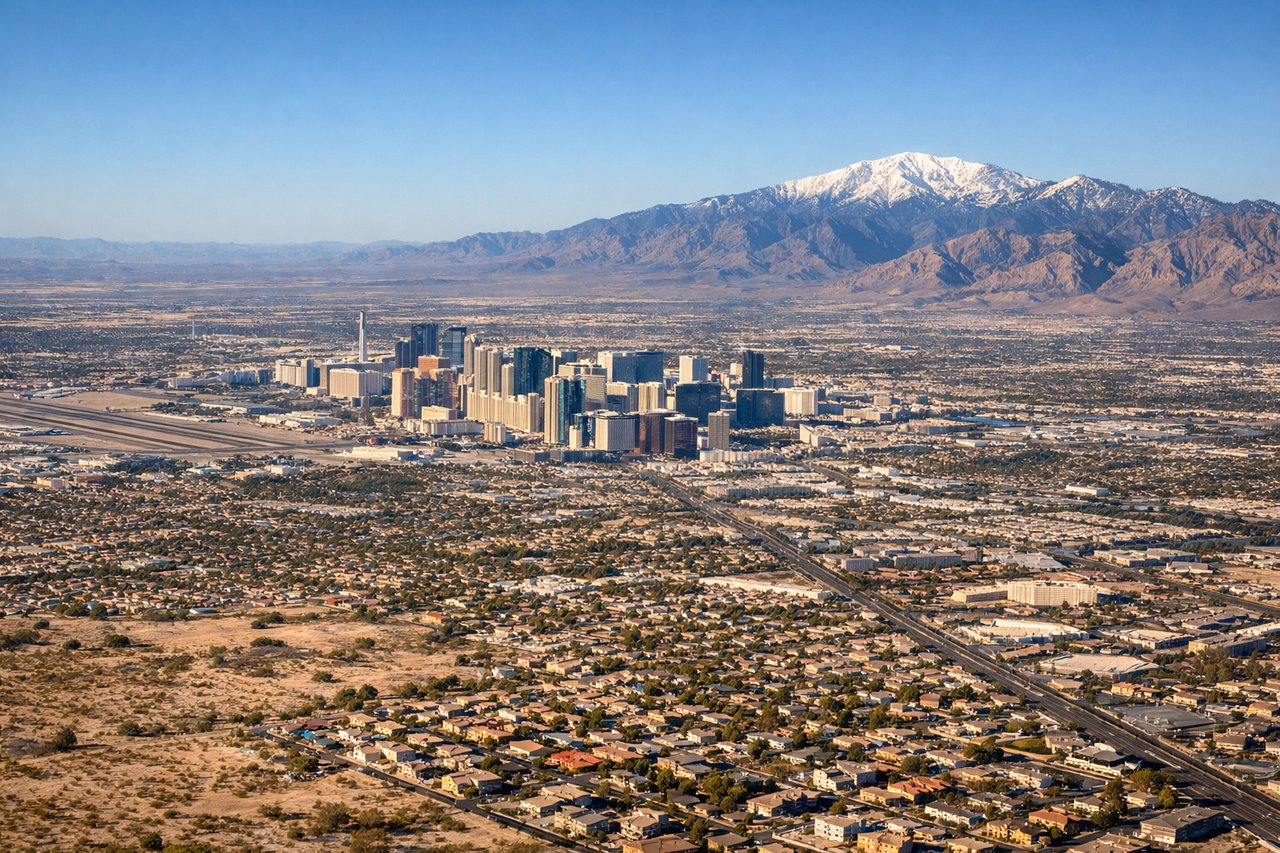
Landing at LAS
RIGHTOn the common westbound arrival into LAS via Runways 26L/26R, the flight path curves in from the southeast over Lake Mead before swinging north of the airfield, putting the neon towers of the Las Vegas Strip and downtown skyline squarely on the right side during the final turn and approach.
Landmarks on this routeAll landmarks →
Will your flight be in sunlight?
See exactly which side of the plane gets sun and shade at your departure time.
About This Route
Which side of the plane should I sit on flying from Baltimore Washington International (BWI) to Mc Carran International (LAS)?
Sit on the Left side of the plane for the best views on flights from Baltimore to Las Vegas. During the long cruise phase, the great-circle route from Baltimore to Las Vegas tracks south of Denver through the southern Rockies and Utah's canyon country, features that lie to the south of the flight path and are therefore visible on the left side for a westbound flight, giving that side more sustained dramatic terrain across the middle hours of the flight.
What can I see during takeoff from Baltimore Washington International in Baltimore?
During takeoff from Baltimore Washington International (BWI), sit on the Right side for the best views. Departures off BWI's Runway 28 climb west, but controllers often turn aircraft north-of-course initially to sequence with DC-area traffic, giving right-side passengers a brief look back at the Chesapeake Bay and Baltimore's harbor and downtown skyline before the turn onto the westbound route. Notable sights include: Chesapeake Bay, Baltimore Inner Harbor, Patapsco River.
What can I see when landing at Mc Carran International in Las Vegas?
When landing at Mc Carran International (LAS), sit on the Right side for the best views. On the common westbound arrival into LAS via Runways 26L/26R, the flight path curves in from the southeast over Lake Mead before swinging north of the airfield, putting the neon towers of the Las Vegas Strip and downtown skyline squarely on the right side during the final turn and approach. Notable sights include: Las Vegas Strip, downtown Las Vegas skyline, Spring Mountains, Red Rock Canyon escarpment.
How long is the flight from Baltimore to Las Vegas?
The flight from Baltimore Washington International (BWI) to Mc Carran International (LAS) takes 4h50m.
What does the Baltimore to Las Vegas flight path pass over?
Southern Appalachian ridges over West Virginia, the Ohio River valley, the Great Plains of Kansas, the southern Colorado Rockies, and the red-rock canyon country of eastern Utah near the Colorado River