Las Vegas Strip hotel towers, The Sphere, downtown Las Vegas skyline
🛬 Landing at Las Vegas (LAS)
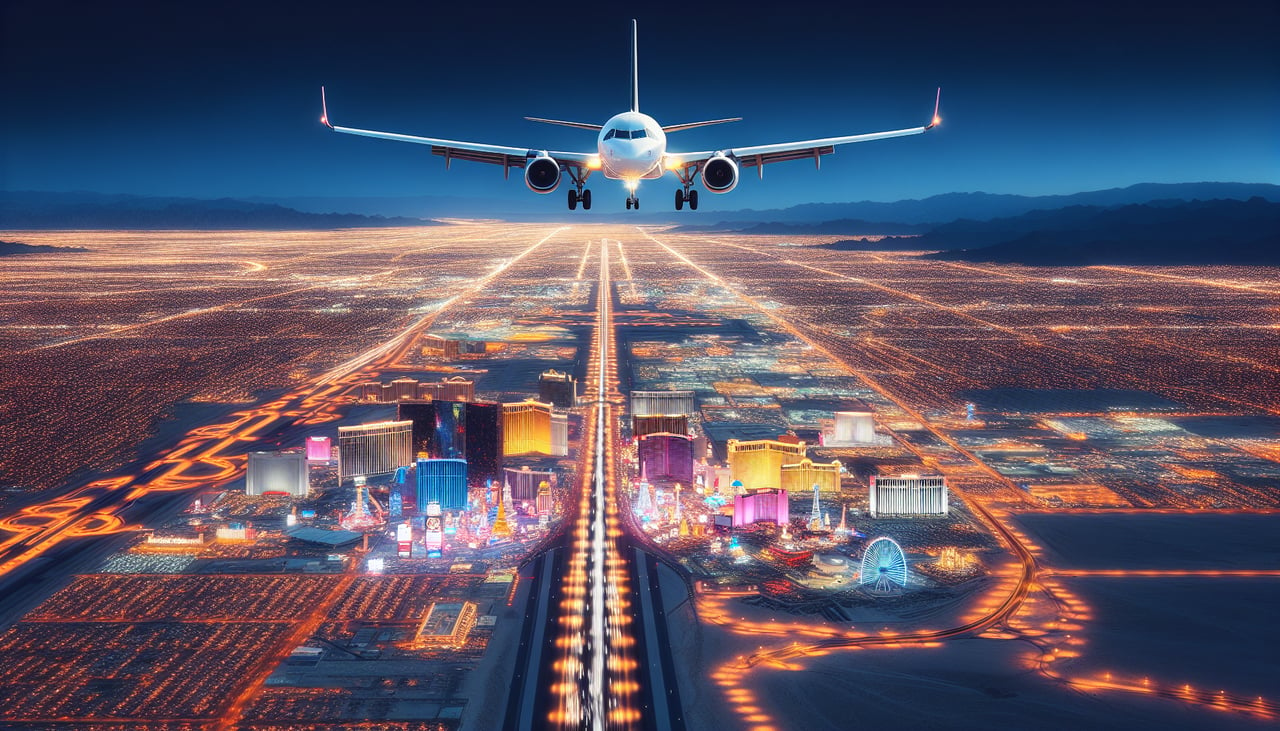 Left Side
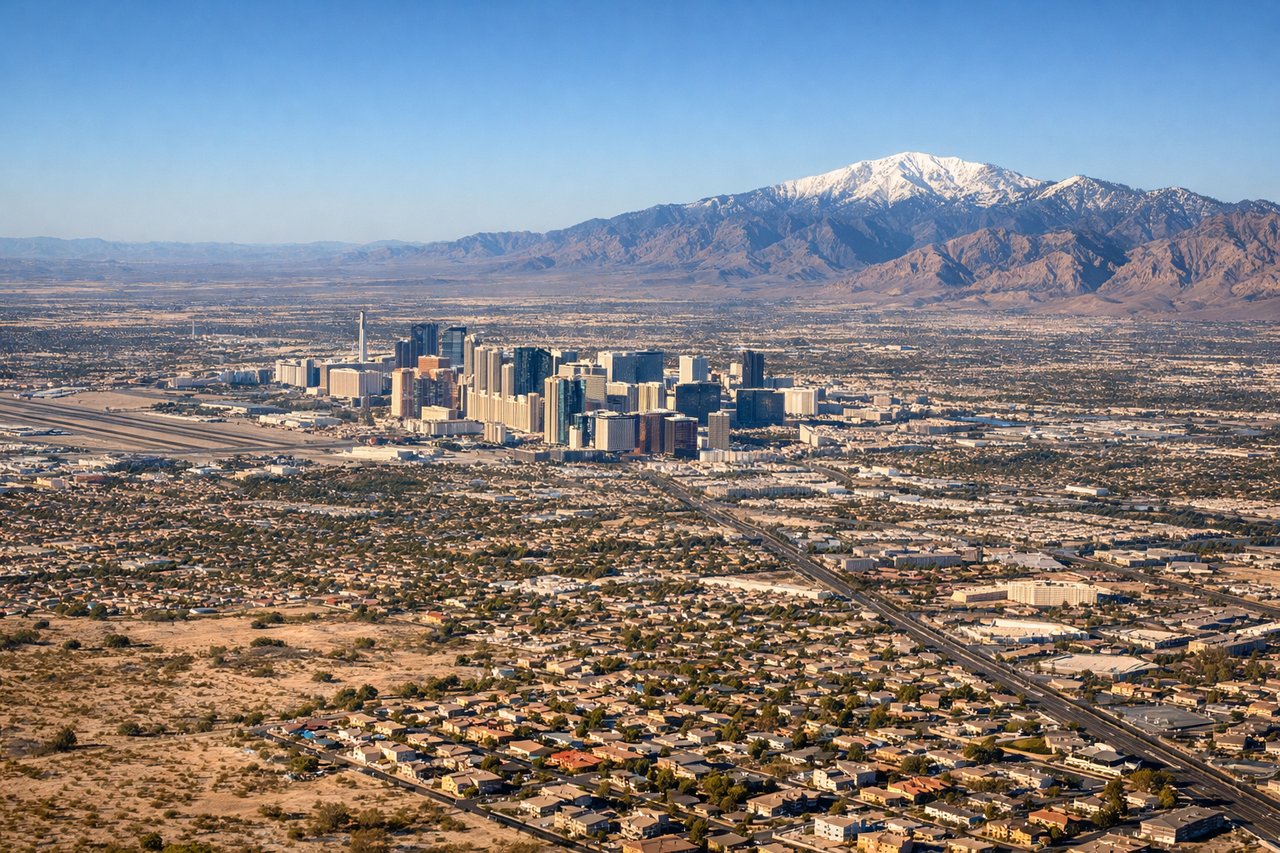 Right Side
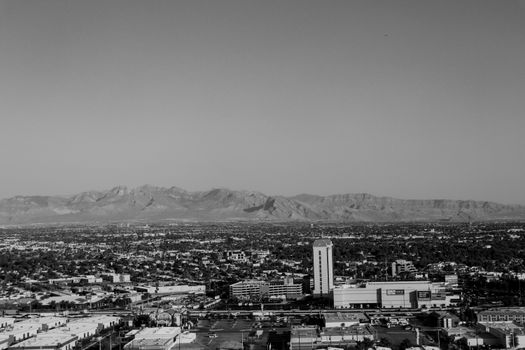 Photo: Gela delrose
Harry Reid International (still commonly called McCarran/LAS) is one of the busiest airports in the US, with four runways and terminals connected to the Strip by short flights and monorail-style transit; Terminal 3 handles many international and legacy carrier flights, while Terminal 1 serves domestic operations including Southwest and Allegiant.
Landmarks on routes to Las VegasAll landmarks →
Connecting at LAS?
Find out if your layover is long enough at Mc Carran International.
Check layover times →Popular Routes to Mc Carran International (LAS)
North America
Europe
Asia
Oceania
Africa
About This Airport
Which side of the plane has the best views landing at Mc Carran International (LAS)?
When landing at Mc Carran International (LAS), sit on the Right side for the best views. On the common westbound approach to 26L, the aircraft flies in from the east and passes just south of the Las Vegas Strip before touchdown. That puts the Strip's iconic hotel towers and the Sphere on the right side of the plane for a great final approach view. Notable sights include: Las Vegas Strip hotel towers, The Sphere, downtown Las Vegas skyline, Lake Mead/Henderson foothills in the distance during initial descent.
What can I see when arriving at Las Vegas?
Arriving at Mc Carran International in Las Vegas, passengers on the Right side enjoy views of Las Vegas Strip hotel towers, The Sphere, downtown Las Vegas skyline, Lake Mead/Henderson foothills in the distance during initial descent. On the common westbound approach to 26L, the aircraft flies in from the east and passes just south of the Las Vegas Strip before touchdown. That puts the Strip's iconic hotel towers and the Sphere on the right side of the plane for a great final approach view.
What factors affect the best window seat landing at Mc Carran International?
The best window seat landing at Mc Carran International (LAS) depends on several factors: the approach path and runway in use, geographic features around Las Vegas (mountains, coastlines, city skylines), weather conditions, and time of day. Morning and evening arrivals often offer the best lighting.