The right side gets the LA skyline and San Gabriel Mountains on climb-out, then the Strip and Spring Mountains on approach. On the left you mostly get coast and desert, so it is a bit less varied.
Flown LAX to LAS? Did we get it right?
Flight Path
Los Angeles to Las Vegas is 236 miles (380 km), a flight of about 1 hour 15 minutes.
After climbing out over the LA Basin, the route crosses the San Gabriel and San Bernardino Mountains area near Cajon Pass. It then passes over the Mojave Desert near Barstow, with dry lakebeds and cinder cones in the Mojave National Preserve area, before the Spring Mountains and Las Vegas Valley come into view.
Great circle distance and headings ›


Phase by phase
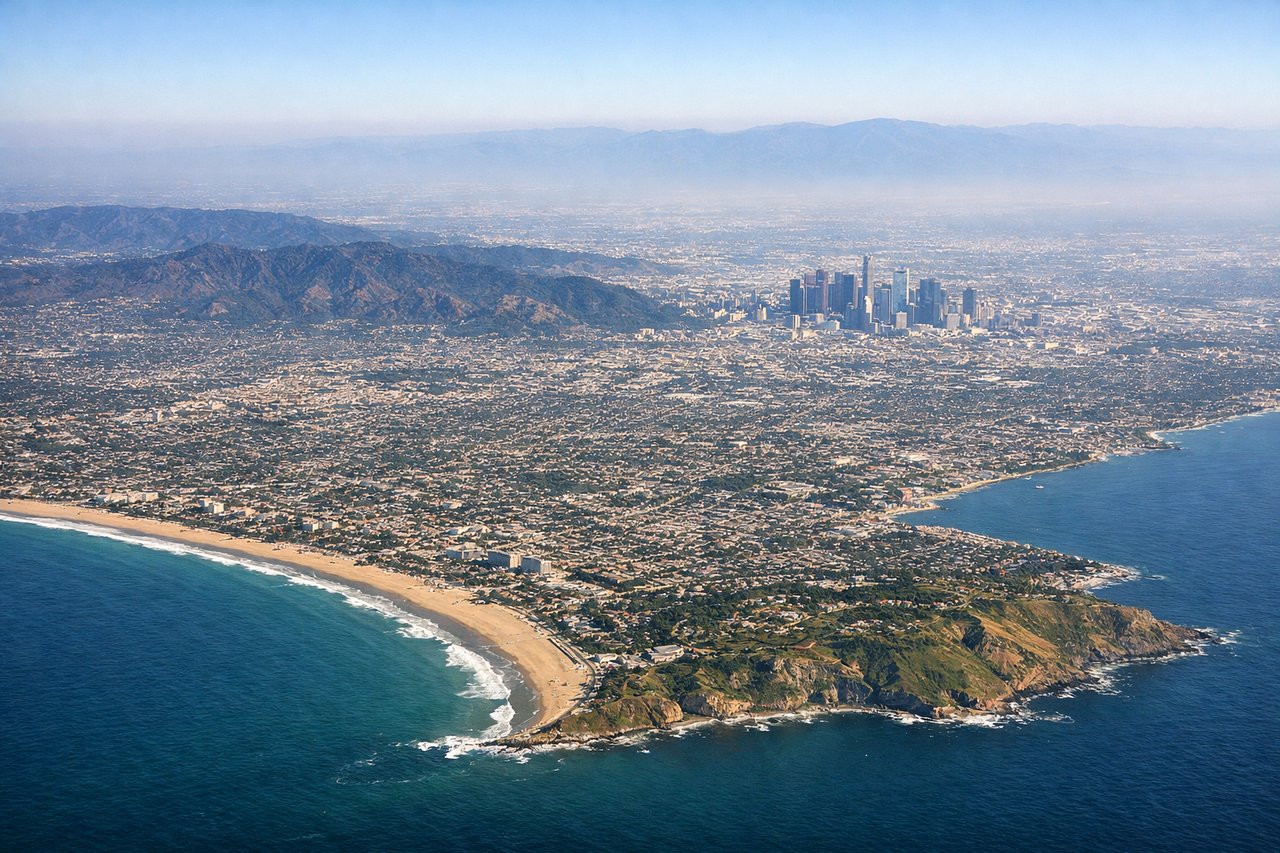
Takeoff from LAX
RIGHTIn the usual west-flow departure, you take off over the ocean and bank right toward the northeast. That puts the right windows on the Westside, downtown LA and the San Gabriel Mountains. The left side mostly sees Santa Monica Bay and the Santa Monica Mountains, which are nice but less varied.
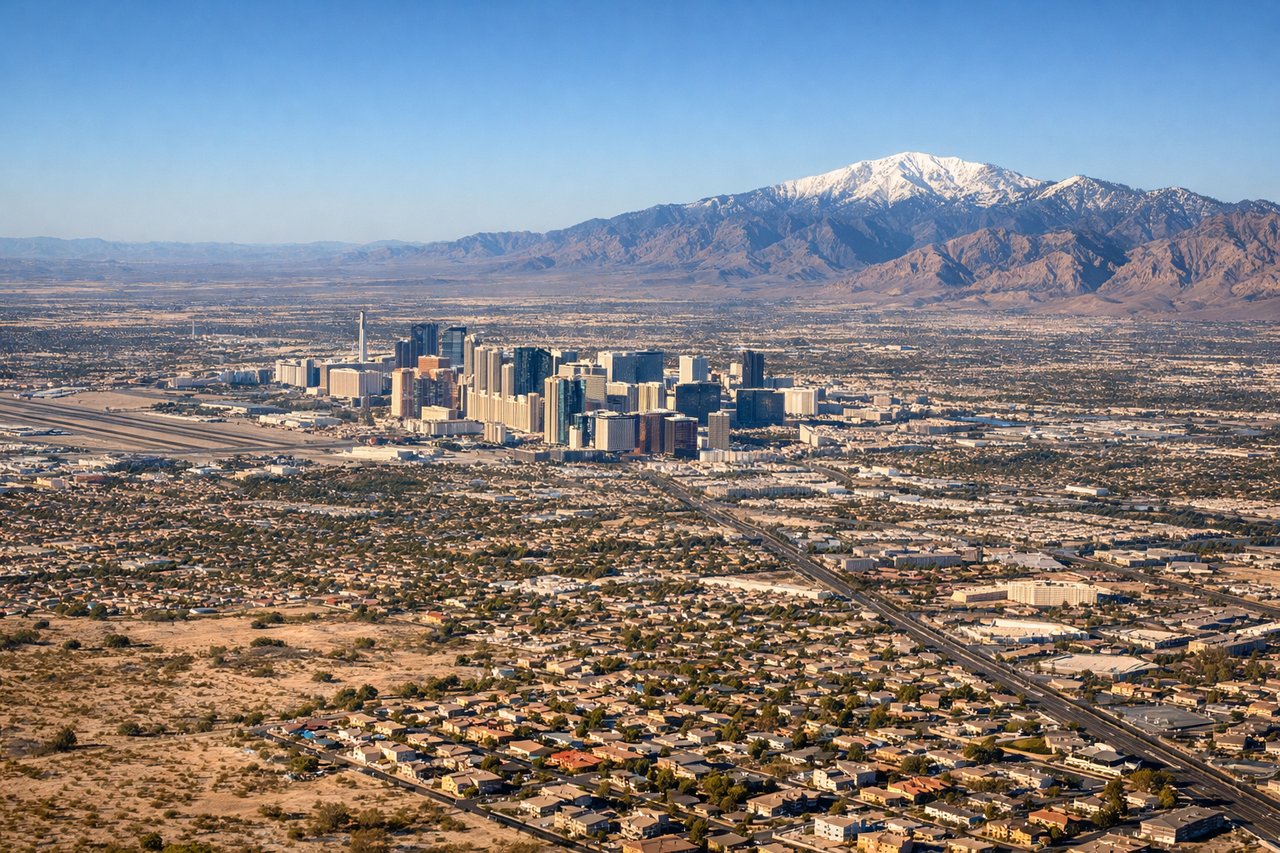
Landing at LAS
RIGHTLanding westbound on Runway 26 is the common setup. The final approach passes just south of the Strip, so the right windows look north up the Las Vegas Strip and across the valley to the Spring Mountains. The left side mostly sees desert subdivisions and the southern end of the valley.
Will your flight be in sunlight?
Pick a date and time in the Sun Map to watch the sun move across your whole flight.
About This Route
Which side of the plane should I sit on flying from Los Angeles International (LAX) to Mc Carran International (LAS)?
Sit on the Right side of the plane for the best views on flights from Los Angeles to Las Vegas. The right side gets the LA skyline and San Gabriel Mountains on climb-out, then the Strip and Spring Mountains on approach. On the left you mostly get coast and desert, so it is a bit less varied.
What can I see during takeoff from Los Angeles International in Los Angeles?
During takeoff from Los Angeles International (LAX), sit on the Right side for the best views. In the usual west-flow departure, you take off over the ocean and bank right toward the northeast. That puts the right windows on the Westside, downtown LA and the San Gabriel Mountains. The left side mostly sees Santa Monica Bay and the Santa Monica Mountains, which are nice but less varied. Notable sights include: Downtown Los Angeles skyline, San Gabriel Mountains (Mt. Wilson ridge), Santa Monica Bay coastline, Palos Verdes Peninsula.
What can I see when landing at Mc Carran International in Las Vegas?
When landing at Mc Carran International (LAS), sit on the Right side for the best views. Landing westbound on Runway 26 is the common setup. The final approach passes just south of the Strip, so the right windows look north up the Las Vegas Strip and across the valley to the Spring Mountains. The left side mostly sees desert subdivisions and the southern end of the valley. Notable sights include: The Las Vegas Strip, Stratosphere tower and downtown, Spring Mountains and Mt. Charleston, Frenchman Mountain.
How long is the flight from Los Angeles to Las Vegas?
The flight from Los Angeles International (LAX) to Mc Carran International (LAS) takes about 1 hour 15 minutes. The shortest flight path between them is 236 miles (380 km); winds and air traffic control usually add a few percent.
What does the Los Angeles to Las Vegas flight path pass over?
After climbing out over the LA Basin, the route crosses the San Gabriel and San Bernardino Mountains area near Cajon Pass. It then passes over the Mojave Desert near Barstow, with dry lakebeds and cinder cones in the Mojave National Preserve area, before the Spring Mountains and Las Vegas Valley come into view.