The left side wins for both takeoff and landing, combining the Las Vegas Strip and Spring Mountains on departure with the San Gabriel Mountains and LA skyline on arrival, giving consistently more dramatic and varied scenery than the right side's desert flats and suburban sprawl.
Flight Path
Mojave Desert, San Bernardino Mountains, and the eastern edge of the Los Angeles basin along the flight path
Great circle distance and headings ›


.jpg?width=600)
Phase by phase
Takeoff from LAS
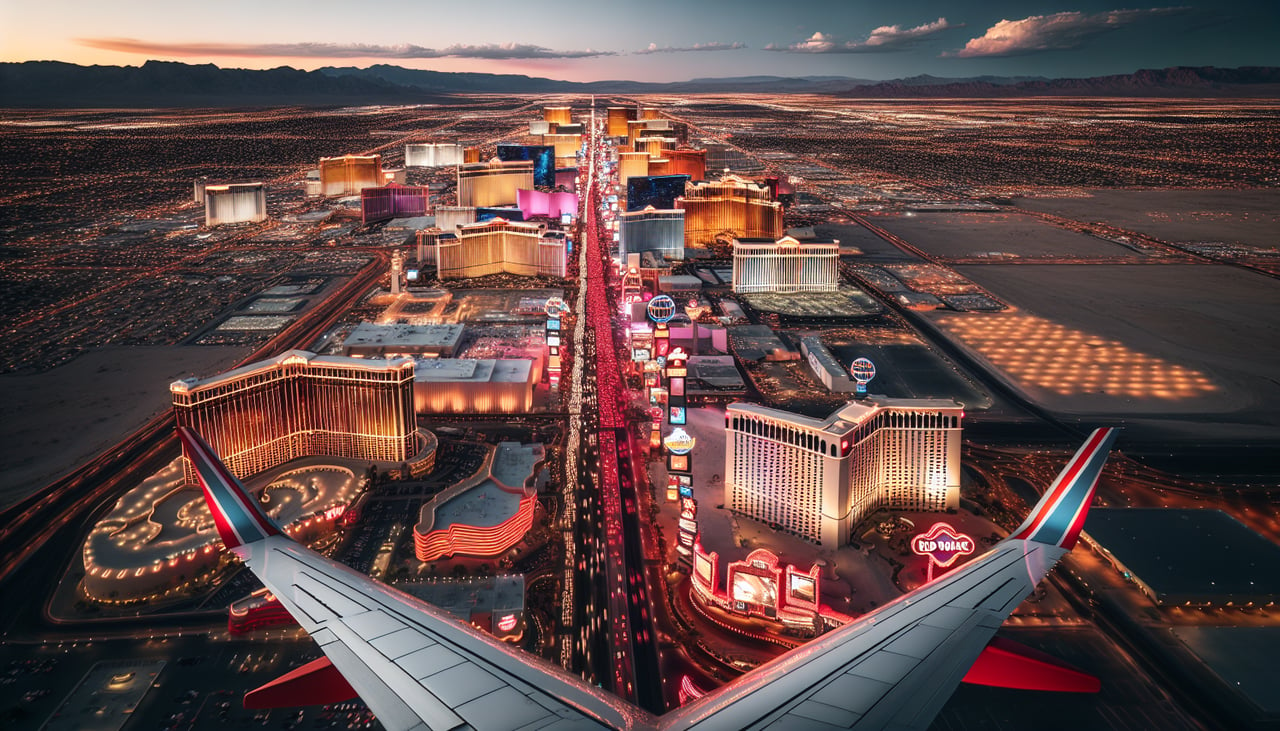
LEFTDeparting LAS to the southwest, the left side gets views of the Las Vegas Strip skyline and the McCullough Range before the flight path angles toward the Mojave Desert. The right side mostly shows the flatter desert basin toward Sunrise Mountain with less definition.

Landing at LAX
LEFTOn approach into LAX from the east, the left side offers views of the San Gabriel Mountains and the Los Angeles basin's dense urban grid stretching toward downtown skyscrapers. The right side faces south toward Orange County suburbs, which is comparatively repetitive residential sprawl.
Landmarks on this routeAll landmarks →
Will your flight be in sunlight?
See exactly which side of the plane gets sun and shade at your departure time.
About This Route
Which side of the plane should I sit on flying from Mc Carran International (LAS) to Los Angeles International (LAX)?
Sit on the Left side of the plane for the best views on flights from Las Vegas to Los Angeles. The left side wins for both takeoff and landing, combining the Las Vegas Strip and Spring Mountains on departure with the San Gabriel Mountains and LA skyline on arrival, giving consistently more dramatic and varied scenery than the right side's desert flats and suburban sprawl.
What can I see during takeoff from Mc Carran International in Las Vegas?
During takeoff from Mc Carran International (LAS), sit on the Left side for the best views. Departing LAS to the southwest, the left side gets views of the Las Vegas Strip skyline and the McCullough Range before the flight path angles toward the Mojave Desert. The right side mostly shows the flatter desert basin toward Sunrise Mountain with less definition. Notable sights include: Las Vegas Strip, Spring Mountains, McCullough Range, Lake Mead (distant).
What can I see when landing at Los Angeles International in Los Angeles?
When landing at Los Angeles International (LAX), sit on the Left side for the best views. On approach into LAX from the east, the left side offers views of the San Gabriel Mountains and the Los Angeles basin's dense urban grid stretching toward downtown skyscrapers. The right side faces south toward Orange County suburbs, which is comparatively repetitive residential sprawl. Notable sights include: San Gabriel Mountains, Downtown Los Angeles skyline, Griffith Observatory area, Pacific coastline near LAX.
How long is the flight from Las Vegas to Los Angeles?
The flight from Mc Carran International (LAS) to Los Angeles International (LAX) takes 1h 20m.
What does the Las Vegas to Los Angeles flight path pass over?
Mojave Desert, San Bernardino Mountains, and the eastern edge of the Los Angeles basin along the flight path