The right side wins both the takeoff and landing sequences—Hoover Dam and Lake Mead on departure, and central London's skyline along the Thames on arrival—while the long cruise over Canada and the North Atlantic offers similar, mostly featureless views on both sides.
Flight Path
The route crosses the Rocky Mountain foothills of Wyoming, the boreal forests and lakes of the Canadian Prairies, the southern shore of Hudson Bay, and the icy southern tip of Greenland before crossing the North Atlantic toward Scotland.
Great circle distance and headings ›


.jpg?width=600)
.jpeg?width=600)
Phase by phase
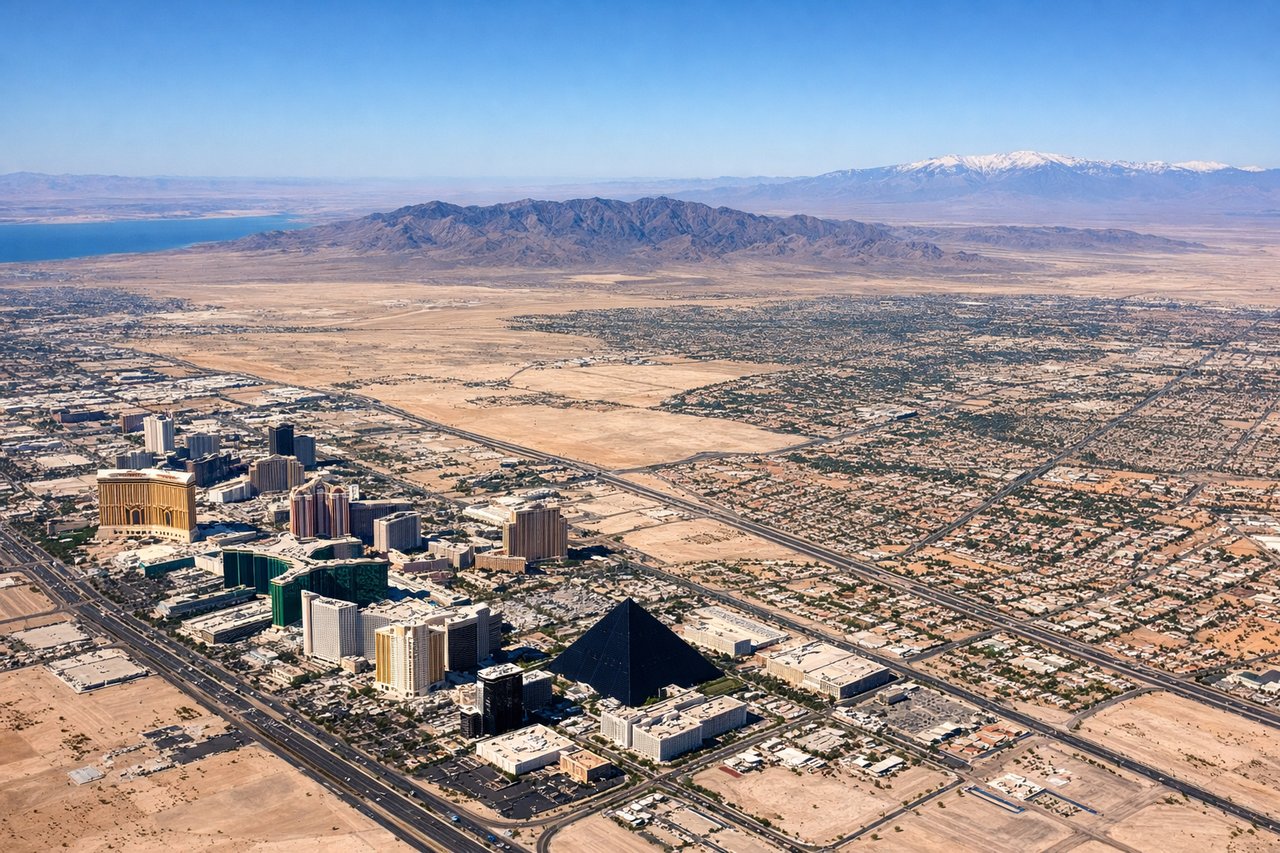
Takeoff from LAS
RIGHTDepartures from LAS climbing out and turning toward the northeast put Lake Mead and Hoover Dam on the right side, giving a striking view of turquoise water and the dam against the desert canyon walls. The left side shows the Spring Mountains and Red Rock Canyon, scenic but less distinctive than the dam and reservoir.
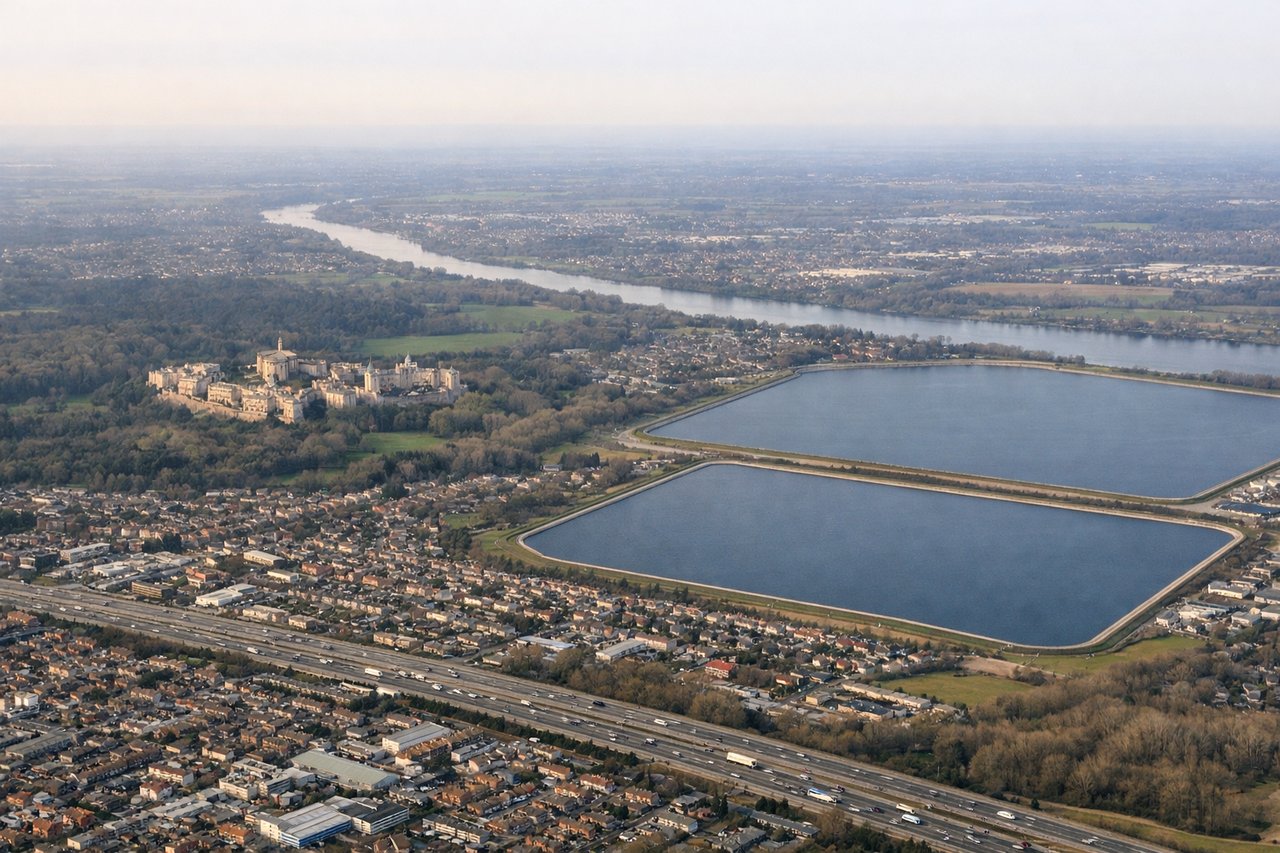
Landing at LHR
RIGHTOn the common westerly approach into Heathrow (27L/27R), the flight path tracks the Thames Valley, and the right side faces north toward central London, revealing the Thames looping past Canary Wharf and the Shard. The left side mainly shows the quieter suburbs and, closer to touchdown, Windsor Castle, but with less overall landmark density.
Landmarks on this routeAll landmarks →
Will your flight be in sunlight?
See exactly which side of the plane gets sun and shade at your departure time.
About This Route
Which side of the plane should I sit on flying from Mc Carran International (LAS) to Heathrow (LHR)?
Sit on the Right side of the plane for the best views on flights from Las Vegas to London. The right side wins both the takeoff and landing sequences—Hoover Dam and Lake Mead on departure, and central London's skyline along the Thames on arrival—while the long cruise over Canada and the North Atlantic offers similar, mostly featureless views on both sides.
What can I see during takeoff from Mc Carran International in Las Vegas?
During takeoff from Mc Carran International (LAS), sit on the Right side for the best views. Departures from LAS climbing out and turning toward the northeast put Lake Mead and Hoover Dam on the right side, giving a striking view of turquoise water and the dam against the desert canyon walls. The left side shows the Spring Mountains and Red Rock Canyon, scenic but less distinctive than the dam and reservoir. Notable sights include: Lake Mead, Hoover Dam, Colorado River, Lake Las Vegas.
What can I see when landing at Heathrow in London?
When landing at Heathrow (LHR), sit on the Right side for the best views. On the common westerly approach into Heathrow (27L/27R), the flight path tracks the Thames Valley, and the right side faces north toward central London, revealing the Thames looping past Canary Wharf and the Shard. The left side mainly shows the quieter suburbs and, closer to touchdown, Windsor Castle, but with less overall landmark density. Notable sights include: River Thames, Canary Wharf towers, The Shard, London Eye.
How long is the flight from Las Vegas to London?
The flight from Mc Carran International (LAS) to Heathrow (LHR) takes 9h 35m.
What does the Las Vegas to London flight path pass over?
The route crosses the Rocky Mountain foothills of Wyoming, the boreal forests and lakes of the Canadian Prairies, the southern shore of Hudson Bay, and the icy southern tip of Greenland before crossing the North Atlantic toward Scotland.