Manila to Las Vegas is 7,375 miles (11,869 km), a flight of about 13 hours 45 minutes.
While most of this ultra-long-haul flight crosses open Pacific water with little to see on either side, the right side offers a stronger overall package: partial views of the Alaskan coastline and Canadian Rockies during the northern great-circle cruise track, followed by the dramatic Las Vegas Strip and Lake Mead on final approach.
Flight Path
North Pacific Ocean, Aleutian Island chain, Gulf of Alaska coastline
Great circle distance and headings ›


Phase by phase
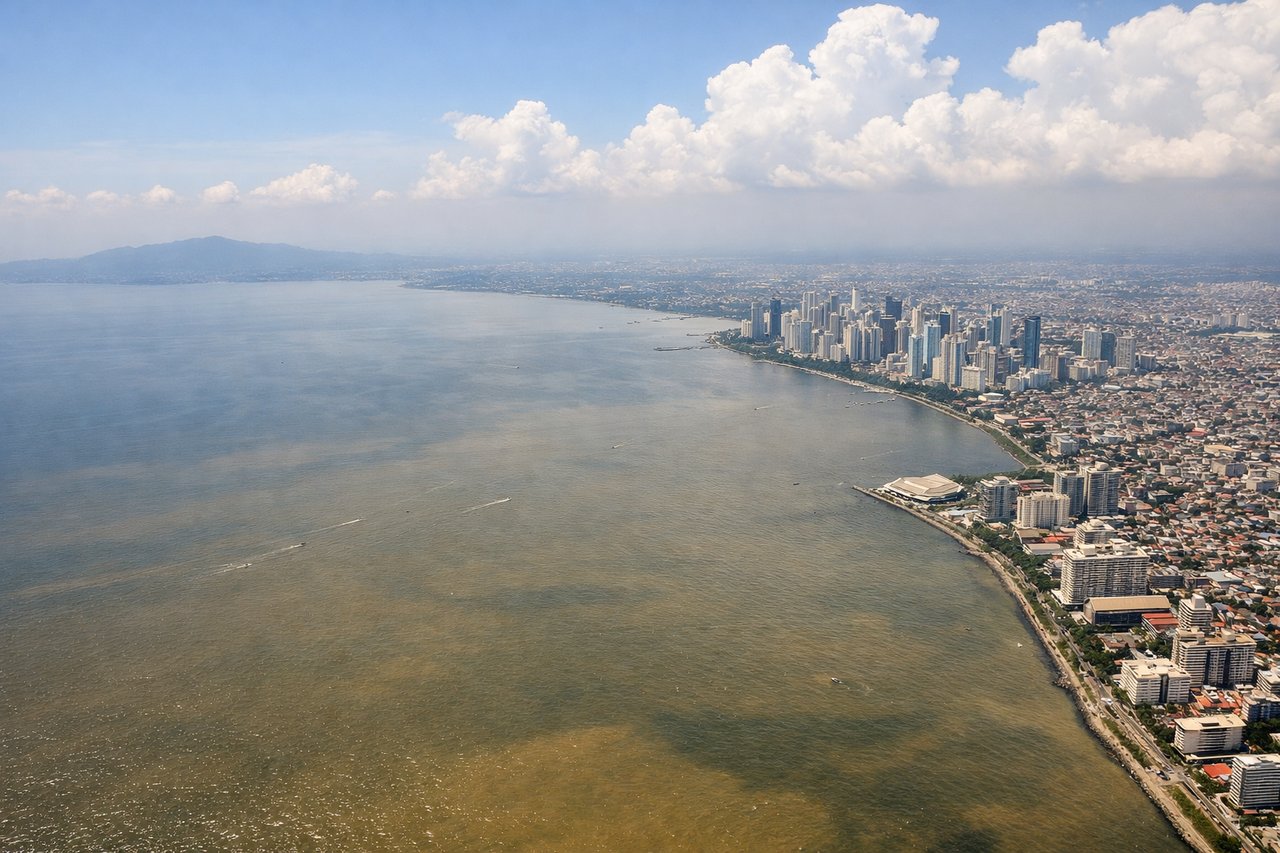
Takeoff from MNL
LEFTDeparting NAIA on the northeast-facing runway (06), the initial turn keeps Manila Bay and the city's skyline visible on the left side, giving passengers a brief but distinct urban and coastal view before the long ocean crossing begins.

Landing at LAS
RIGHTOn the westbound approach into LAS via runways 26L/26R, the aircraft passes south of the Las Vegas Strip before turning final, putting the neon towers and Lake Mead's blue basin on the right side of the cabin. This is one of the most recognizable urban approach views in North America.
Landmarks on this routeAll landmarks →
Will your flight be in sunlight?
Pick a date and time in the Sun Map to watch the sun move across your whole flight.
About This Route
Which side of the plane should I sit on flying from Ninoy Aquino International (MNL) to Mc Carran International (LAS)?
Sit on the Right side of the plane for the best views on flights from Manila to Las Vegas. While most of this ultra-long-haul flight crosses open Pacific water with little to see on either side, the right side offers a stronger overall package: partial views of the Alaskan coastline and Canadian Rockies during the northern great-circle cruise track, followed by the dramatic Las Vegas Strip and Lake Mead on final approach.
What can I see during takeoff from Ninoy Aquino International in Manila?
During takeoff from Ninoy Aquino International (MNL), sit on the Left side for the best views. Departing NAIA on the northeast-facing runway (06), the initial turn keeps Manila Bay and the city's skyline visible on the left side, giving passengers a brief but distinct urban and coastal view before the long ocean crossing begins. Notable sights include: Manila Bay, Intramuros/Manila skyline, Corregidor Island, Cavite coastline.
What can I see when landing at Mc Carran International in Las Vegas?
When landing at Mc Carran International (LAS), sit on the Right side for the best views. On the westbound approach into LAS via runways 26L/26R, the aircraft passes south of the Las Vegas Strip before turning final, putting the neon towers and Lake Mead's blue basin on the right side of the cabin. This is one of the most recognizable urban approach views in North America. Notable sights include: Las Vegas Strip skyline, Lake Mead, Spring Mountains, Mojave Desert basin.
How long is the flight from Manila to Las Vegas?
The flight from Ninoy Aquino International (MNL) to Mc Carran International (LAS) takes about 13 hours 45 minutes. The shortest flight path between them is 7,375 miles (11,869 km); winds and air traffic control usually add a few percent.
What does the Manila to Las Vegas flight path pass over?
North Pacific Ocean, Aleutian Island chain, Gulf of Alaska coastline