The right side wins overall because it dominates the two longest and most visually rewarding phases: the mid-flight crossing of the Sierra Nevada's eastern escarpment near Mount Whitney and the stark Owens Valley/Death Valley desert country, followed by the classic Las Vegas Strip view on final approach. The left side's advantage is limited to a short, though scenic, glimpse of San Francisco right after takeoff.
Flight Path
Sierra Nevada eastern escarpment near Mount Whitney, Owens Valley, Mono Lake/Bishop area, and the Mojave Desert approaching Death Valley National Park
Great circle distance and headings ›


Phase by phase
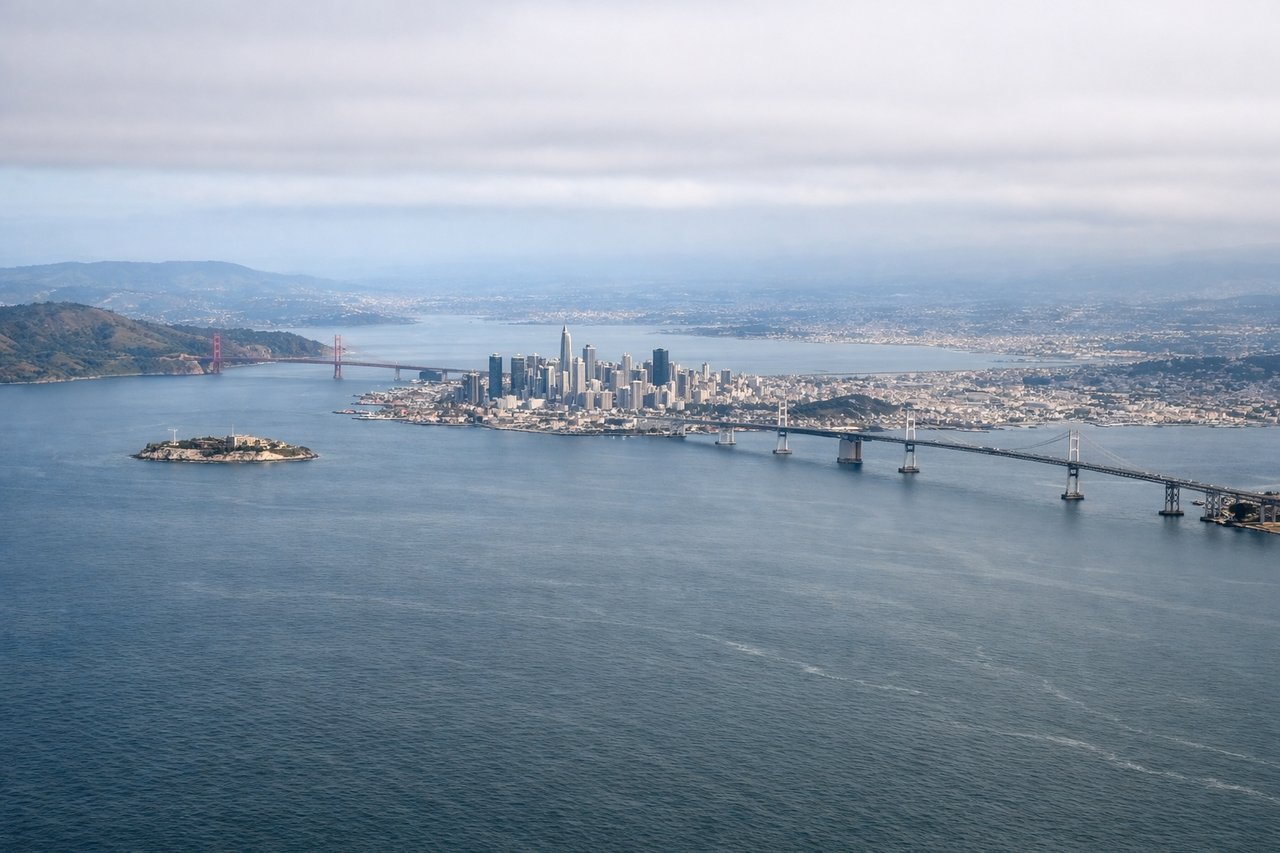
Takeoff from SFO
LEFTDeparting SFO's eastbound runways, the initial climb and turn put San Francisco itself on the left, giving a brief but clear view of the downtown skyline, the Bay Bridge, and Alcatraz Island before the aircraft turns onto its southeast heading. The right side only shows the flatter Peninsula suburbs and San Jose sprawl.
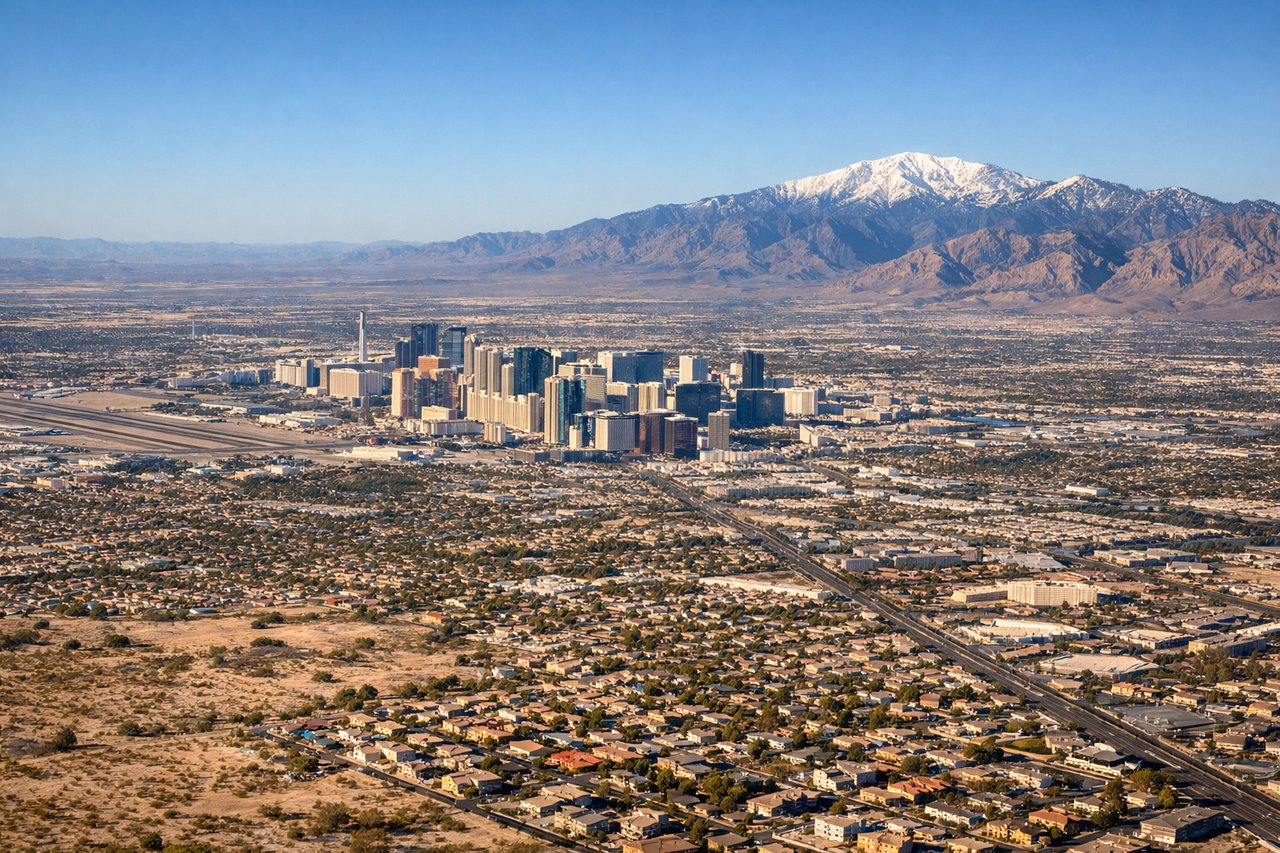
Landing at LAS
RIGHTWhen LAS uses its common westbound approach on runway 26, the flight path passes just south of the Strip, putting the entire line of iconic casino towers on the right side of the cabin during final descent. The left side instead faces the quieter Henderson valley and low desert ridgelines, which are far less distinctive.
Landmarks on this routeAll landmarks →
Will your flight be in sunlight?
See exactly which side of the plane gets sun and shade at your departure time.
About This Route
Which side of the plane should I sit on flying from San Francisco International (SFO) to Mc Carran International (LAS)?
Sit on the Right side of the plane for the best views on flights from San Francisco to Las Vegas. The right side wins overall because it dominates the two longest and most visually rewarding phases: the mid-flight crossing of the Sierra Nevada's eastern escarpment near Mount Whitney and the stark Owens Valley/Death Valley desert country, followed by the classic Las Vegas Strip view on final approach. The left side's advantage is limited to a short, though scenic, glimpse of San Francisco right after takeoff.
What can I see during takeoff from San Francisco International in San Francisco?
During takeoff from San Francisco International (SFO), sit on the Left side for the best views. Departing SFO's eastbound runways, the initial climb and turn put San Francisco itself on the left, giving a brief but clear view of the downtown skyline, the Bay Bridge, and Alcatraz Island before the aircraft turns onto its southeast heading. The right side only shows the flatter Peninsula suburbs and San Jose sprawl. Notable sights include: San Francisco skyline, Bay Bridge, Alcatraz Island, Berkeley/Oakland hills.
What can I see when landing at Mc Carran International in Las Vegas?
When landing at Mc Carran International (LAS), sit on the Right side for the best views. When LAS uses its common westbound approach on runway 26, the flight path passes just south of the Strip, putting the entire line of iconic casino towers on the right side of the cabin during final descent. The left side instead faces the quieter Henderson valley and low desert ridgelines, which are far less distinctive. Notable sights include: Las Vegas Strip hotel towers, Spring Mountains, desert valley floor, McCarran/Harry Reid airport approach corridor.
How long is the flight from San Francisco to Las Vegas?
The flight from San Francisco International (SFO) to Mc Carran International (LAS) takes 1h 25m.
What does the San Francisco to Las Vegas flight path pass over?
Sierra Nevada eastern escarpment near Mount Whitney, Owens Valley, Mono Lake/Bishop area, and the Mojave Desert approaching Death Valley National Park