The left side wins on the strength of the San Francisco Bay departure and the mountain and lake scenery crossed during cruise, while the right side's landing glimpse of Chicago is a brief highlight against otherwise flat Midwestern terrain.
Flight Path
Sierra Nevada range near Lake Tahoe, Nevada's Great Basin desert, the Great Salt Lake and Wasatch Range near Salt Lake City, and the flat farmland of Nebraska and Iowa leading into Illinois
Great circle distance and headings ›


Phase by phase
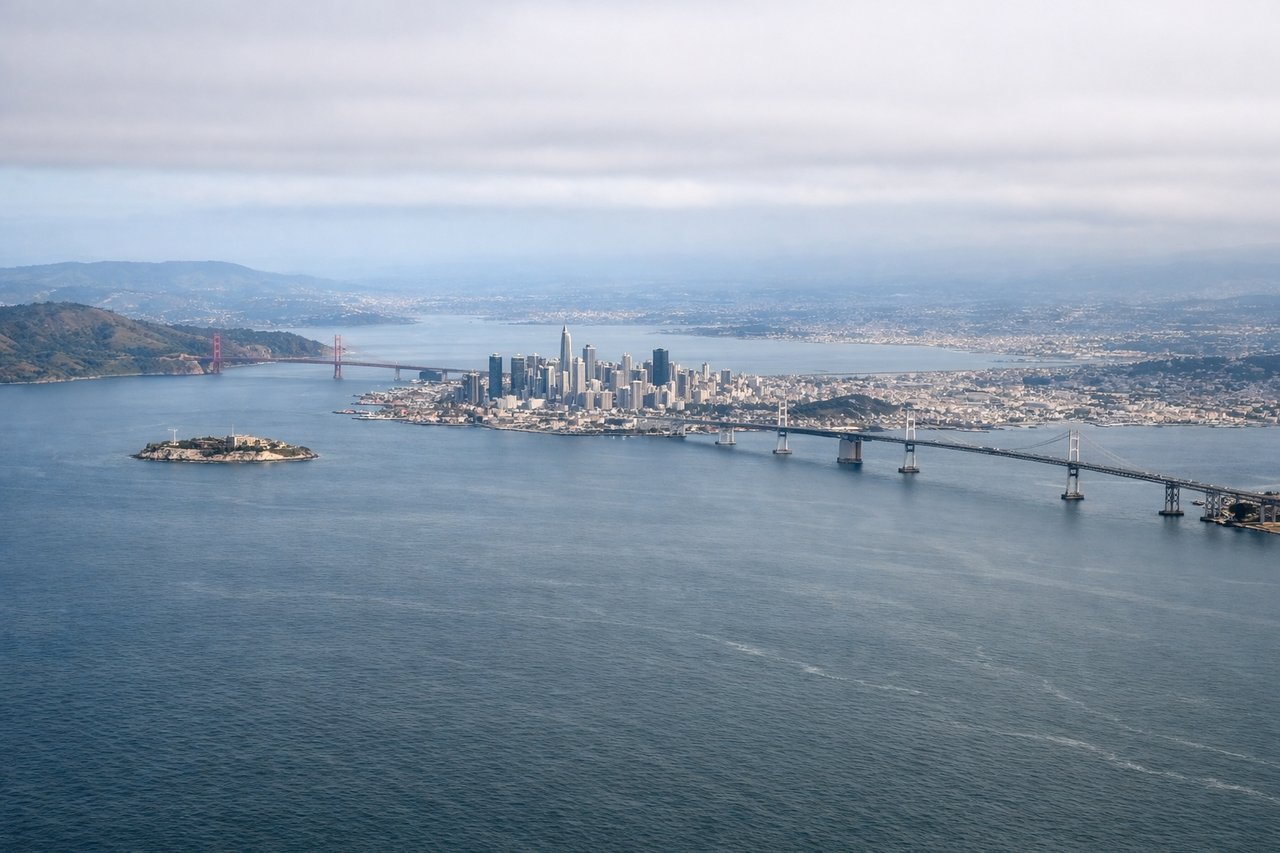
Takeoff from SFO
LEFTEastbound departures off SFO's runway 10s climb out directly over San Francisco Bay, putting the city skyline, Golden Gate Bridge and Marin Headlands on the left side of the aircraft. The right side only shows the Peninsula suburbs and South Bay, which are far less distinctive.
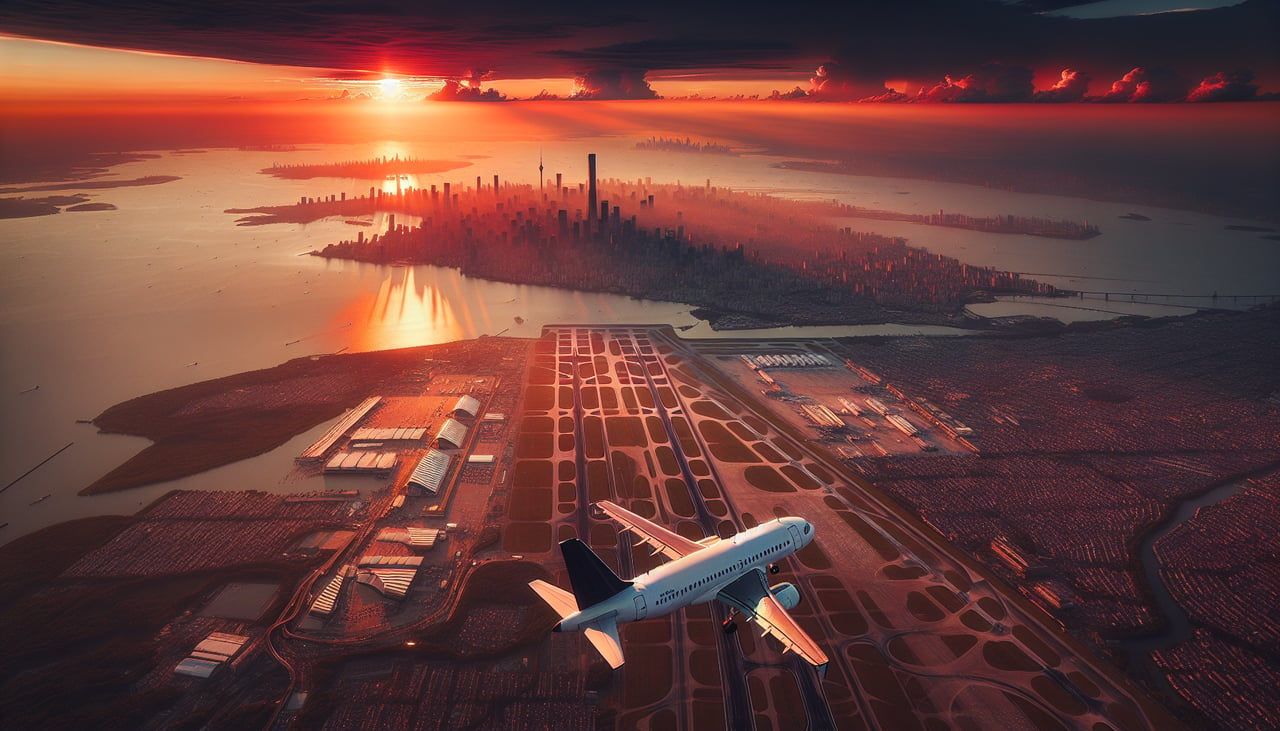
Landing at ORD
RIGHTArrivals into ORD from the west often loop south of the field before turning onto final for the westward-facing runways when southwest winds prevail, briefly exposing the Chicago skyline and Lake Michigan's shoreline to the right side. The left side during this turn mostly shows flat western suburbs and farmland.
Landmarks on this routeAll landmarks →
Will your flight be in sunlight?
See exactly which side of the plane gets sun and shade at your departure time.
About This Route
Which side of the plane should I sit on flying from San Francisco International (SFO) to Chicago Ohare International (ORD)?
Sit on the Left side of the plane for the best views on flights from San Francisco to Chicago. The left side wins on the strength of the San Francisco Bay departure and the mountain and lake scenery crossed during cruise, while the right side's landing glimpse of Chicago is a brief highlight against otherwise flat Midwestern terrain.
What can I see during takeoff from San Francisco International in San Francisco?
During takeoff from San Francisco International (SFO), sit on the Left side for the best views. Eastbound departures off SFO's runway 10s climb out directly over San Francisco Bay, putting the city skyline, Golden Gate Bridge and Marin Headlands on the left side of the aircraft. The right side only shows the Peninsula suburbs and South Bay, which are far less distinctive. Notable sights include: San Francisco skyline, Golden Gate Bridge, Alcatraz Island, Marin Headlands.
What can I see when landing at Chicago Ohare International in Chicago?
When landing at Chicago Ohare International (ORD), sit on the Right side for the best views. Arrivals into ORD from the west often loop south of the field before turning onto final for the westward-facing runways when southwest winds prevail, briefly exposing the Chicago skyline and Lake Michigan's shoreline to the right side. The left side during this turn mostly shows flat western suburbs and farmland. Notable sights include: Chicago skyline (Willis Tower), Lake Michigan shoreline, Chicago River mouth, western suburban grid.
How long is the flight from San Francisco to Chicago?
The flight from San Francisco International (SFO) to Chicago Ohare International (ORD) takes 4h 15m.
What does the San Francisco to Chicago flight path pass over?
Sierra Nevada range near Lake Tahoe, Nevada's Great Basin desert, the Great Salt Lake and Wasatch Range near Salt Lake City, and the flat farmland of Nebraska and Iowa leading into Illinois