The left side strings together three strong scenic moments: the San Francisco Bay skyline on departure, glimpses of the Sierra Nevada and Lake Tahoe region and the Rocky Mountains along the northern great-circle routing, and the Manhattan skyline and harbor on arrival into JFK. The right side spends most of the flight over the comparatively featureless Great Basin and Great Plains with a less dramatic final approach over Jamaica Bay.
Flown SFO to JFK? Did we get it right?
Flight Path
San Francisco to New York is 2,580 miles (4,152 km), a flight of about 5 hours 5 minutes.
The route tracks a northerly great-circle path crossing the Sierra Nevada near Lake Tahoe, the high desert of Nevada and Utah, the Great Salt Lake, the Rocky Mountains and Wind River Range in Wyoming, the Great Plains of Nebraska and Iowa, and the southern Great Lakes region near Lake Erie before descending toward the New York metro area.
Great circle distance and headings ›


Phase by phase
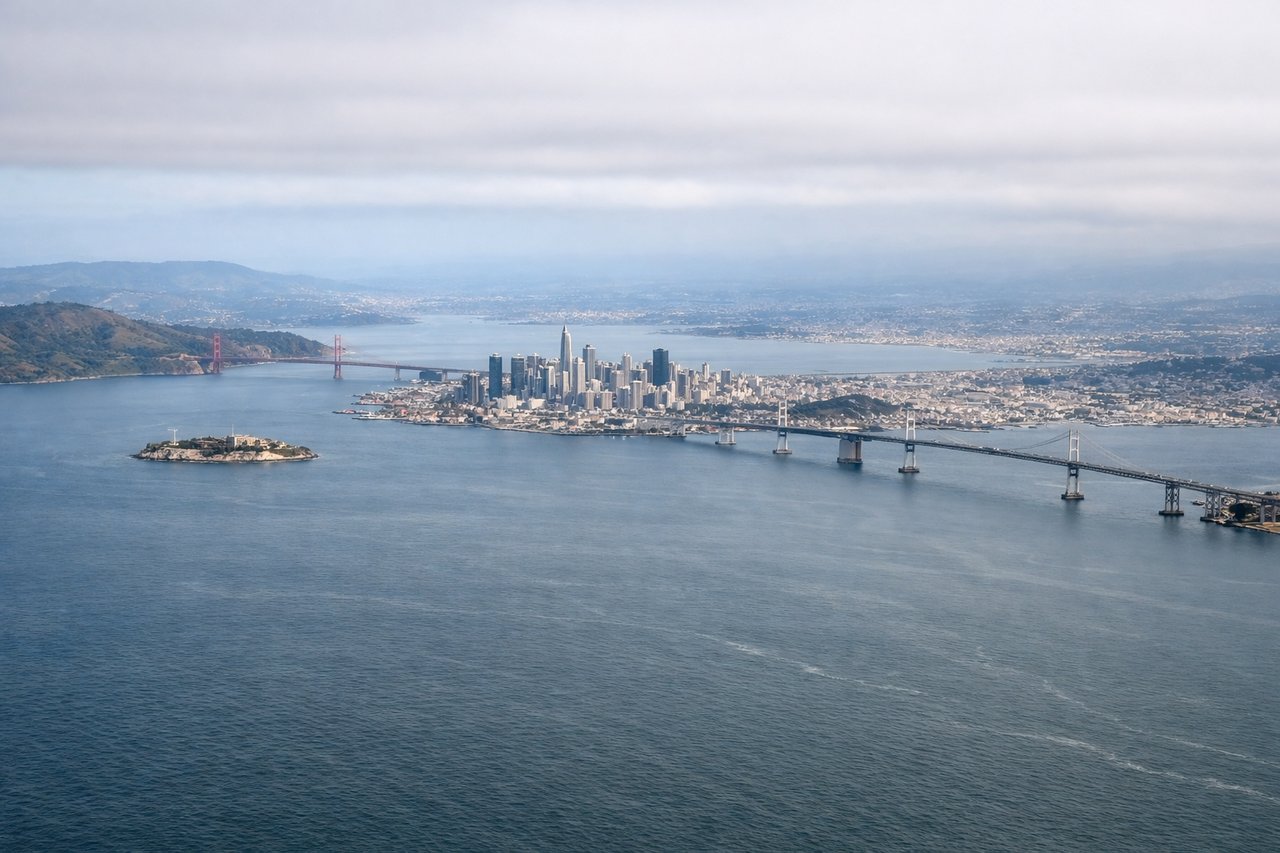
Takeoff from SFO
LEFTDeparting SFO to the east, the climb-out curves north of the runway heading, putting San Francisco's downtown skyline, the Golden Gate Bridge, and the Bay Bridge on the left side of the aircraft. The right side only shows the flatter South Bay and San Jose suburbs.
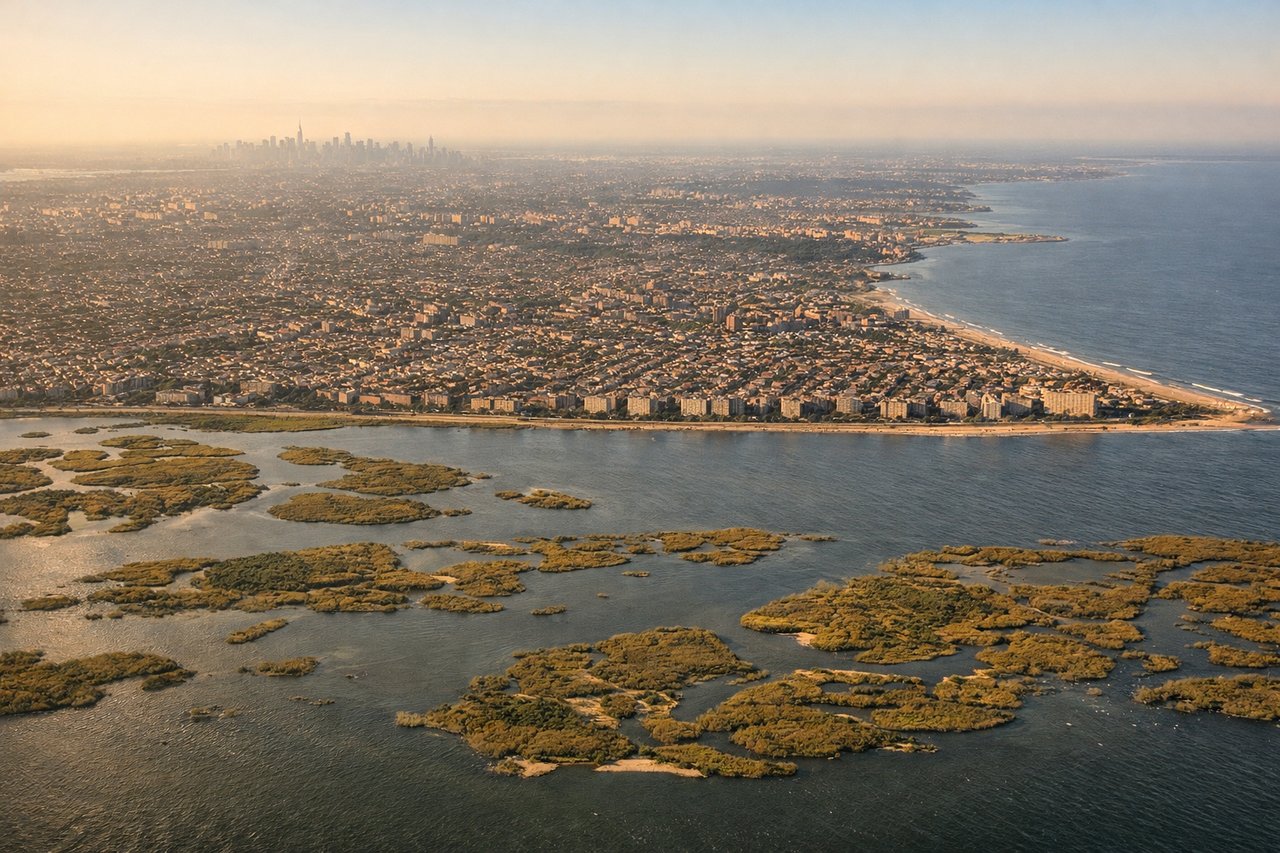
Landing at JFK
LEFTArriving at JFK from the west, flights commonly track over New Jersey and Staten Island before turning east toward the airport, putting lower Manhattan and New York Harbor on the left side during the descent. The right side mostly faces the open Atlantic and the marshes of Jamaica Bay.
Will your flight be in sunlight?
Pick a date and time in the Sun Map to watch the sun move across your whole flight.
About This Route
Which side of the plane should I sit on flying from San Francisco International (SFO) to John F Kennedy International (JFK)?
Sit on the Left side of the plane for the best views on flights from San Francisco to New York. The left side strings together three strong scenic moments: the San Francisco Bay skyline on departure, glimpses of the Sierra Nevada and Lake Tahoe region and the Rocky Mountains along the northern great-circle routing, and the Manhattan skyline and harbor on arrival into JFK. The right side spends most of the flight over the comparatively featureless Great Basin and Great Plains with a less dramatic final approach over Jamaica Bay.
What can I see during takeoff from San Francisco International in San Francisco?
During takeoff from San Francisco International (SFO), sit on the Left side for the best views. Departing SFO to the east, the climb-out curves north of the runway heading, putting San Francisco's downtown skyline, the Golden Gate Bridge, and the Bay Bridge on the left side of the aircraft. The right side only shows the flatter South Bay and San Jose suburbs. Notable sights include: San Francisco skyline, Golden Gate Bridge, Bay Bridge, Marin Headlands.
What can I see when landing at John F Kennedy International in New York?
When landing at John F Kennedy International (JFK), sit on the Left side for the best views. Arriving at JFK from the west, flights commonly track over New Jersey and Staten Island before turning east toward the airport, putting lower Manhattan and New York Harbor on the left side during the descent. The right side mostly faces the open Atlantic and the marshes of Jamaica Bay. Notable sights include: Manhattan skyline, Statue of Liberty, Verrazzano-Narrows Bridge, New York Harbor.
How long is the flight from San Francisco to New York?
The flight from San Francisco International (SFO) to John F Kennedy International (JFK) takes about 5 hours 5 minutes. The shortest flight path between them is 2,580 miles (4,152 km); winds and air traffic control usually add a few percent.
What does the San Francisco to New York flight path pass over?
The route tracks a northerly great-circle path crossing the Sierra Nevada near Lake Tahoe, the high desert of Nevada and Utah, the Great Salt Lake, the Rocky Mountains and Wind River Range in Wyoming, the Great Plains of Nebraska and Iowa, and the southern Great Lakes region near Lake Erie before descending toward the New York metro area.