Sydney to Singapore is 3,900 miles (6,277 km), a flight of about 8 hours 10 minutes.
The left side wins on both ends of the flight: dramatic Blue Mountains scenery right after takeoff and a strong skyline view of Singapore on final approach, while the right side offers comparatively plain valley and strait views at those same moments.
Flight Path
The route crosses Australia's Top End wetlands near Arnhem Land, the open waters of the Timor Sea, and the volcanic islands of Indonesia's Nusa Tenggara chain (Timor, Flores, and Sumbawa, home to Mount Tambora), before continuing over the Java Sea and Sumatra's Barisan Mountains toward the Strait of Malacca.
Great circle distance and headings ›.jpg?width=600)


Phase by phase
Takeoff from BWU
LEFTDeparting BWU on a heading that closely matches the direct track to Singapore (roughly 295-300°), the aircraft climbs almost straight over the Blue Mountains without much turning. The southern side of the flight path gives a clear look into the dramatic sandstone escarpments and valleys of the Blue Mountains, including the famous Three Sisters formation, while the northern side shows the somewhat less distinctive Grose Valley wilderness.
Landing at SIN
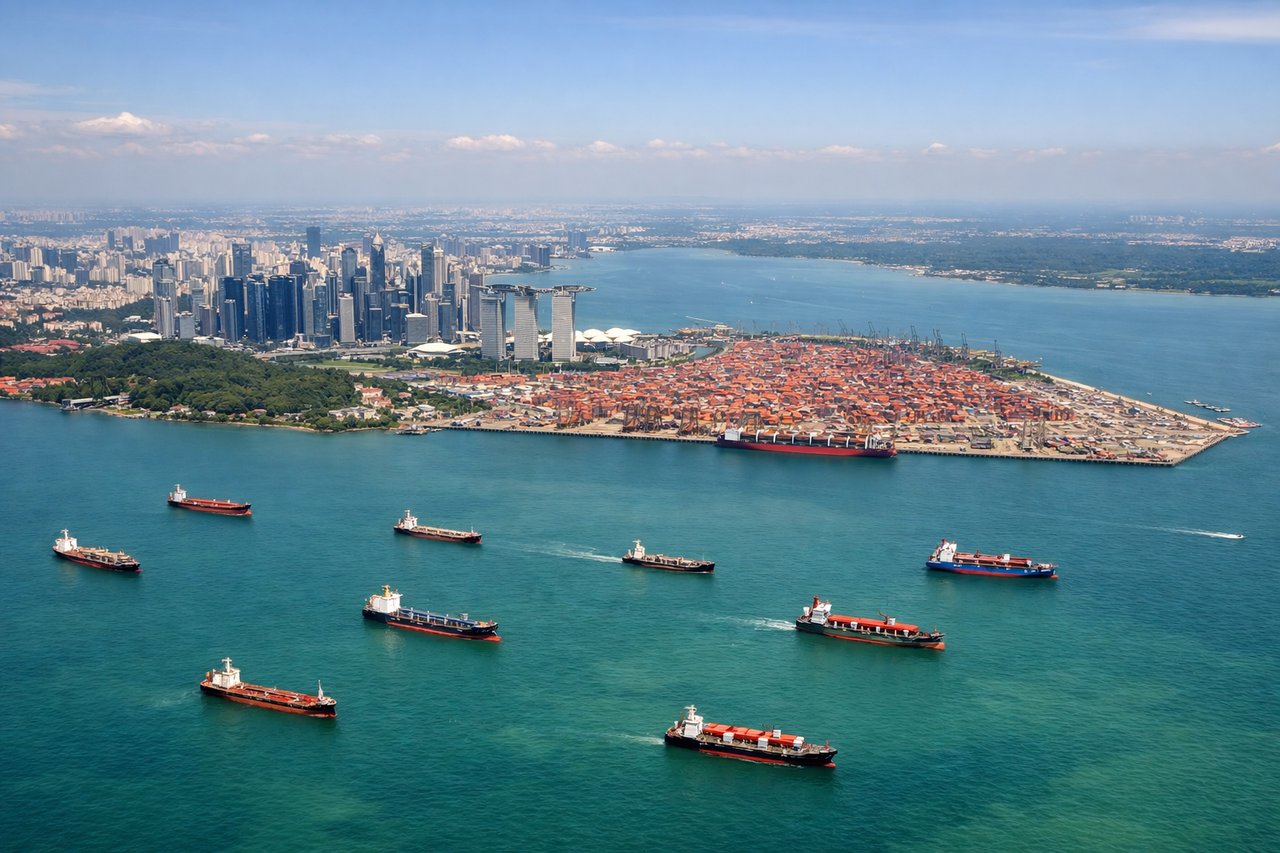
LEFTOn approach into Changi from the south over the Singapore Strait, the aircraft's final descent path puts Singapore's city skyline and port on the left side of the cabin, with Marina Bay's towers, Sentosa Island, and the massive Tanjong Pagar container terminal all visible as the plane lines up for landing. The right side mostly faces open strait waters and low-lying Indonesian islands with far less visual interest.
Landmarks on this routeAll landmarks →
Will your flight be in sunlight?
Pick a date and time in the Sun Map to watch the sun move across your whole flight.
About This Route
Which side of the plane should I sit on flying from Sydney Bankstown (BWU) to Singapore Changi (SIN)?
Sit on the Left side of the plane for the best views on flights from Sydney to Singapore. The left side wins on both ends of the flight: dramatic Blue Mountains scenery right after takeoff and a strong skyline view of Singapore on final approach, while the right side offers comparatively plain valley and strait views at those same moments.
What can I see during takeoff from Sydney Bankstown in Sydney?
During takeoff from Sydney Bankstown (BWU), sit on the Left side for the best views. Departing BWU on a heading that closely matches the direct track to Singapore (roughly 295-300°), the aircraft climbs almost straight over the Blue Mountains without much turning. The southern side of the flight path gives a clear look into the dramatic sandstone escarpments and valleys of the Blue Mountains, including the famous Three Sisters formation, while the northern side shows the somewhat less distinctive Grose Valley wilderness. Notable sights include: Blue Mountains escarpment, Three Sisters rock formation, Jamison Valley, Lake Burragorang (Warragamba Dam).
What can I see when landing at Singapore Changi in Singapore?
When landing at Singapore Changi (SIN), sit on the Left side for the best views. On approach into Changi from the south over the Singapore Strait, the aircraft's final descent path puts Singapore's city skyline and port on the left side of the cabin, with Marina Bay's towers, Sentosa Island, and the massive Tanjong Pagar container terminal all visible as the plane lines up for landing. The right side mostly faces open strait waters and low-lying Indonesian islands with far less visual interest. Notable sights include: Marina Bay skyline, Sentosa Island, Tanjong Pagar container port, Singapore Strait shipping lanes.
How long is the flight from Sydney to Singapore?
The flight from Sydney Bankstown (BWU) to Singapore Changi (SIN) takes about 8 hours 10 minutes. The shortest flight path between them is 3,900 miles (6,277 km); winds and air traffic control usually add a few percent.
What does the Sydney to Singapore flight path pass over?
The route crosses Australia's Top End wetlands near Arnhem Land, the open waters of the Timor Sea, and the volcanic islands of Indonesia's Nusa Tenggara chain (Timor, Flores, and Sumbawa, home to Mount Tambora), before continuing over the Java Sea and Sumatra's Barisan Mountains toward the Strait of Malacca.