While landing views on the left are strong, the takeoff experience from Bankstown on the right side is more dramatic and immediate, offering clear views of Sydney's most iconic geography (Harbour and Blue Mountains) within minutes. The right side also captures better views during the long cruise phase over the Indian Ocean and approaching the Middle East.
Flown BWU to LHR? Did we get it right?
Flight Path
Sydney to London is 10,568 miles (17,007 km), a flight of about 17 hours 30 minutes.
The flight path typically crosses the Indian Ocean (minimal landmarks), then over the Arabian Peninsula (Oman coast, Persian Gulf region), Iraq/Syria, Turkey (Taurus Mountains visible on some routes), the Mediterranean, and southern Europe before reaching the UK. The most visually notable midpoint features are the Strait of Hormuz area, the Zagros Mountains in Iran (if routed that direction), and the Mediterranean coastline approaching southern Europe. However, much of the 17+ hour journey crosses open ocean or sparsely populated desert regions with limited distinctive landmarks visible from cruise altitude.
Great circle distance and headings ›


Phase by phase
Takeoff from BWU
RIGHTRight-side seats offer views of Sydney Harbour and the Blue Mountains during the initial climb-out westward from Bankstown. The harbour's distinctive geography and the mountain range's escarpment are both clearly visible within the first 15 minutes of flight.
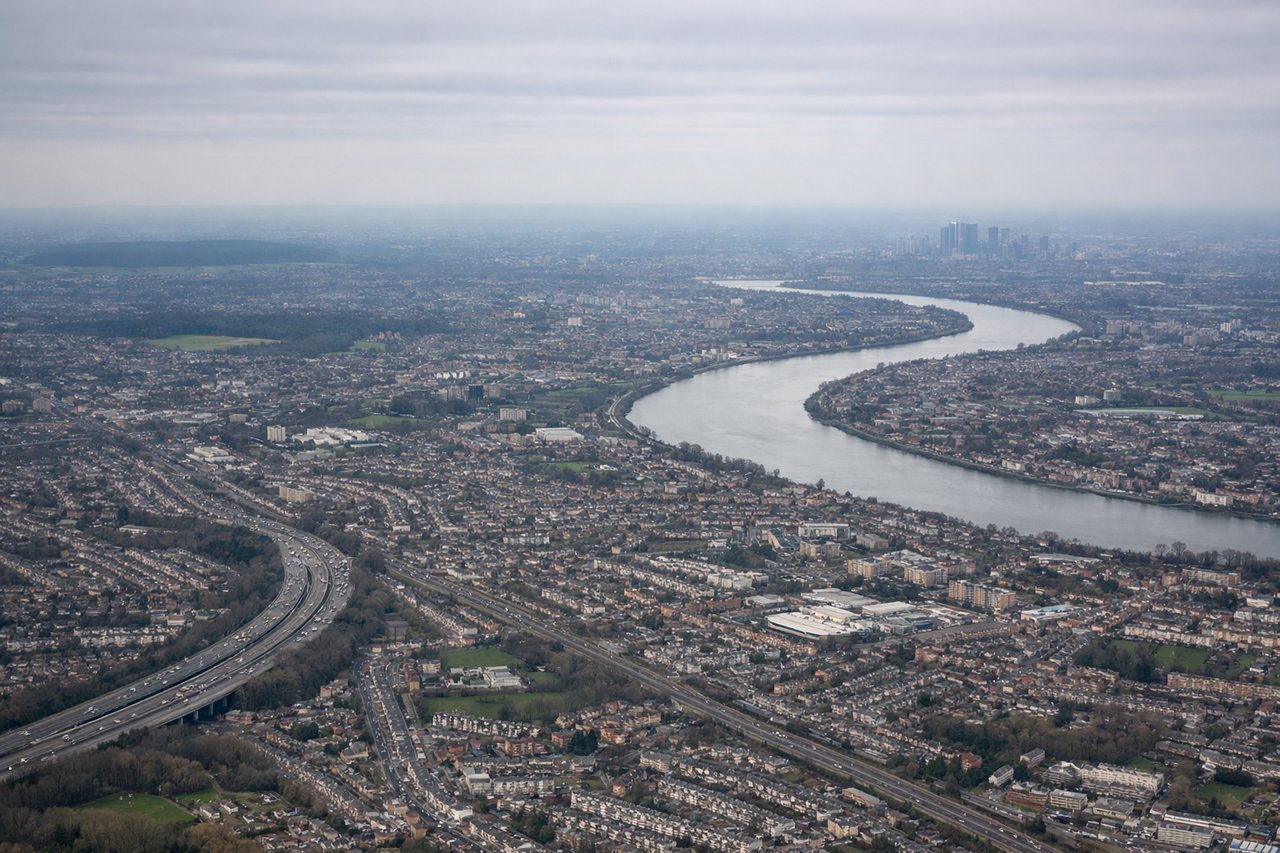
Landing at LHR
LEFTLeft-side seats provide excellent views during the descent into London Heathrow, particularly of the Thames Valley, Windsor Castle area, and the final approach over the Colne Valley and reservoirs west of London. These landmarks are directly along the standard westerly approach path.
Will your flight be in sunlight?
Pick a date and time in the Sun Map to watch the sun move across your whole flight.
About This Route
Which side of the plane should I sit on flying from Sydney Bankstown (BWU) to Heathrow (LHR)?
Sit on the Right side of the plane for the best views on flights from Sydney to London. While landing views on the left are strong, the takeoff experience from Bankstown on the right side is more dramatic and immediate, offering clear views of Sydney's most iconic geography (Harbour and Blue Mountains) within minutes. The right side also captures better views during the long cruise phase over the Indian Ocean and approaching the Middle East.
What can I see during takeoff from Sydney Bankstown in Sydney?
During takeoff from Sydney Bankstown (BWU), sit on the Right side for the best views. Right-side seats offer views of Sydney Harbour and the Blue Mountains during the initial climb-out westward from Bankstown. The harbour's distinctive geography and the mountain range's escarpment are both clearly visible within the first 15 minutes of flight. Notable sights include: Sydney Harbour, Blue Mountains (Great Dividing Range), Parramatta River, Penrith Lakes.
What can I see when landing at Heathrow in London?
When landing at Heathrow (LHR), sit on the Left side for the best views. Left-side seats provide excellent views during the descent into London Heathrow, particularly of the Thames Valley, Windsor Castle area, and the final approach over the Colne Valley and reservoirs west of London. These landmarks are directly along the standard westerly approach path. Notable sights include: River Thames, Windsor and Eton area, Colne Valley reservoirs, London urban sprawl (western districts).
How long is the flight from Sydney to London?
The flight from Sydney Bankstown (BWU) to Heathrow (LHR) takes about 17 hours 30 minutes. The shortest flight path between them is 10,568 miles (17,007 km); winds and air traffic control usually add a few percent.
What does the Sydney to London flight path pass over?
The flight path typically crosses the Indian Ocean (minimal landmarks), then over the Arabian Peninsula (Oman coast, Persian Gulf region), Iraq/Syria, Turkey (Taurus Mountains visible on some routes), the Mediterranean, and southern Europe before reaching the UK. The most visually notable midpoint features are the Strait of Hormuz area, the Zagros Mountains in Iran (if routed that direction), and the Mediterranean coastline approaching southern Europe. However, much of the 17+ hour journey crosses open ocean or sparsely populated desert regions with limited distinctive landmarks visible from cruise altitude.