Cairo to Muscat is 1,713 miles (2,757 km), a flight of about 3 hours 55 minutes.
While takeoff favors the right for delta views, the landing approach over the Hajar Mountains and Muscat's coastal setting is more visually dramatic and memorable. Left-side seats capture this superior arrival experience.
Flight Path
The flight path crosses the Sinai Peninsula (desert plateau with sparse wadis), then the Red Sea's northern reaches, before crossing into Saudi Arabia's Empty Quarter (Rub' al Khali)—vast sand dunes visible from altitude. The aircraft then tracks southeast over the Arabian Peninsula's interior desert toward the Strait of Hormuz approach, with occasional visibility of the Oman Mountains' western foothills as the descent begins toward Muscat.
Great circle distance and headings ›

.jpg?width=600)
.JPG?width=600)


_and_the_Dubai_skyline_(25781049892).jpg?width=600)
Phase by phase
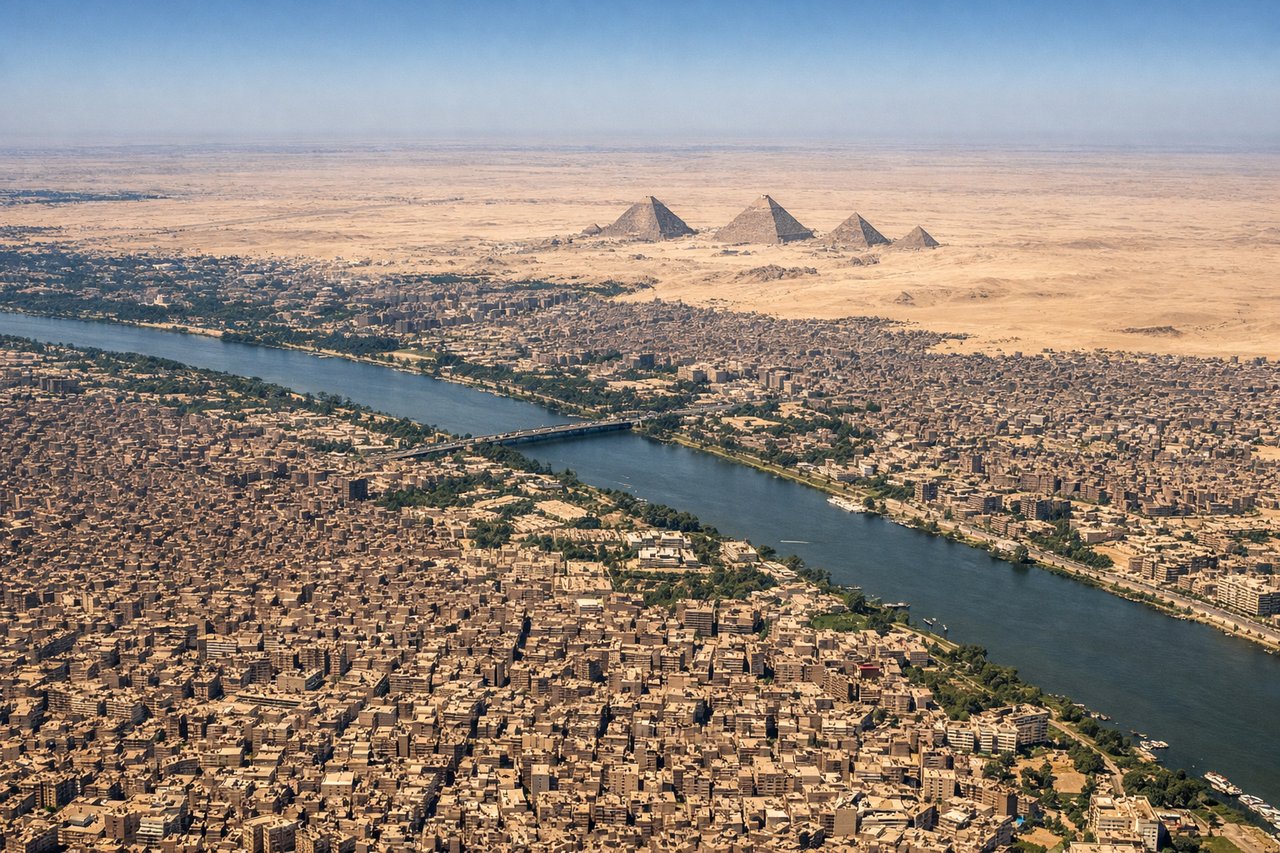
Takeoff from CAI
RIGHTRight-side seats capture the Nile Delta's intricate waterway network during initial climb. Cairo International typically departs eastbound (runways 05R/05L), so right windows face north toward the delta's distributaries and agricultural patchwork before the aircraft turns southeast toward Muscat.
Landing at MCT
LEFTLeft-side seats offer the best view of Muscat's coastal approach and the Hajar Mountains. Seeb International typically lands westbound (runways 30L/30R), so left windows face south toward the dramatic mountain backdrop and the city's waterfront development along the Gulf of Oman.
Landmarks on this routeAll landmarks →
Will your flight be in sunlight?
Pick a date and time in the Sun Map to watch the sun move across your whole flight.
About This Route
Which side of the plane should I sit on flying from Cairo International (CAI) to Seeb International (MCT)?
Sit on the Left side of the plane for the best views on flights from Cairo to Muscat. While takeoff favors the right for delta views, the landing approach over the Hajar Mountains and Muscat's coastal setting is more visually dramatic and memorable. Left-side seats capture this superior arrival experience.
What can I see during takeoff from Cairo International in Cairo?
During takeoff from Cairo International (CAI), sit on the Right side for the best views. Right-side seats capture the Nile Delta's intricate waterway network during initial climb. Cairo International typically departs eastbound (runways 05R/05L), so right windows face north toward the delta's distributaries and agricultural patchwork before the aircraft turns southeast toward Muscat. Notable sights include: Nile Delta with its branching channels and green agricultural fields, Cairo urban sprawl to the southwest, Mediterranean Sea horizon to the north, Lake Manzala (shallow lagoon) to the northeast.
What can I see when landing at Seeb International in Muscat?
When landing at Seeb International (MCT), sit on the Left side for the best views. Left-side seats offer the best view of Muscat's coastal approach and the Hajar Mountains. Seeb International typically lands westbound (runways 30L/30R), so left windows face south toward the dramatic mountain backdrop and the city's waterfront development along the Gulf of Oman. Notable sights include: Hajar Mountains (rocky, arid peaks rising inland), Gulf of Oman coastline with Muscat's harbor and port facilities, Muscat city sprawl along the coast, desert plains between mountains and sea.
How long is the flight from Cairo to Muscat?
The flight from Cairo International (CAI) to Seeb International (MCT) takes about 3 hours 55 minutes. The shortest flight path between them is 1,713 miles (2,757 km); winds and air traffic control usually add a few percent.
What does the Cairo to Muscat flight path pass over?
The flight path crosses the Sinai Peninsula (desert plateau with sparse wadis), then the Red Sea's northern reaches, before crossing into Saudi Arabia's Empty Quarter (Rub' al Khali)—vast sand dunes visible from altitude. The aircraft then tracks southeast over the Arabian Peninsula's interior desert toward the Strait of Hormuz approach, with occasional visibility of the Oman Mountains' western foothills as the descent begins toward Muscat.